
Read this article in ʻŌlelo Hawaiʻi
By Brook Kapūkuniahi Parker (i haʻi ʻia Kawika Parker)
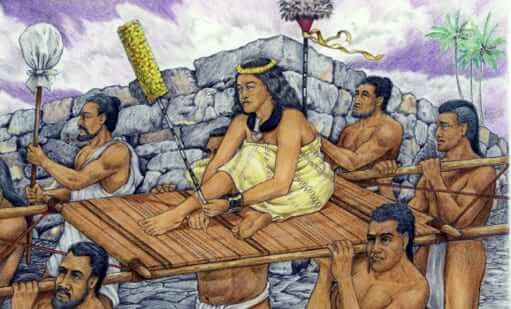
The very sacred high chiefess Kalanikauleleiaiwi, a daughter of Keakealaniwahine (mother) and Kaneikakuaiwilani (father), was the inheritor of all the most sacred kapu gathered from Hawaiʻi Island to Kauaʻi.
She could claim lineage from every ruling family on every island. She was the result of over 300 years of careful genetic engineering. The actual architects of those marriage arrangements could be considered brilliant; their posturing, manipulation, and calculations, resulted in the most complex and sophisticated social structure found in all of Polynesia.
Kalanikauleleiaiwi would become the mother of kings. Every ruling chief and high ranking aliʻi on every island at the time of Capt. James Cook’s arrival in 1778 could lay claim to this very special matriarch.
The high chiefess was raised in a pā (enclosed compound) guarded by trusted caretakers and warriors to ensure her chastity. She was destined to marry into the most influential and powerful aliʻi families across the pae ʻāina, and her children would be considered the highest born of all within the aliʻi class. Her first born would be most senior in rank.
Her first husband Kaulaheanuiokamoku (Kaulahea) was from Maui. He was of the Piʻilani family line and heir to a long line of powerful and esteemed Maui rulers. Prestige and honor was bestowed on their first child, a daughter named Kekuiapoiwanui.
It was arranged that Kekaulike, Kaulahea’s son by another wife, would marry Kekuiapoiwanui, who was his half-sister.
Their marriage was considered a nīʻaupiʻo marriage. The combination of the pair being siblings – and Kekuiapoiwanui being of the highest possible rank, ensured their children superior status among all island chiefly families.
This sibling marriage produced four children: two sons, Kamehamehanui Ailuau and Kahekilinuiahumanu (Kahekili); and two daughters, Kalolapupuka (Kalola) and Kuhoʻoheiheipahu (who died young). The three surviving siblings played major political roles in 18th century Hawaiʻi.
Kalanikauleleiaiwi’s second husband was also from Hawaiʻi Island – her half-brother Keaweikekahialiʻiokamoku (Keawe), the ruling chief over most of the island. They were both born to the same mother, Keakealaniwahine, but Keawe’s father was Kanaloakapulehu.
Together they had two children, a son, Kalanikeʻeaumoku, and a daughter, Kekelaokalani.
Her third husband was Kauauanuiamahi, a high chief from Kohala. She bore him a son who was named Alapaʻinuiakauaua (Alapaʻi).
Her fourth husband, believed to be her true love, was Lonoikahaupu, a high chief from Kauaʻi. Together they had a daughter, Kanoena, and a son, Keawepoepoe. These siblings are joined in a piʻo (full brother and sister) marriage, and they have three children together: a daughter, Kailaupule, and twin sons Kameʻeiamoku and Kamanawa.
Keawepoepoe also has a son, Keʻeaumokupapaiahiahi, (father to the future Queen Kaʻahumanu) with another wife. These three brothers – Kameʻeiamoku, Kamanawa and Keʻeaumokupapaiahiahi – eventually rise in position and influence in the court of their young nephew, Kamehameha Kūnuiākea (Kamehameha I).
Kalanikauleleiaiwi’s fifth, and final, husband is recorded as being a high chief from Kohala by the name of Kanekoa. Together they had a daughter named Poʻomaikalani.


 and Kaneikakuaiwilani (father), was the inheritor of all the most sacred kapu gathered from Hawaiʻi Island to Kauaʻi.)