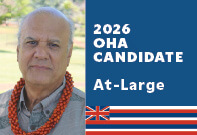
vol2026 Trustee At-Large Candidate
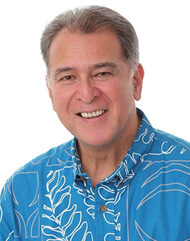
- Age – 70
- Occupation – OHA Trustee-At-Large; former senator; musician; cultural practitioner; advocate
- Where did you grow up – Kapahulu, Kakaʻako, Moanalua, and Kāneʻohe, Oʻahu
- Schooling – Kamehameha Schools, Pacific University, Harvard
- Current residence – Pālolo, Oʻahu
- Website – wearekupuna.com
Write-in Responses
Question 1Question 2Question 3
OHA’s mission is to improve conditions for Native Hawaiians. What unique skills and/or experiences do you bring to this kuleana to help OHA fulfill its mission?
What is your understanding of the role of an OHA trustee and their kuleana within the agency and to the lāhui?
Share your manaʻo on the military’s use of crown and government lands in Hawaiʻi given the impending expiration of multiple military land leases and the fact that OHA derives an annual pro rata revenue share from the military’s use of those lands.
- I bring more than four decades of service in government, culture, and community advocacy shaped by work across public institutions, cultural organizations, and media. As an OHA Trustee‑at‑Large, I help guide beneficiary advocacy, resource allocation, and policy oversight for Native Hawaiian wellbeing. My decade in the Hawaiʻi State Senate, including service as Senate Majority Leader, strengthened my ability to navigate complex systems and build coalitions that support Hawaiʻi’s people. Culturally, I have long been entrusted with roles that protect and uplift Hawaiian identity, including service with the Oʻahu Island Burial Council, Kawaiahaʻo Church, the Polynesian Voyaging Society, and the Hawaiian Music Hall of Fame. As a Nā Hōkū Hanohano Award‑winning musician and longtime broadcaster, I’ve amplified Hawaiian language and values. These experiences strengthen my ability to steward resources responsibly and support the wellbeing of our lāhui.
- A trustee is a fiduciary – legally and morally responsible for protecting trust assets, advancing beneficiary wellbeing, and ensuring decisions are made with care, transparency, and accountability. My understanding of the role begins there. As a trustee, I steward Public Land Trust revenues, oversee programs and policies, and ensure OHA’s resources are used wisely for Native Hawaiians. Within the agency, a trustee helps set direction, uphold governance standards, and insist on clear reporting, responsible budgeting, and disciplined oversight. Trustees guide policy rather than administration, requiring collaboration, patience, and the courage to ask difficult questions. Within the lāhui, the kuleana is deeper. A trustee must listen to community voices, understand lived realities, and carry forward values such as respect for kūpuna, protection of iwi kūpuna, and care for ʻāina. Leadership is service, and I approach this kuleana with steadiness, humility, and commitment to our people.
- My manaʻo on the military’s use of crown and government lands begins with a simple truth: these lands are part of the Public Land Trust, and Native Hawaiians are entitled to a fair pro‑rata share of revenues. The military’s one‑dollar‑a‑year leases are neither fair nor reflective of the cultural and historical significance of these ʻāina. With leases expiring in 2029, we must secure agreements grounded in fairness, transparency, environmental restoration, cultural protection, and a robust community benefits package shaped with beneficiaries. OHA’s Military‑Leased Lands Working Group helps ensure Native Hawaiian interests, cultural sites, iwi kūpuna, and future land use are fully represented. My approach is balanced and pono: insist on accurate inventories, clear reporting, and revenue structures that reflect true value while advancing community wellbeing and long‑term stewardship of our ʻāina and lāhui.
Yes/No Questions
Question 1Question 2Question 3Question 4Question 5
Do you support mandatory federal consultation with the Office of Hawaiian Affairs on all federal actions and processes concerning Native Hawaiian affairs?
In light of major cuts to Native Hawaiian-serving programs and OHA’s finite trust resources, do you believe OHA should play a role in helping address resulting Native Hawaiian community impacts through advocacy, partnerships, or other mitigation strategies?
Should telescope/observatory development on Maunakea and Haleakalā be stopped at least until mismanagement and legal claims to summit lands have been resolved?
In its role as an asset manager, OHA currently utilizes funds to purchase land with particular cultural, historical or ecological importance for their protection and preservation as needed.
Do you believe OHA should continue investing in these legacy land acquisitions when it determines those investments meaningfully advance its fiduciary obligations and long-term benefits to Native Hawaiian communities, even alongside other pressing beneficiary needs?
Do you believe OHA should continue investing in these legacy land acquisitions when it determines those investments meaningfully advance its fiduciary obligations and long-term benefits to Native Hawaiian communities, even alongside other pressing beneficiary needs?
Should the U.S. military be prevented from live-fire training in Hawaiʻi – both on land and in the surrounding ocean? Do you believe OHA should actively challenge or seek changes to military training activities in Hawaiʻi when those activities are perceived to negatively impact Native Hawaiian trust interests, cultural resources, environmental health, or access to culturally significant lands and waters?
< Back to Candidates