
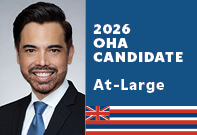
2026 Trustee At-Large Candidate
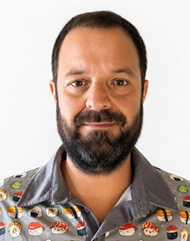
- Age – n/a
- Occupation – System Administrator
- Where did you grow up – n/a
- Schooling – n/a
- Current residence – Honolulu, Oʻahu
- Website – n/a
Write-in Responses
Question 1Question 2Question 3
OHA’s mission is to improve conditions for Native Hawaiians. What unique skills and/or experiences do you bring to this kuleana to help OHA fulfill its mission?
What is your understanding of the role of an OHA trustee and their kuleana within the agency and to the lāhui?
Share your manaʻo on the military’s use of crown and government lands in Hawaiʻi given the impending expiration of multiple military land leases and the fact that OHA derives an annual pro rata revenue share from the military’s use of those lands.
- I bring a systems focused approach to solving the structural failures that hold our communities back. Across Hawaiʻi, too many projects stall because agencies lack staff, permits sit for years, and directives go unimplemented. My focus has centered on diagnosing these bottlenecks and designing practical, workforce driven solutions. My proposal: a Guaranteed Work Initiative. Mission critical work crews trained to restore watersheds, strengthen food systems, protect cultural resources, and move long delayed projects forward.
Hawaiʻi thrives when small communities thrive, and I’ve focused on ways OHA can activate its lands to support cultural identity, local enterprise, and long term stewardship. Whether restoring streams, supporting small farms, or creating daily economic activity through cultural hubs, my plan emphasizes solutions that uplift people while protecting ʻāina. OHA’s mission requires more than vision, it requires execution. - A trustee’s kuleana is to uphold fiduciary duty, set clear policy, and ensure OHA’s work advances Mana i Mauli Ola’s foundations of ʻohana, moʻomeheu, and ʻāina. That requires aligning OHA’s land decisions with beneficiary needs‚ not with plans that stall or fail to deliver daily value. OHA’s long-standing focus on condos in Kakaʻako Makai does not match its mission or strategic plan. Housing alone cannot activate the land, strengthen cultural identity, or create economic stability for Native Hawaiians. Trustees must correct this by guiding OHA toward development that serves beneficiaries every day. My view is that Kakaʻako Makai should become a cultural and economic hub: a multi-story cultural center, daily markets, artisan and food-producer spaces, workforce and business development programs, legal advocacy offices, and community services. This model generates recurring revenue, strengthens cultural visibility, and fulfills OHA’s kuleana to uplift the lāhui.
- For generations, Hawaiʻi has suffered from deeply undervalued public land leases, including military occupied crown and government lands. Some parcels were taken or leased under conditions that would not meet modern standards of consent, and several pre-statehood agreements (including $1 leases) raise serious questions about whether they reflect fair value or were negotiated under coercive controlling political circumstances. These historic shortfalls have deprived Native Hawaiian beneficiaries of resources they should have received. OHA must insist on independent valuation, full environmental review, and terms that reflect true market rates. Culturally significant lands and lands not essential to military missions should be returned. Correcting past undervaluation and ensuring fair compensation going forward is one of the most fiscally responsible ways to strengthen long term revenue for Native Hawaiian beneficiaries without raising taxes on local families.
Yes/No Questions
Question 1Question 2Question 3Question 4Question 5
Do you support mandatory federal consultation with the Office of Hawaiian Affairs on all federal actions and processes concerning Native Hawaiian affairs?
In light of major cuts to Native Hawaiian-serving programs and OHA’s finite trust resources, do you believe OHA should play a role in helping address resulting Native Hawaiian community impacts through advocacy, partnerships, or other mitigation strategies?
Should telescope/observatory development on Maunakea and Haleakalā be stopped at least until mismanagement and legal claims to summit lands have been resolved?
In its role as an asset manager, OHA currently utilizes funds to purchase land with particular cultural, historical or ecological importance for their protection and preservation as needed.
Do you believe OHA should continue investing in these legacy land acquisitions when it determines those investments meaningfully advance its fiduciary obligations and long-term benefits to Native Hawaiian communities, even alongside other pressing beneficiary needs?
Do you believe OHA should continue investing in these legacy land acquisitions when it determines those investments meaningfully advance its fiduciary obligations and long-term benefits to Native Hawaiian communities, even alongside other pressing beneficiary needs?
Should the U.S. military be prevented from live-fire training in Hawaiʻi – both on land and in the surrounding ocean? Do you believe OHA should actively challenge or seek changes to military training activities in Hawaiʻi when those activities are perceived to negatively impact Native Hawaiian trust interests, cultural resources, environmental health, or access to culturally significant lands and waters?
< Back to Candidates

 Martin.)