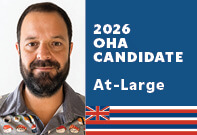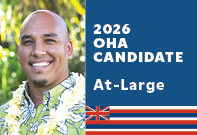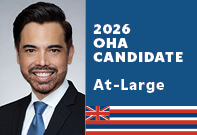
2026 Trustee At-Large Candidate
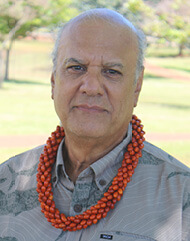
- Age – 76
- Occupation – Mahiʻai with Niu Now Molokaʻi; Retired Honolulu Police Officer
- Where did you grow up – Honolulu, Oʻahu
- Schooling – DOE public elementary schools, Kamehameha Schools
- Current residence – Hoʻolehua Homestead, Molokaʻi
- Website – nihipali.org
Write-in Responses
Question 1Question 2Question 3
OHA’s mission is to improve conditions for Native Hawaiians. What unique skills and/or experiences do you bring to this kuleana to help OHA fulfill its mission?
What is your understanding of the role of an OHA trustee and their kuleana within the agency and to the lāhui?
Share your manaʻo on the military’s use of crown and government lands in Hawaiʻi given the impending expiration of multiple military land leases and the fact that OHA derives an annual pro rata revenue share from the military’s use of those lands.
- Born and raised in the 50s urban ghettos of Honolulu, I experienced firsthand the historic social and economic challenges as a Kanaka Maoli Hawaiʻi. Educated in the Territorial public schools, I graduated from Kamehameha. As a retired police officer, I utilized that experience writing grants, curriculum, and reports to help organize community activities and projects. An educator, artist, inventor, and ʻAHO elected delegate, I’ve held numerous leadership and supportive roles in political, economic, social and cultural organizations locally, nationally and internationally, organizing, participating in community meetings, beneficiary initiatives, iwi repatriation, restoring ʻike niu, ʻāina momona, wai and kai, and lāʻau lapaʻau methods that establish food and water security and sovereignty.
- The Hawai’i State Constitution 48 years ago created a governing board of nine trustees to set up OHA policy managing the Native Trust ceded lands assets. OHA never received its equity of 20% revenues, causing systemic economic and social inequalities of physical, psychological and spiritual trauma and dislocation within the general population of Hawaiʻi. A semi-autonomous state entity, OHA nation building initiatives of self-determination/governance were abandoned; defaulted on its primary, inherent, and fundamental economic and political sovereign rights for Kānaka to govern our own affairs.
The U.S. Congress Apology Law guaranteed a process of reconciliation with the Native Hawaiian people directly. Studies, findings and recommendations by the DOI, DOJ, and state government task forces created guidelines for implementing steps of reconciliation, hoʻopono. We must huliau, think as beneficiaries, stop living an illusion of reality and assimilation of americanism. Remember, we are the host culture, the native people, not a racial minority; we are houseless, not homeless. We can overcome these social and cultural stigmas through an economic realignment, kuleana waiwai like whereby our Native Trust assets can be invested in a CDFI, a Native Hawaiian Bank, that can overcome this economic/social disenfranchisement towards a better future for all of Hawaiʻi. - U.S. military leases of 46,000 acres of Hawaiian land which expire in 2028, but costs Islanders in historical land use, unaddressed toxic legacy of environmental harm and contamination. Native Hawaiians need to decide our future of our ka pae ʻāina o Hawaiʻi. “Aloha ʻāina reminds us that land is not a commodity to be exploited but a living relationship to be honored and sustained,” said Vicky Holt Takamine. Keep Hawaiian lands in Hawaiian Hands. E huliau kākou a pau – change we must!
Yes/No Questions
Question 1Question 2Question 3Question 4Question 5
Do you support mandatory federal consultation with the Office of Hawaiian Affairs on all federal actions and processes concerning Native Hawaiian affairs?
In light of major cuts to Native Hawaiian-serving programs and OHA’s finite trust resources, do you believe OHA should play a role in helping address resulting Native Hawaiian community impacts through advocacy, partnerships, or other mitigation strategies?
Should telescope/observatory development on Maunakea and Haleakalā be stopped at least until mismanagement and legal claims to summit lands have been resolved?
In its role as an asset manager, OHA currently utilizes funds to purchase land with particular cultural, historical or ecological importance for their protection and preservation as needed.
Do you believe OHA should continue investing in these legacy land acquisitions when it determines those investments meaningfully advance its fiduciary obligations and long-term benefits to Native Hawaiian communities, even alongside other pressing beneficiary needs?
Do you believe OHA should continue investing in these legacy land acquisitions when it determines those investments meaningfully advance its fiduciary obligations and long-term benefits to Native Hawaiian communities, even alongside other pressing beneficiary needs?
Should the U.S. military be prevented from live-fire training in Hawaiʻi – both on land and in the surrounding ocean? Do you believe OHA should actively challenge or seek changes to military training activities in Hawaiʻi when those activities are perceived to negatively impact Native Hawaiian trust interests, cultural resources, environmental health, or access to culturally significant lands and waters?
< Back to Candidates