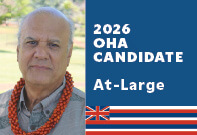
2026 Trustee At-Large Candidate
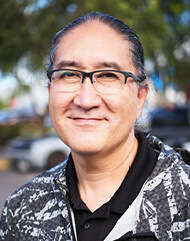
- Age – 48
- Occupation – Educator
- Where did you grow up – Kāneʻohe, Oʻahu, and all around the world
- Schooling – Kamehameha; UH Mānoa; Western Governors University
- Current residence – ʻŌlaʻa, Puna, Hawaiʻi Island,
- Website – kealiiakina.com
Write-in Responses
Question 1Question 2Question 3
OHA’s mission is to improve conditions for Native Hawaiians. What unique skills and/or experiences do you bring to this kuleana to help OHA fulfill its mission?
What is your understanding of the role of an OHA trustee and their kuleana within the agency and to the lāhui?
Share your manaʻo on the military’s use of crown and government lands in Hawaiʻi given the impending expiration of multiple military land leases and the fact that OHA derives an annual pro rata revenue share from the military’s use of those lands.
- My skill set is varied. As an educator for over 30 years, communication is one of my main strengths. I communicate with parents, stakeholders, community partners, and students to help people think and make decisions. I teach Hawaiian history and understand OHA, its origins, and concepts like Native Hawaiian versus Kānaka. I bring a 10,000-foot perspective to create innovative programs. I have a master’s in technology and learning and have led tech initiatives at my current position. We can use technology the way Kamehameha used governance to move our people forward.
I bring financial budget experience for managing programs; working for an institution with a core mission with finite resources to last in perpetuity. I also look at kingdom foundations that still work today to solve homelessness, job gaps, and banking. The kingdom had its own stock market. I bring historical research to decisions that support Kānaka now and in the future. - Rights: The trustee role is making the best decisions for the use of resources the trust cares for. The kuleana is to be that conduit who holds the mission of what is best for the people and the ʻāina at the center of every decision. One cannot do that without knowing what people want, need, or what the land is going through. A trustee needs to be on the ground, in the community, on the mountain, in the kai, and able to empathize with our people. Our people are in diaspora, so it is not about not leaving but whether the opportunity to return exists. Do we have industries to keep our brightest students here? Do we have financial stability to make decisions because it is the right thing to do? Are we in control of government systems? Are we ready to empower the next generation? The power of the written word moved our people to nearly universal literacy. Strive to support our people to be better each generation.
- Protection: Given expiring leases and OHA’s revenue share, we have to think about what is best for our people and ʻāina, not just the money. If we cannot drink the water we will perish, if the air is full of depleted uranium our health is depleted, if the waters are filled with metal and chemicals the cancers will take hold. At minimum we should ask for fair market value for the leasing of land as well as the removal of the civilian population of military dependents to help ease the housing crisis in Hawaiʻi. Think about the next 300 to 500 years. That means understanding history, how the US got control; on Jan. 18, 1893, Queen Liliʻuokalani surrendered executive powers to the US. As a trustee, these considerations matter for land management in perpetuity for everyone who lives in Hawaiʻi. We have to protect our ʻāina, protect our people, and preserve our way of life in perpetuity.
Yes/No Questions
Question 1Question 2Question 3Question 4Question 5
Do you support mandatory federal consultation with the Office of Hawaiian Affairs on all federal actions and processes concerning Native Hawaiian affairs?
In light of major cuts to Native Hawaiian-serving programs and OHA’s finite trust resources, do you believe OHA should play a role in helping address resulting Native Hawaiian community impacts through advocacy, partnerships, or other mitigation strategies?
Should telescope/observatory development on Maunakea and Haleakalā be stopped at least until mismanagement and legal claims to summit lands have been resolved?
In its role as an asset manager, OHA currently utilizes funds to purchase land with particular cultural, historical or ecological importance for their protection and preservation as needed.
Do you believe OHA should continue investing in these legacy land acquisitions when it determines those investments meaningfully advance its fiduciary obligations and long-term benefits to Native Hawaiian communities, even alongside other pressing beneficiary needs?
Do you believe OHA should continue investing in these legacy land acquisitions when it determines those investments meaningfully advance its fiduciary obligations and long-term benefits to Native Hawaiian communities, even alongside other pressing beneficiary needs?
Should the U.S. military be prevented from live-fire training in Hawaiʻi – both on land and in the surrounding ocean? Do you believe OHA should actively challenge or seek changes to military training activities in Hawaiʻi when those activities are perceived to negatively impact Native Hawaiian trust interests, cultural resources, environmental health, or access to culturally significant lands and waters?
< Back to Candidates