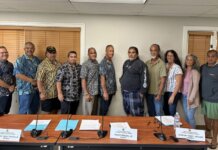
By Kanoelani Steward, Kalamaʻehu Takahashi, Kawaiuluhonua Scanlan, and Bella Wong
Three years after Lahaina burned, public attention is fixated on residential and commercial rebuilds. Although imperative, housing fire victims cannot alone repair the harm of plantation disaster capitalism, the exploitation of moments of extreme collective trauma to rapidly push through unpopular laws that benefit a few elites with plantation roots.
Amidst these efforts lies a persistent question: what is Lahaina’s water future?
Lahaina, once a verdant food basket and home to generations of aliʻi, was ravaged by sugar plantations that first appeared in the mid-1800s across Maui Komohana (West Maui). These corporations seized control of the region’s resources by diverting entire streams, draining aquifers, burning the massive breadfruit grove to fuel mills, disrupting the ability for Kānaka to feed themselves which led to displacement, and clearing upland forests.
Plantations maintained control following the industry’s decline in the 1960s by redirecting water toward luxury developments and resorts. Abandoned agricultural lands overrun by invasive grasses, coupled with a lack of water, created the conditions that fueled the tragic 2023 Lahaina Fire.
Still, modern enterprises descending from these plantations, known as legacy corporations, continue to use water for hotels, golf courses, and gentlemen’s estate pools while local residents endure drought restrictions and fear.
Hawaiʻi’s Constitution mandates that the state safeguard water resources for present and future generations – a duty entrusted to the Commission on Water Resource Management (CWRM).
In 2022, CWRM petitioned for the designation of Maui Komohana’s ground and surface water – a legal tool to reevaluate all water uses through a mandatory permitting process – to more equitably allocate threatened water resources.
Now more than ever, designation offers a chance to dismantle the systemic legacy of plantations. Embracing this opportunity, the Lahaina community has championed a movement to revive the once abundant capital of the Hawaiian Kingdom.
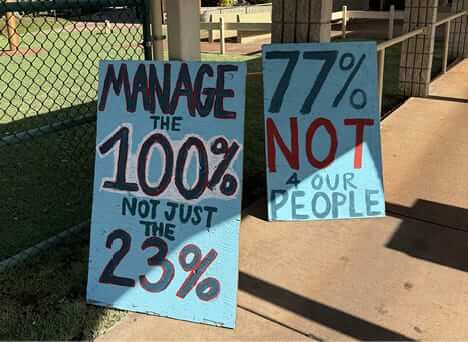
The Maui County Mayor’s Office has answered the call by advocating for public control of diversion systems – 75% of which are still privately owned. But these initiatives continue to face corporate push back and administrative delays.
As the third anniversary of the fire passes, everyone with kuleana to Maui Komohana must heed the wisdom of the kupa ʻāina. They have continuously warned that reinvesting in tourist playgrounds rather than restoring indigenous management systems increases the risk of repeated catastrophe and fails to deliver justice to a community that has suffered immeasurable loss for 150 years.
Post-Fire Political Pollution: Obstructing the Restoration of Wai
While cleanup has progressed, water access has been repeatedly hampered by the Green Administration’s prioritization of profits over people. Politicking began just days after the fire with the “redeployment” of CWRM’s Deputy Director Kaleo Manuel who had led the charge to designate Maui Komohana.
Gov. Josh Green then suspended water protection laws, endorsed corporate water grabs, and erroneously blamed the fire on designation and kalo farmers, all before sending any real aid.
Next, Green hijacked CWRM’s loea seat, reserved for an expert in Native Hawaiian water management techniques, by nominating a candidate sympathetic to legacy corporations.
Progress has most recently been stalled by lawsuits between TY Management and Maui Land & Pineapple (MLP): enterprises that profit daily from the extraction of Maui Komohana water. Their legal battles have spilled into CWRM’s boardroom, consuming valuable time that should be used to make determinations on water permits that have been pending since 2023.
MLP is now in negotiations with the County of Maui to exchange its centuries-old infrastructure for water credits and entitlements for future development, a deal that would shift the cost of fixing the neglected system to taxpayers. Meanwhile, TY continues to pump precious drinking water to irrigate its golf courses.
These tactics intentionally favor legacy corporations: every day the permits remain unsettled is another day of profits.
The Community Pushes Back: Recent Victories
In the aftermath of the fire, the community was forced to confront the fallout of plantation disaster capitalism. Hotels prematurely evicted fire survivors for visitors, foreigners tried buying burned lands for cheap, and the government allowed diverters to take more water.
Instead of conceding, however, the community fortified their determination to resist the status quo, securing critical wins.

When Green pressed to reopen tourism, for example, Lahaina Strong led advocates in a 175-day beach occupation to highlight the exacerbated housing crisis. After a successful protest, Maui County enacted Bill 9 to phase out short-term rentals that use twice as much water as local homes. Groups like the Lahaina Community Land Trust also stepped up to shield Lahaina lands from outside investors.
Concurrently, Nā Mamo Aloha ʻĀina o Honokōhau raised awareness of the politics polluting water governance and worked with Maui students to advocate for water reform at the Hawaiʻi Legislature. The momentum built at the capitol led to the appointment of a community- recognized expert to CWRM’s loea seat.
Following the loss of its headquarters, Nā ʻAikāne o Maui Cultural Center reinvigorated aspirations to restore Lahaina’s historic royal complex, Luaʻehu, and the 17-acre inland fishpond, Mokuhinia, at the center of Lahaina Town.
These are just a few examples of community groups committed to defending wai and ʻāina – the resources that sustained the practices of our kūpuna – as part of the collective struggle for ea and true self-governance.
Their work honors the natural and cultural resources of Lahaina that enabled ʻohana to thrive for generations. A growing population fed by streams that once permeated loʻi kalo through extensive, Kānaka-designed channels and flowed ma kai to sustain flourishing fishponds demonstrate that pono water governance benefits everyone.
For these groups, the path forward is clear: the achievements, histories, and stewardship practices of our kūpuna provide a blueprint to secure a brighter future beyond our present-day struggles, ultimately returning the glory of Lahaina.
As restoration efforts continue, CWRM must fulfill its kuleana to protect our wai through urgent action, thereby advancing long-overdue justice for the Maui Komohana community.
Since 2021, OHA has funded the Native Hawaiian Rights Clinic at the William S. Richardson School of Law to co-power kupa ʻāina from Honokōhau to Ukumehame in their fight to restore streamflow, regain public control of water, and eliminate centuries of injustice.
Kanoelani Steward and Kalamaʻehu Takahashi currently reside in the Kaʻanāpali Moku after the 2023 Lahaina Fire and continue to advocate for pono water management. Kawaiuluhonua Scanlan, a licensed-attorney, and Bella Wong, a second-year law student, both work with the Native Hawaiian Rights Clinic.