

Act 203: A new legal pathway authorizing community co-management agreements
By Hawaiʻi Conservation Alliance, Hui Makaʻāinana o Makana, and Kuaʻāina Ulu ʻAuamo
ʻO Kaʻaona ka malama, ʻo ʻOlepau ka mahina, ʻo Kona ka moku, ʻo Honolulu ke ahupuaʻa, ʻo Haʻimoeipo ka ʻāina, ʻīnana i ke Kukalahale. The sun was shining, the lei were vibrant, and the distinctive clack of rubber slippers resounded in the halls on July 8, 2026, when Gov. Josh Green signed House Bill 2218 into law as Act 203.
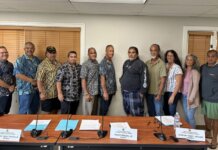
Community leaders, governmental officials, and advocates from across Hawaiʻi gathered at the ceremonial signing room on the fifth floor of the Hawaiʻi State Capitol to celebrate this momentous occasion that many had been working on for the past year, and many more have been working to realize for much, much longer.
Honoring the time-tested Native Hawaiian practices of mālama ʻāina and ahupuaʻa-based management and acknowledging that the state alone cannot sustainably manage all the public trust lands and waters within its purview, Act 203 creates explicit legal authority for the state’s Board of Land and Natural Resources (BLNR) to enter into long-term community co-management agreements with community-based organizations.
In Ching v. Case, 145 Hawaiʻi 148 (2019), the Hawaiʻi Supreme Court reiterated that the state has an affirmative, actionable duty to mālama ʻāina, preserve, and protect public trust lands and waters under its care for current and future generations of Native Hawaiians and kamaʻāina to love and enjoy.
Article XI, Section 1, and Article XII, Section 7, of our Hawaiʻi State Constitution likewise affirm that the state must restore and protect public trust lands and waters for generations to come, including for subsistence, cultural, and religious purposes.
Community-led mālama ʻāina efforts with the state have been growing for decades through various means including Community-Based Subsistence Fishing Areas (CBSFAs), rights of entry, curatorships, and revocable permits to name a few.
However, as an ever-increasing number of community groups embrace their kuleana to mālama ʻāina by functionally operating as co-managers, therein lay the challenge to explicitly define their co-management functions and responsibilities with the state.
Act 203 aims to do just that – uplift current efforts and lead the way for more effective and secure relationships by explicitly authorizing long-term community co- management agreements for up to 65 years.
These agreements can be executed by BLNR with “community co-managers,” defined as Hawaiʻi incorporated nonprofits with the mission, capacity, and commitment to mālama ʻāina. Community co-managers must engage in community-driven planning, including potential revenue generation and other management efforts and projects that benefit public trust lands and waters.
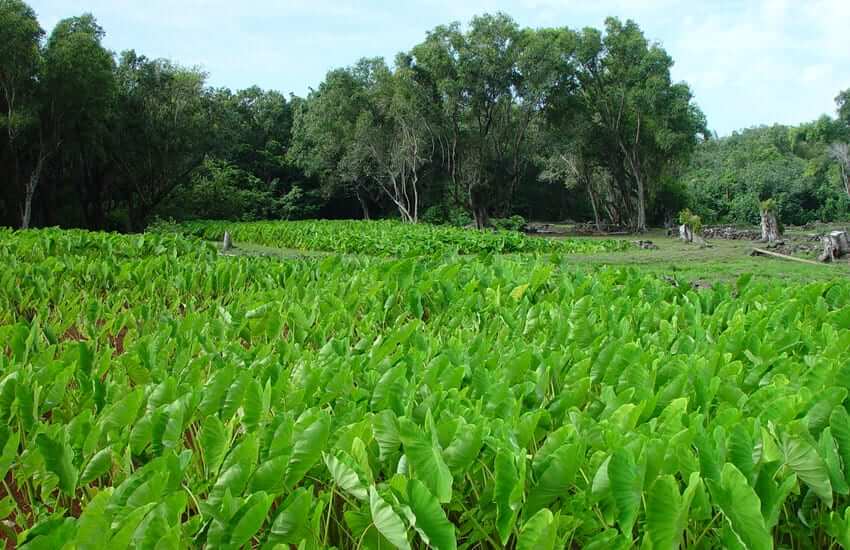
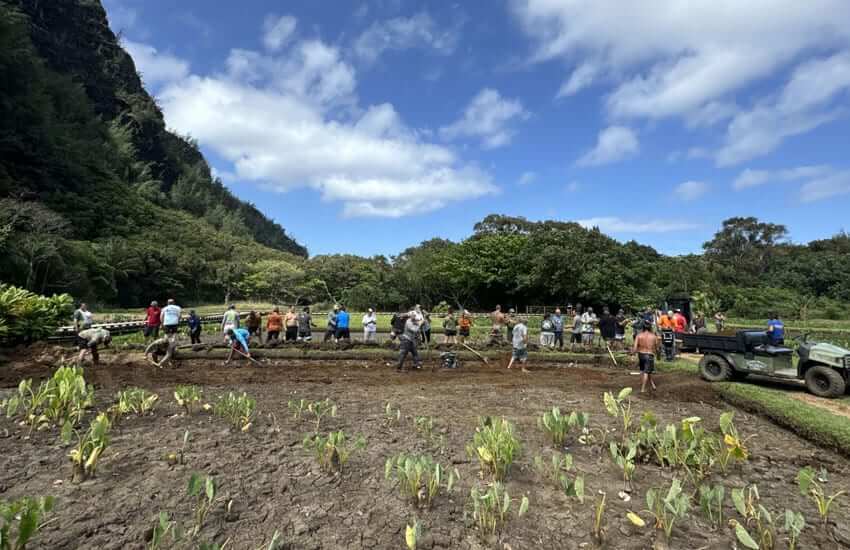
This new legal tool was initiated by the trailblazing Hui Makaʻāinana o Makana (the Hui) which, since 1998, has led the hoʻomalu of their sacred ʻāina kūpuna at the Hāʻena State Park on Kauaʻi.
Although the legislation was born from a decades-long struggle for a long-term lease in Hāʻena specifically, it quickly illuminated a shared opportunity for a clarified legal pathway to empower and increase community co-management across the pae ʻāina.
Act 203 is intended to give established mālama ʻāina communities real, dedicated seats at the table with the state as the true co-managers that they are and always have been – despite it all – since time immemorial. A distinct and exciting highlight of Act 203 is that it covers co-management of ʻāina in its broadest sense; from our fisheries ma kai to inland ma uka public trust lands.
Over the past year, a working group of representatives from the Hui, Hawaiʻi Conservation Alliance, Kuaʻāina Ulu ʻAuamo, Hanalei Initiative, Mālama Pūpūkea-Waimea, and Department of Land and Natural Resources (DLNR) informed and developed House Bill 2218, utilizing lessons from the CBSFA movement and other community-centered mālama ʻāina efforts across Hawaiʻi.
The working group led robust community engagement, outreach, and agency inreach that were essential aspects in the creation and passage of this new law. House Speaker Rep. Nadine Nakamura and her staff were also extremely instrumental, advocating from within the state legislature to keep the bill alive during session.
The huge support from fellow community groups, partners, and individuals across the pae ʻāina was also a critical factor in this legislative success. Some key supporters were the Office of Hawaiian Affairs, Hawaiʻi Alliance for Community-Based Economic Development, Hawaiʻi Community Foundation, Sierra Club of Hawaiʻi, and Kauaʻi Mayor Derek Kawakami.
The new law, of course, is not intended to be an easy “quick fix” for the myriad of complicated issues facing our people and the state, and its true effectiveness will be tested as time goes on. Simply put, Act 203 serves as another community-crafted “tool in the toolbox” to strengthen and increase community-based mālama ʻāina across Hawaiʻi.
A larger vision of this new legal pathway is to help decrease our dependence on outside resources and the centralized governing systems that are unable to sustainably manage and hoʻoulu all the waiwai held in our public trust lands and waters.
Act 203 was intended from the start to uplift resilient community groups that have demonstrated for years the technical, organizational, cultural, and community competencies necessary to act as co-managers with the state.
As such, the communities that will most immediately benefit from this new legal framework are those that have already been functionally operating as co-managers with the state over an extended period.
Several community groups have started drafting their own community co-management agreements and implementation plans, and we all look forward to seeing these agreements formalized and passed by BLNR through the public hearing process in the near future.
E mālama ʻāina kākou no nā kau ā kau, mau ā mau.
For more on the origins of Act 203: kuahawaii.org/community-resources/co-management/. Interested community groups should reach out directly to DLNR for up-to-date guidance on implementation.