
Earlier this summer, dozens of Kaʻū families gathered at Punaluʻu Beach Park holding handmade cardboard signs reading “Respect Our Wahi Pana” and “Public Lands Not Private Hands.” They were rallying under the weight of a sudden, quiet crisis: the county’s lease for the beach park was about to expire on June 30.
For generations of Kaʻū ʻohana, Punaluʻu has been a vital source of subsistence and the ultimate gathering place for life’s major milestones. The community’s cultural identity is anchored here.
“Especially for me, born and raised on this beach. Lived down here. Fished down here. Worked down here. Everything down here,” says Kaʻū community leader Guy Enriques, “If you throw me in the water up there in the middle of the night, if I look at the bottom, I’ll know where I am.”
Kaʻū native Kurt Dela Cruz made the hour-long drive to the rally from Hilo, where he now lives in what he calls “economic exile” – a familiar reality for locals forced to leave their hometown in search of better-paying jobs.
“First thing you do is jump in Punaluʻu. The waters hug you,” says Dela Cruz, “Kaʻū is medicine. The barren landscape, mountains, winds – that’s us, that makes us. It’s about protecting that medicine.”
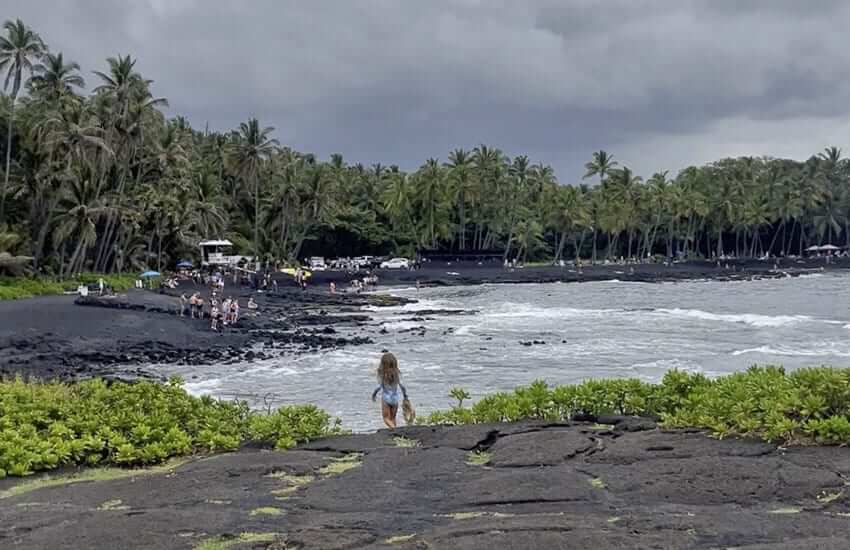
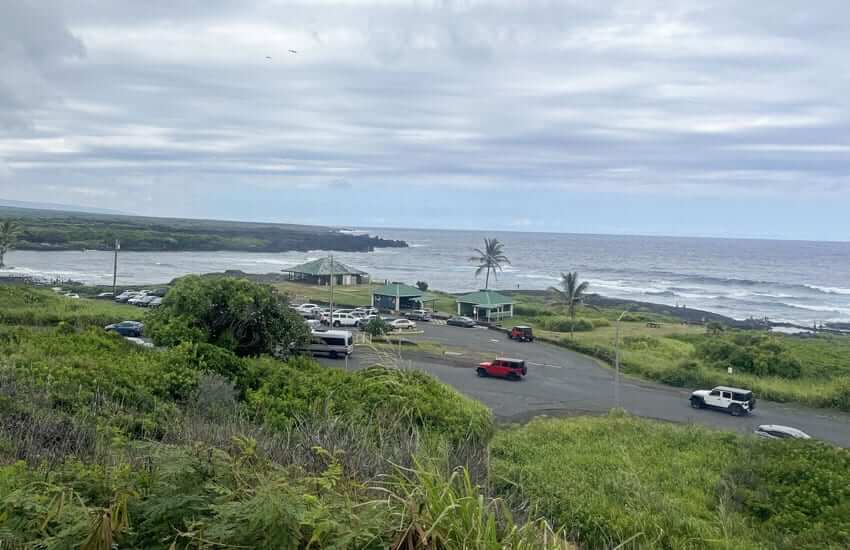
For seven decades, public access to that medicine has hung on a fragile administrative thread. While a two-month extension was reached to temporarily keep the park gates open until September 1, the scare served as a sharp wake-up call.
Hawaiʻi County has operated the park under a $1-a-year lease agreement with private landowners since 1954. The lease covers 6.8 acres, and includes the pavilions, parking areas, and campgrounds. This park, however, is just a fraction of the nearly 150 acres in Punalu’u that has been under private ownership since the plantation era.
Long before sugar plantations and resort developers, Punaluʻu was a place of profound communal abundance. Even after the Māhele of 1848, the majority of the land remained in Hawaiian hands.
Lot Kapuaiwa (Kamehameha V) claimed the more than 5,300-acre Punaluʻu ahupuaʻa, while kuleana parcels within the beach park area were awarded in the early 1850s to names like Kanekoa, Nawali, Kekapa, and Makaha.
The landscape shifted significantly after the 1893 overthrow of the Hawaiian Kingdom. The loss of political power allowed corporate interests to systematically consolidate individual family lands, with entities like Hutchinson Sugar Plantation and Hilea Sugar Company absorbing most of these kuleana parcels.
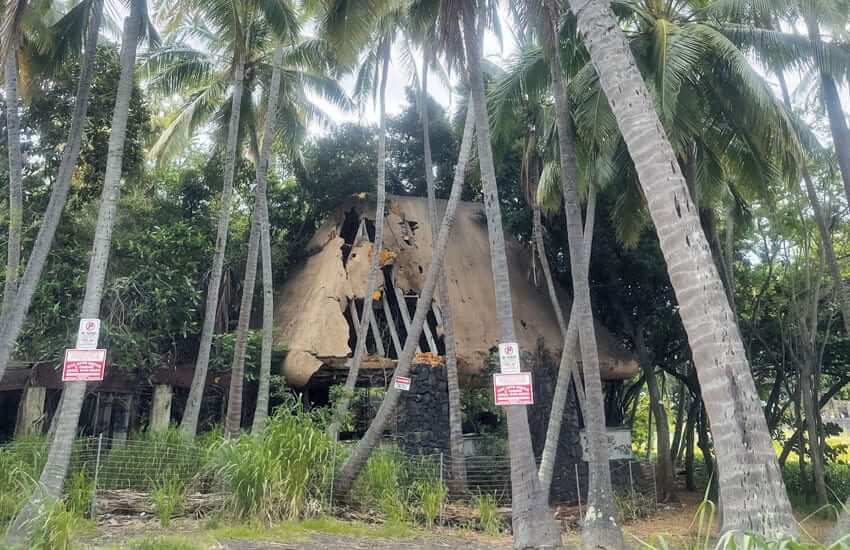
When sugar collapsed a century later, corporate entities departed, leaving local families to absorb the economic shock. Then came tourism – promised as an economic savior but often leaving behind little more than broken promises and decaying structures like the empty Punaluʻu Village Restaurant sitting just ma uka of the beach.
For decades, a revolving door of investment firms bought and sold the land, bringing an exhausting cycle of ambitious resort plans, permit battles, and local resistance.
“What chapter is this, chapter six?” asks Dela Cruz.
First came C. Brewer’s Sea Mountain golf course community in the 1970s. Then came Punaluʻu Development in the early 90s which ran into fierce community resistance that tied up their permits in court. The land was sold in 1994 to SM Investment Partners, which ended up withdrawing its permits five years later under intense community pressure.
Then in 2006, a new developer proposed Sea Mountain Village with 1,500 condo units and 300 hotel rooms.
Kaʻū mobilized once again in opposition. But this time, the strategy shifted from defensive resistance to permanent protection.
“I don’t want my five boys to have to fight this in their lifetime,” said Enriques
Kaʻū fought in 2007 to add Punaluʻu to the county’s Public Access, Open Space, and Natural Resources Preservation Commission (PONC) list.
This history of extraction has occasionally sown friction in tight-knit Kaʻū, as families wrestled with the desperate need for local jobs versus preserving their rural lifestyle.
“I’m tired of the division that developers bring into Kaʻū,” shared long time community leader Earl Louis, “but we need the support of the community.”
For community leaders, healing that division means recognizing that decades of commercial interests have returned virtually nothing of long-term value to Kaʻū. Instead of pitting neighbor against neighbor over resort jobs, Kaʻū families are focusing on a permanent alternative: protection through community stewardship.
“Punaluʻu is just not my home,” says Enriques, “It’s everybody’s who lives in Kaʻū. It’s our home.”
For two decades, Punaluʻu has lingered on the PONC priority list – until now. For the first time in over a century, there is a very tangible pathway for local families to step in and steward Punaluʻu into perpetuity.
With the lease extension set to expire on Sept. 1, 2026, Hawaiʻi County is actively working through the PONC process. The county faces an incredibly tight timeline to secure an appraisal, negotiate the acquisition, and close the deal.
For the families of Kaʻū, the stakes are too high for another chapter of defensive waiting. The push to permanently return Punaluʻu to the hands of the community is happening right now.