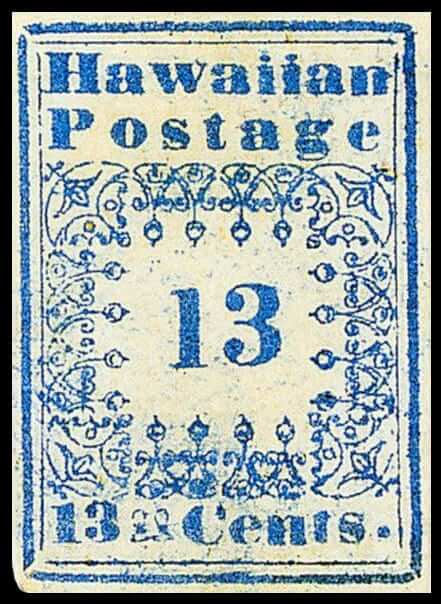
 In 1853, the Hawaiian Kingdom issued a 13-cent postage stamp bearing the portrait of King Kamehameha III, likely making him the first Indigenous sovereign depicted on the national postage of an independent state.
At the time, adhesive postage was still a relatively new technology. Britain had issued the world’s first stamp only 13 years earlier, followed by the United States in 1847 and Hawaiʻi in 1851. Over the next four decades, Hawaiian postage would carry the faces of our aliʻi across the islands and through postal systems around the world.
Hawaiian postage emerged from a national postal system established by Kamehameha III by royal decree on Dec. 21, 1850, among the earliest national postal administrations in the Pacific.
Its first stamps, issued in 1851, were later nicknamed the “Missionaries” because of their association with surviving missionary correspondence. These early issues were part of a much larger expansion of Hawaiian national infrastructure and connected Hawaiʻi materially to the 19th century family of nations.
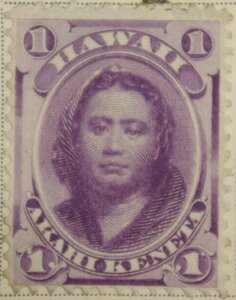
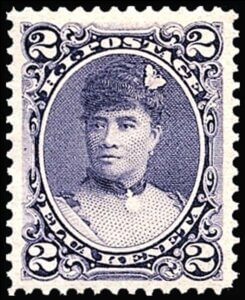
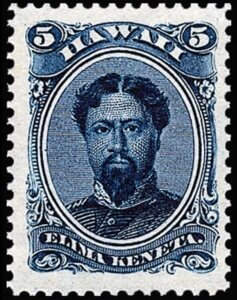
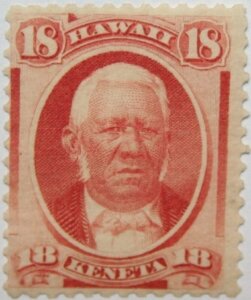
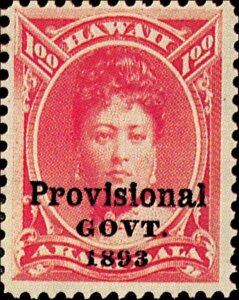
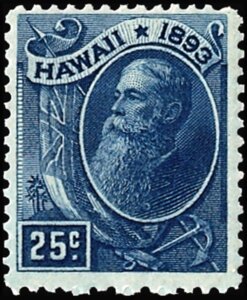
The first Hawaiian Kingdom stamps were issued in 1851 (see image above). In 1853, a stamp was issued featuring the image of Kamehameha III and for the next 40 years, the likenesses of a succession of aliʻi represented the sovereignty of Hawaiʻi internationally. Following the overthrow, existing stamps were overprinted with the words “Provisional Govt. 1893” over the visages of our aliʻi as in this example (second from the right) of a stamp bearing the image of Queen Emma. Thereafter, new stamps – such as the one on the far right – featured the image of kingdom traitor and insurrectionist Sanford B. Dole. – Images Courtesy of Wikipedia
The introduction of Kamehameha III’s portrait in 1853 began a succession of aliʻi images on Hawaiian postage. Eventually, Kamehameha III, Kamehameha IV, Kamehameha V, Victoria Kamāmalu, Mataio Kekūanaōʻa, William Charles Lunalilo, Queen Emma Kaleleonālani, David Kalākaua, William Pitt Leleiohoku, Miriam Likelike, Queen Kapiʻolani, and Queen Liliʻuokalani would all appear on stamps. Kamehameha I was represented through his statue.
Together, they formed a visual genealogy of Hawaiian political authority. Some stamp issues also carried inscriptions in ʻōlelo Hawaiʻi, making the language itself part of how the Kingdom represented the Hawaiian nation internationally.
The prominence of Hawaiian aliʻi is unusual within 19th century philately, when Indigenous people rarely appeared on postage. Hawaiian stamps presented successive generations of aboriginal political authority, including reigning and former monarchs, royal consorts, heirs, the Kuhina Nui, and other senior aliʻi.
Native Hawaiians appeared on Hawaiian stamps because Hawaiians ruled Hawaiʻi and represented themselves to the world, rather than appearing through a colonial gaze as objects of ethnographic curiosity. Hawaiian stamps became paper emissaries of the kingdom, circulating the faces of Kānaka Maoli leaders across the Pacific, the Americas, Europe, and Asia. For Kānaka at Sutter’s Mill, in the Pacific Northwest, sailors in distant ports, and Hawaiians studying abroad, those same stamps could carry another meaning: a small piece of the homeland.
The postal service also intersected directly with the political career of King Kalākaua. Before being elected as king, he served as Postmaster General under Kamehameha V, working within the bureaucracy responsible for domestic and international correspondence.
Kamehameha V subsequently gave that bureaucracy a permanent home. Construction of the kingdom’s first purpose-built post office began in 1870 at Merchant and Bethel Streets in downtown Honolulu and was completed the following year. The Kamehameha V Post Office pioneered concrete-block construction in Hawaiʻi and remains a surviving part of the government district developed under the monarchy.
By then, postal administration had become inseparable from Hawaiʻi’s foreign relations. International mail required agreements governing rates, transit, and postal revenues.
Under Kalākaua, the Hawaiian Kingdom joined the Universal Postal Union (UPU) in 1882. Created through the 1874 Treaty of Bern, the UPU established an international framework for exchanging mail among member countries and later became a specialized agency of the United Nations. Hawaiian postage now moved through foreign postal systems under common international rules recognizing the postal authority that issued it.
The illegal overthrow of Queen Liliʻuokalani on Jan. 17, 1893, produced an immediate and literal change in this philatelic record.
The Provisional Government overprinted existing royal stamps with “PROVISIONAL GOVT. 1893.” One of the most poignant material symbols of the overthrow remains Liliʻuokalani’s portrait bearing the name of the government that removed her, imposed directly across the face of the queen.
The overprints were followed by a deliberate reworking of Hawaiian postage. The Provisional Government ordered the destruction of plates and dies used for earlier issues as new designs were prepared.
Republic of Hawaiʻi stamps introduced a new political vocabulary, including Sanford Dole and, on official issues, Lorrin Thurston, while selectively retaining Hawaiian national imagery such as the statue of Kamehameha I.
The result reflected the republic’s political contradiction: a government seeking American annexation that nevertheless depended upon existing Hawaiian symbols to represent the country it now governed.
Kānaka Maoli figures largely disappeared from postage after American annexation.
Under the Organic Act, Hawaiian stamps ceased to be valid for postage on June 14, 1900, as the islands were incorporated into the U.S. postal system. In 1937, the U.S. Post Office depicted the statue of Kamehameha I on a stamp commemorating Hawaiʻi as an American territory.
Duke Kahanamoku followed in 2002. The kingdom placed Hawaiian rulers on its stamps as representatives of a living Hawaiian nation and people, while the United States later returned Hawaiian figures to postage as subjects of territorial commemoration and historical memory.
Today, stamps of the Hawaiian Kingdom are generally encountered as collectibles or in museum collections. That context can obscure what they originally were: instruments of Hawaiian statecraft and communication that connected a recognized Hawaiian government and its people to a wider international network.
What began in 1853 with an Indigenous sovereign on the postage of an independent Hawaiian Kingdom ended in 1900, when Hawaiian postage was absorbed into the postal system of the nation that had seized Hawaiʻi.