Bearing the Weight of WESPAC’s Push for Extractive Fishing in Papahānaumokuākea and Other Sacred Pacific Ocean Spaces
By Kenika Lorenzo-Elarco and Hau‘oli Lorenzo-Elarco
What does protection mean when even some of our most sacred and carefully protected ocean spaces are being reopened to commercial fishing? As World Ocean Day approaches, there is a renewed attention to the need for marine protected areas that are strong not only on paper, but in purpose and practice.
While the world is being urged to strengthen ocean protections, the Western Pacific Regional Fishery Management Council (WESPAC), fueled by the Trump Administration, has moved to restore commercial fishing access of all four Pacific Marine National Monuments: Pacific Islands Heritage (PIH), Muliava (Rose) Atoll, Marianas Trench, and Papahānaumokuākea.
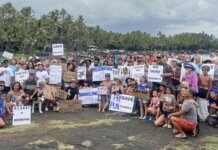
Despite massive opposition, WESPAC took final action recommending the reopening of commercial fisheries in the 3 to 200 nautical mile (nm) zone of Papahānaumokuākea. Additionally, they voted to reopen commercial fisheries in the 12 to 50 nm zone at Muliava, Sāmoa, 0 to 50 nm in the Marianas Trench Islands, and 50 to 200 nm at Jarvis and Wake Islands, and Johnston Atoll in PIH.
These final recommendations will move into further federal review by NOAA and for public comment. Papa- hānaumokuākea, with the extra protective national marine sanctuary designation layer, would require additional congressional steps.
That procedural detail matters, but only up to a point. The deeper issue is not simply what zone might be opened or under what regulatory conditions, but what it means to revisit commercial extraction in places already recognized as culturally sacred and ecologically critical.
At the WESPAC meeting, Papahānaumokuākea Native Hawaiian Cultural Working Group (CWG) member William Ailā Jr. warned the council that “those who do not learn from history are doomed to repeat it.” Commercial fishing, though labeled as “sustainable” and with the misappropriated term “pono,” risks repeating past mistakes.
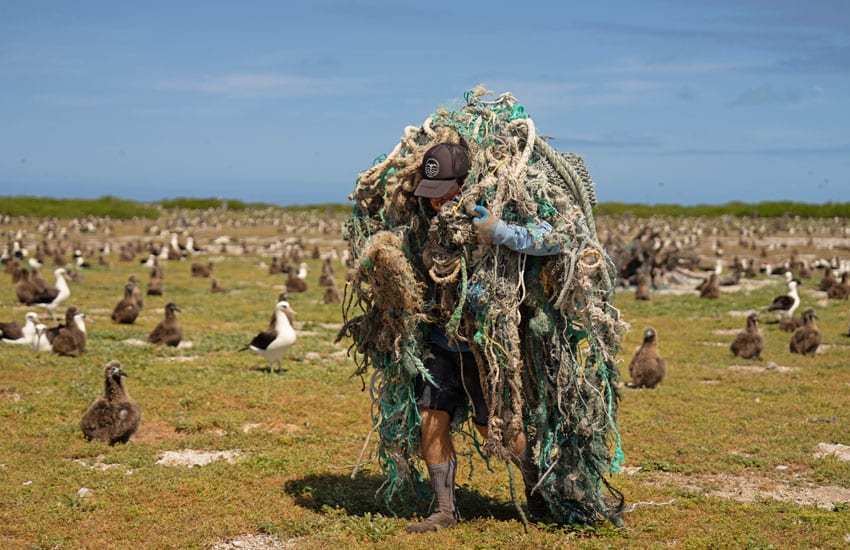
Since the commercialization of fishing in Hawaiʻi, particularly in the Northwestern Hawaiian Islands (NWHI), unsustainable and harmful practices have caused irreparable damage to both the ecological and cultural wellbeing of our ocean.
As early as the 1840s, foreign commercial traders nearly wiped out the Hawaiian pearl oyster from Pearl Harbor within a short 30-year period. After a massive population of large pearl oysters were discovered at Manawai (Pearl & Hermes), an estimated 100 tons of pearl oysters were extracted from Manawai in just three years (1927-1930) for global trade. Nearly a century later, that population still has not recovered.
Between the 1970s and the 1990s, the lobster fishery in the Northwestern Hawaiian Islands (NWHI) caused a near ecosystem collapse. Lobster populations plummeted, precious coral reefs were damaged by traps, and the endangered Hawaiian monk seal, which depends in part on lobster as prey, also declined. The fishery was closed in 2000 to avoid further catastrophe.
That same year, the shark population in NWHI was ravaged by a single commercial fishing vessel that killed 990 manō in just 21 days. In 2014, longliners reported a catch of 11,700 ʻahi from the now protected expanded area of Papahānaumokuākea, along with more than 5,600 sharks as bycatch, meaning one shark was caught for every two ʻahi. Most sea animals caught as bycatch do not survive.
Fishing is a rich cultural practice shared amongst many people. Native Hawaiians, like many of our Pacific cousins, have lived in harmony with the ocean through pono fishing practices since time immemorial.
However, commercial fishing is not a cultural practice, and it threatens our ability to live respectfully with the ocean.
In just a few decades of colonial, destructive, and profit-driven fishing, populations of important species have plummeted resulting in near-catastrophic ecosystem collapses. With this renewed push to restore commercial fishing, we no longer risk repeating past mistakes, we are deliberately choosing them.
Commercial fishing continued in Papahānaumokuākea until 2016. The late Uncle Buzzy Agard was one of the commercial fishermen in NWHI. Over a 10-year period, he witnessed a massive fish population decline from fishing in the area.
From that point forward, he along with many other respected kūpuna including Aunty Laura Thompson, Uncle Eddie Kaʻanāʻanā, Uncle Walter Paulo, Aunty Wilma Holi, Uncle Kawika Kapahulehua, Dr. Kekuni Blaisdell, Dr. Carlos Andrade and others lobbied state and federal agencies to establish a marine protected area called the Northwestern Hawaiian Islands Coral Reef Ecosystem Reserve in 2001.
Through their efforts, the CWG was established. Guided by these kūpuna, Papahānaumokuākea was born as a national marine monument in 2006, expanded in 2016, recognized as a UNESCO World Heritage Site in 2010, and designated a national marine sanctuary in 2025.
WESPAC argues that Pacific Island peoples carry an unfair burden of global marine conservation goals. But that argument ignores a central truth: these protections were never forced on Pacific Island peoples. We fought for them.
Indeed, we embody the words of late Tongan-Fijian writer Epeli Hauʻofa, “No people on earth are more suited to be guardians of the world’s largest ocean than those for whom it has been home for generations.”
Rather than framing ocean protection as a burden, we should instead ask why Pacific Island peoples, and our protected and sacred oceans, are forced to bear the unfair burden of industrial fishing.
As World Ocean Day on June 8 calls attention to strong marine protected areas, Hawaiʻi faces a harder question: what does protection require of us when the place in question is sacred, storied, and entrusted to future generations?
Papahānaumokuākea reminds us that some places are not meant to be measured only by what can be taken from them, but by the relationships they carry, the memory they hold, and the responsibilities they call forth.
Kenika Lorenzo-Elarco is a Kanaka ʻŌiwi educator and scholar from Waialua, Oʻahu. He is a member of the Papahānaumokuākea Native Hawaiian CWG and serves as the co-chair of the communications subcommittee. Kenika also serves as the community engagement manager at the W. M. Keck Observatory and a junior specialist faculty at UH Mānoa.