Eight ʻŌiwi Among PBN’s 2026 “40 Under 40” Awardees








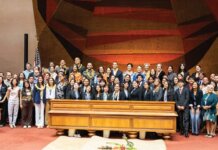
Pacific Business News’ annual “40 Under 40” awards celebrate some of Hawaiʻi’s most accomplished rising leaders and visionaries – young men and women who are shaping the future of our islands through their innovation, leadership and impact. Pictured (Top l-r): Alex Awo, director of habitat restoration programs, Mālama Maunalua; Kamaka Cardines, program director, Ulu Aʻe Learning Center; Chanel Josiah, COO, Hawaiʻi Community Lending; and Katie Kaʻahanui, director, Safe & Sound Westside, Department of the Honolulu Prosecuting Attorney. (Bottom l-r): Kalani Kaʻanaʻana, CEO, Hawaiʻi Green Growth; K.Sean Kekina, COO, Office of Hawaiian Affairs; Ivory Kealani Lloyd, director of marketing and events, Common Ground Kauaʻi; and Nahelani Parsons, founder and president, Pacific Government Relations. Hoʻomaikaʻi iā ʻoukou!
Cease-And-Desist Demand Sent to Berning
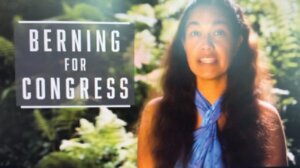
In early August, the ʻohana of the late Haunani-Kay Trask sent a Cease-and-Desist Demand to Nathan M. Berning, a candidate for Hawaiʻi’s U.S. Congressional District 1 (urban and central Oʻahu).
Berning, a nonpartisan challenging incumbent Rep. Ed Case, has been running a campaign ad that features Trask’s image, making it appear that she is endorsing his candidacy.
Trask, a renowned Native Hawaiian academic, educator, poet, and outspoken advocate for Hawaiian sovereignty passed away in 2021.
According to Hawaiʻi Public Radio, Berning has claimed that the image was that of an actress whose resemblance to Trask was “coincidental” and said that the concerns that were being raised “would be sent to his campaign manager in Tennessee.”
In an email to Ka Wai Ola, her sister Mililani Trask, a retired attorney and former Office of Hawaiian Affairs trustee wrote, “Any material that suggests, implies or trades on the appearance of [Haunani-Kay’s] association with this campaign is misleading to Hawaiʻi voters and deeply offensive to our family and to the lāhui.”
The Cease-and-Desist Demand reads, in part: “Your campaign’s placement of Dr. Trask’s identity in campaign communications creates … the false and deeply objectionable impression that she, her estate, or her ʻohana endorsed, supported, or is otherwise affiliated with your candidacy.
“Dr. Trask’s life and work were devoted to Kānaka Maoli sovereignty, resistance to colonialism, and the intellectual and political liberation of the Hawaiian people … The ʻohana affirmatively rejects any suggestion that Dr. Trask would have supported your candidacy, policies or political program.”
The Trask ʻOhana has demanded immediate cessation of the use of Haunani-Kay’s image.
“This matter touches directly on the integrity of our elections, the responsibilities of our media, and the legacy of one of the most important Native Hawaiian leaders of our lifetime,” said Mililani.
Based on his online presence, Berning appears to reside in Florida. The U.S. Constitution requires that all members of Congress be inhabitants of the state they represent at the time they are elected.
Multi-Venue Art Exhibit Celebrates 50 Years of Aloha ʻĀina
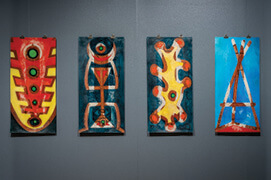
I OLA KANALOA: 50 Years of Aloha ʻĀina is a multi-venue exhibition of contemporary art presented in collaboration with the Protect Kahoʻolawe ʻOhana (PKO).
Established in 1976 to protect the sacred island of Kanaloa- Kahoʻolawe, in 2026 PKO celebrates a half-century of unwavering aloha ʻāina for the island, a legacy that continues to inspire demilitarization movements in Hawaiʻi and elsewhere.
The exhibit features the work of over 20 artists and unfolds across four venues in Honolulu: Honolulu Hale, Aupuni Space, Native Books at Arts & Letters Nuʻuanu, and KĪPUKA – Community Makers Space. It opened August 15 and runs through October 12.
Presented as part of a yearlong celebration, the project’s various strands address themes of military occupation, ecological restoration, political sovereignty, ea – self-determination, Hawaiian spirituality, and intergenerational healing. Admission is free and open to all.
The exhibition recognizes the interdependence between the natural environment, community, and our collective futures. It honors, celebrates, and gives thanks to the PKO, past, present, and future, as well as its early warriors, its many leaders and extended communities, for all that has been carried forward for over half a century.
Organized by Puʻuhonua Society, the exhibit was curated by artist Drew Kahuʻāina Broderick with support from Puʻuhonua Society’s Director of Curatorial Initiatives Josh Tengan and made possible by Teiger Foundation, with support from the Mayor’s Office of Culture and the Arts. It was developed in consultation with PKO leaders Davianna Pōmaikaʻi McGregor and Craig Neff.
Puʻuhonua Society Executive Director Emma Manu-Broderick said, “The Protect Kahoʻolawe ʻOhana has shown us what it looks like to turn shared values into collective action. The need … is no less urgent today than it was 50 years ago.”
For more information go to: puuhonua-society.org/activations/kahoolawe.
Daniels is New Mission Houses ED

Peter Daniels was recently named executive director of Hawaiian Mission Houses Historic Site and Archives. As executive director, he will focus on strengthening community partnerships, expanding public engagement, fostering inclusive conversations about Hawaiʻi’s history, and ensuring the long-term sustainability of the organization.
Daniels has more than 30 years of executive leadership experience in communications, community engagement, public affairs, and strategic partnerships. Most recently, he was director of campus communications for Kamehameha Schools Kapālama.
His previous experience in communications includes leadership roles with school districts and educational organizations throughout Hawaiʻi, California, and Washington State, where he was responsible for corporate communications, community en- gagement, strategic partnerships, and organizational initiatives serving diverse communities.
A graduate of Kamehameha Schools Kapālama, Daniels has a bachelor’s degree in speech and communication from Boston College and a master’s in journalism from Indiana University.
Hawaiian Mission Houses Historic Site and Archives is one of Hawaiʻi’s oldest educational and historical organizations and is a repository of one of the Hawaiʻi’s most significant collections of archival materials, historic structures, and cultural artifacts, including thousands of books, letters, journals, and one of the largest collections of 19th century documents written in ʻōlelo Hawaiʻi.
Three ʻŌiwi Receive Native Artists Award
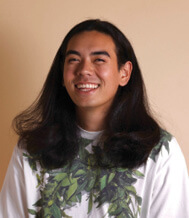


LIFT Award recipients (l-r): Rocket Ahuna, Malia Osorio, and Nainoa Rosehill.
– Courtesy Photos
Fashion designer Rocket Ahuna, multidisciplinary artist Malia Osorio, and painter/photographer Nainoa Rosehill are among the 15 Indigenous artists honored with 2026 LIFT – Early Career Support for Native Artists awards.
This award is presented annually by the Native Arts + Cultures Foundation (NACF) and provides selected artists with professional development, marketing support, culturally appropriate evaluation and a $15,000 award to develop and realize new projects that address critical issues including cultural sovereignty, environmental and social justice, healing and wellbeing, and systemic change.
Raised in Kapaʻa, Kauaʻi, Ahuna’s work draws from ʻike Hawaiʻi, hula, ʻōlelo and pilina to ʻāina to explore how fashion can carry ancestral knowledge and contemporary expressions of Hawaiian identity. A graduate of the Fashion Institute of Technology, his collections have included themes of place, genealogy and storytelling.
Based in Wahiawā, Oʻahu, Osorio’s commitment to Indigenous social justice has taken her to the front lines of struggles around the world including Maunakea, Standing Rock and Palestine. Her art documents and honors the communities participating in social justice movements worldwide and is inextricable from her activism.
Rosehill was raised, and still resides, in Puna, Hawaiʻi Island. His art is oriented towards sacred mysteries, archaeological ruins, geographies of crisis, and the limits – and potentials – of images. His work focuses on both the veneration of images and destruction of images. His art has been exhibited locally, nationally and internationally.
The NACF advances equity and cultural knowledge, focusing on the power of arts and collaboration to strengthen Native communities and promote positive change for Native Americans, Native Hawaiians, and Alaska Natives.
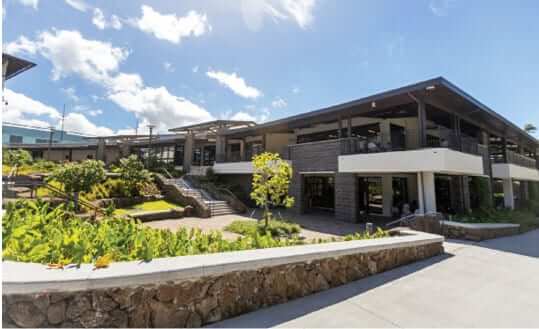
Punahou Unveils the Mary Kawena Pukui Learning Commons
POL Asks Court to Move Lawsuit to Hawaiʻi
On July 14, Papa Ola Lōkahi (POL) filed a motion asking the U.S. District Court for the District of Columbia to transfer Do No Harm v. U.S. Department of Health and Human Services to the U.S. District Court for the District of Hawaiʻi where Papa Ola Lōkahi operates and co- administers the Native Hawaiian Health Scholarship Program (NHHSP) at the center of the lawsuit.
The scholarship program directly benefits the citizens of Hawaiʻi, as program scholars commit to serving in Hawaiʻi, thereby increasing the number of primary care providers in the state.
“We are committed to defending this program for the students and the communities it serves. It is easier to defend the program in a court within our own community [rather] than in one nearly 5,000 miles away,” said POL CEO Dr. Sheri Daniels.
The NHHSP was established by Congress under the Native Hawaiian Health Care Improvement Act to address long- standing and persistent health disparities. Since 1991, the program has helped more than 300 recipients pursue health profession education and service placements throughout Hawaiʻi.
Do No Harm, a conservative group based in Utah, filed the lawsuit in March 2026, challenging the scholarship program’s Native Hawaiian eligibility criteria. POL moved to intervene in the case in May 2026, and the court granted the organization the right to intervene in June 2026.
Gallery ʻIolani Presents ʻAi Mama
An exhibit exploring the contemporary transmission of ʻike through the lifework and lived experiences of two master practitioners, ʻŌlohe G. ʻUmi Kai and Suluʻape Keone Nunes, is now open at Gallery ʻIolani at Windward Community College in Kāneʻohe through December 11.
The exhibit, ʻAi Mama, considers how knowledge is carried, embodied, practiced, and shared across generations through photographs, storytelling, and selected works and cultural materials. It offers a glimpse into the complex cultural and genealogical contexts that have shaped their practices and the knowledge they carry forward.
ʻAi Mama refers to the process of chewing food and sharing it with another; a metaphor for the transmission of knowledge. ʻAi Mama asks us to consider ʻike not as something static or contained, but as something living. Cultural knowledge is inseparable from the people and relationships through which it is transmitted; the stories surrounding the work are as important as the objects and images themselves.
ʻAi Mama is co-curated by Kapulani Landgraf and Noelle M.K.Y. Kahanu and is the second exhibition in a four-part exhibition series at Gallery ʻIolani centered on Hawaiian mentorship and the transmission of ʻike. It includes a series of public programs, artist conversations, workshops, and community gatherings designed to encourage dialogue and deepen engagement.
Admission is free and the gallery is open Tuesday – Saturday from 12:30 – 4:30 p.m. The opening reception for ʻAi Mama is on Friday, September 11, from 4:00 – 7:00 p.m. For more information visit gallery.windward.hawaii.edu/ai-mama.
Court Halts North Shore Development
Oʻahu’s Environmental Court ruled in July that the development of a new Ritz-Carlton resort at on Oʻahu’s North Shore (the area known as Turtle Bay) cannot proceed until additional studies are completed; the county must consider potential impacts to conservation lands and native species. The area is home to several endangered species protected by state and federal laws.
The court noted that the City and County of Honolulu relied on an old environmental report issued 13 years ago for the development. The outdated study lacks information on newly listed endangered species and changed ecological conditions. This ruling directs the county to require a supplemental environmental impact statement.
“The court’s ruling makes clear that the county cannot rely on outdated environmental reviews to approve development. Hawaiʻi’s environmental laws require decisions based on today’s science, not yesterday’s assumptions,” said Center for Biological Diversity Hawaiʻi and Pacific Islands Director Maxx Phillips.
The lawsuit was filed in February by Earthjustice on behalf of the Center for Biological Diversity, Conservation Council for Hawaiʻi, and community group Kūpaʻa Kuilima.
“Our community is thrilled that the court has upheld our environmental protections,” said Jessica dos Santos of Kūpaʻa Kuilima. “Kuilima is not only one of the last stretches of pristine coast on Oʻahu; it’s also a place of cultural significance beloved by residents.”
Since the original document was approved, significant new information has emerged about native wildlife and ecosystems in the project area. Hundreds of acres abutting the areas slated for development have been designated as conservation lands.
Endangered Hawaiian yellow- faced bees, placed on the federal endangered species list in 2016, have been documented in the project area. It is also an important nesting area for Laysan albatross and a critical habitat for endangered Hawaiian monk seals. None of this was addressed in the 2013 environ- mental report.
OHA Workday at Kākoʻo ʻŌiwi
Hui Kū Maoli Ola to Steward 400 Acres
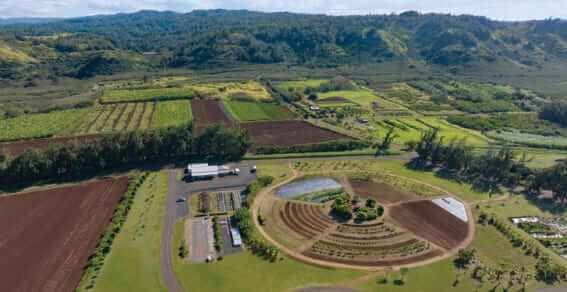
Ono Small Puaʻa, a new venture by Native Hawaiian-owned Hui Kū Maoli Ola, is stewarding nearly 400 acres of ma uka agricultural lands at Turtle Bay Resort on Oʻahu’s North Shore under a 20-year lease agreement that began in June. The land is owned by Host Hotels & Resorts.
Ono Small Puaʻa will revitalize Native Hawaiian agroforestry practices, support local kalo farmers, expand agricultural use, and reconnect the lands to their cultural, agricultural, and environmental purpose.
Founded over 25 years ago, Hui Kū Maoli Ola is recognized for its work in habitat restoration, native plant propagation, agroforestry, and community stewardship. Project partners Kumano i ke Ala and GO FARM Hawaiʻi will bring their experience in cultural agriculture, farmer training, and workforce development to the Ono Small Puaʻa initiative.
“We see the Turtle Bay ma uka lands as a place where restoration, agriculture, education, and community can thrive together,” said Hui Kū Maoli Ola Co-founder Matt Kapalikū Schirman. “Our vision is to help reconnect these lands to their cultural purpose through Native Hawaiian stewardship practices, native plants, and regenerative agriculture, while creating opportunities for local farmers, cultural education and long-term community engagement.”
Their vision includes diversified agriculture, orchard development, educational programming, native Hawaiian plant restoration, farm stands, and expanded opportunities for community-based farming.
East Maui Water Diversion Permits Ruled Illegal
The Environmental Court has invalidated the Board of Land and Natural Resources’ (BLNR) decision authorizing Mahi Pono to take 41.72 million gallons of water per day from East Maui streams in 2026.
In its July 17 ruling, the court found that BLNR breached its public trust duties. “This decision is a vindication not just of the people’s water rights, but of how the law is supposed to work,” said Wayne Chung Tanaka, Sierra Club of Hawaiʻi executive director.
“The Land Board ignored clear case law and direct orders by the Environmental Court, and its attorneys once again decided to waste everybody’s time and our taxpayer dollars defending a patently defective decision.
“I hope that the court’s ruling can finally break the Board’s decades-long habit of ignoring water waste and corporate water hoarding, at the expense of East Maui’s watersheds, estuaries, farmers, cultural practitioners – and our very constitution.”
The Court’s decision follows a series of rulings chastising BLNR for its actions impacting East Maui streams. As part of its decision, the court ordered BLNR to hold a contested case hearing over the East Maui stream diversion permit for 2026, which must also incorporate the issuance of the anticipated 2027 permit.
Community Intervenes in Proposed Hanalei Luxury Development
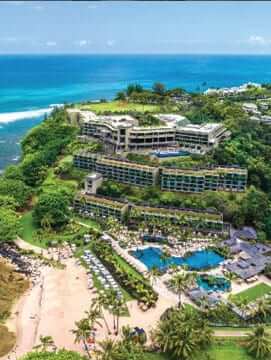
A community coalition successfully petitioned the Kauaʻi Planning Commission to intervene in proceedings over a luxury coastal housing development by Miami-based Starwood Capital Group’s 1 Hotel Hanalei Bay.
The proposed multi-million-dollar development proposal overlooking Hanalei Bay includes two-story six-plex housing units, a 4,500-square-foot event pavilion and expanded parking and infrastructure.
The groups, Mālama Kuaʻāina, Hanalei-Wainiha-Hāʻena Community Association, Hui Hoʻo- malu i Ka ʻĀina, and Conservation Council for Hawaiʻi, say the proposed development fails to comply with environmental and cultural protection laws and would harm sensitive coastal resources, imperiled native seabirds, scenic view planes, and Native Hawaiian cultural practices.
Already, 1 Hotel Hanalei Bay is associated with excessive seabird kills – more than 25% of Kauaʻi’s documented seabird deaths occur at this resort. Additional development, lighting, and activity would exacerbate this.
The intervention allows the community to submit evidence, present expert testimony, and help inform the commission’s decision on whether the project should proceed.
“Our coastlines are not sacrifice zones for luxury development,” said Caren Diamond, Mālama Kuaʻāina executive director. “Hanalei Bay is a living cultural and ecological treasure, and the community has a responsibility to protect it for future generations.”
E kala mai…
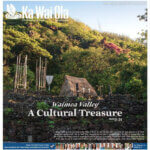
In the August 2026 issue of Ka Wai Ola, in the cover story “Waimea Valley: A Cultural Treasure of the Highest Order,” we indicated that Charlie Pietsch II acquired Waimea Valley in 1973. We have since learned that was not entirely accurate. Pietsch was part of a four-member hui of investors operating as Bishop Corporation (not to be confused with Bishop Estate) that purchased the valley to establish a botanical garden and entertainment venue. Waimea Falls Park was operated for 25 years by Associates Four, a partnership comprised of the same four shareholders of Bishop Corporation.