By Olin Kealoha Lagon
In 1820 a ship arrived carrying a printing press and the missionary whose grandson would help overthrow our kingdom. Both cargoes have landed again.
On Oct. 23, 1819, a small brig called the Thaddeus sailed out of Boston Harbor carrying two cargoes that would remake Hawaiʻi.
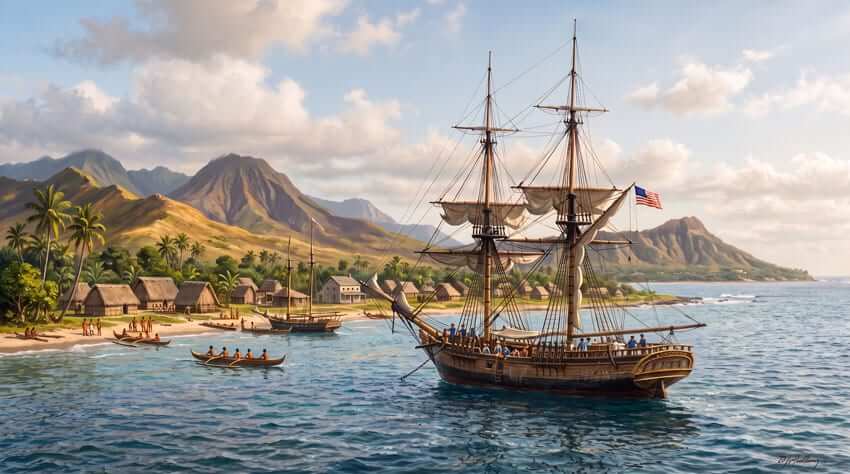
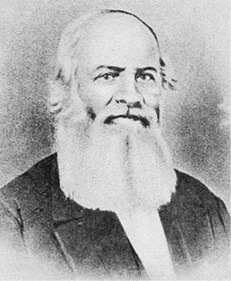
The first stood on deck. Asa Thurston, newly ordained, newly married, sent to bring the gospel here. Seventy-three years after that ship landed his grandson, Lorrin, would help lead the overthrow of our kingdom.
The second sat below in a crate. A used Ramage printing press, the kind you work one lever at a time. It came with an assignment. Yet less than two years after it landed, the first hand to pull its lever belonged to a chief.
This past June I was in Boston for AI (artificial intelligence) classes at MIT (the Massachusetts Institute of Technology), a birthplace of the field. One afternoon I stumbled into Park Street Church, where a plaque by the front door proudly marks their 1819 mission to the Sandwich Islands, the same mission that sent the Thaddeus. I knew nothing of this history. But after spending a couple of hours there, it hit me. We are living through a similar arrival. The ships of artificial intelligence have already dropped anchor, and they are carrying both cargoes again. The press and the passenger.
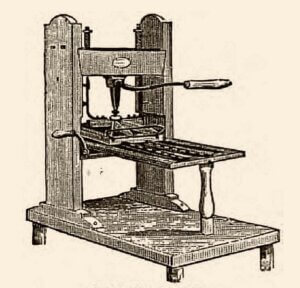
This time, the press is the most disruptive technology any of us will ever touch. And this time the passenger is not a person. It is everything that rides in beside a tool this powerful: the values of the people who packed it and the plans we were never part of.
Let me be super clear about what this story is not. I am not pointing a finger at any faith. Christianity didn’t overthrow our kingdom. Men chasing land and power did.
Many of our kūpuna chose faith with clear eyes and made it profoundly Hawaiian. The Baibala Hemolele. The hīmeni that fill our churches every Sunday.
Our queen, devoted to the end, composed Ke Aloha o Ka Haku from her imprisonment and asked God to forgive the sins of men. At the bottom of that manuscript, she named the missionary party who overthrew her government. She drew a line I am drawing here. Ke Aliʻi Pauahi, raised in a mission classroom, inspired by faith to bequeath one of the largest educational gifts in history. I honor all of it.
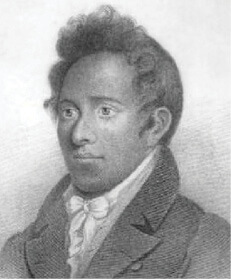
In fact, the reason that ship sailed at all was because of a Hawaiian. His name was ʻŌpūkahaʻia. A boy from Kaʻū who lost his parents in war, swam out to a trading ship, and landed in Connecticut.
He learned English. Then Latin. Then Hebrew. Then he sat down and started building the first attempt to write our language down.
He wanted to carry it home but died of typhus. It was the book about his life that convinced those New England volunteers to go. Elisha Loomis, the printer, signed up after reading it.
And he was not the only Kanaka on that manifest. Four Hawaiian men also sailed. John Honoliʻi, Thomas Hopu, William Kanui, and Humehume.
On a ship that changed everything, some of our people were on deck. Not enough of them. Not in charge of the voyage. But there.
Mission boards were shipping presses all over the earth in those years, each one carrying the same assignment. Print so that others may convert.
What our kūpuna did with that press has almost no parallel anywhere in history.
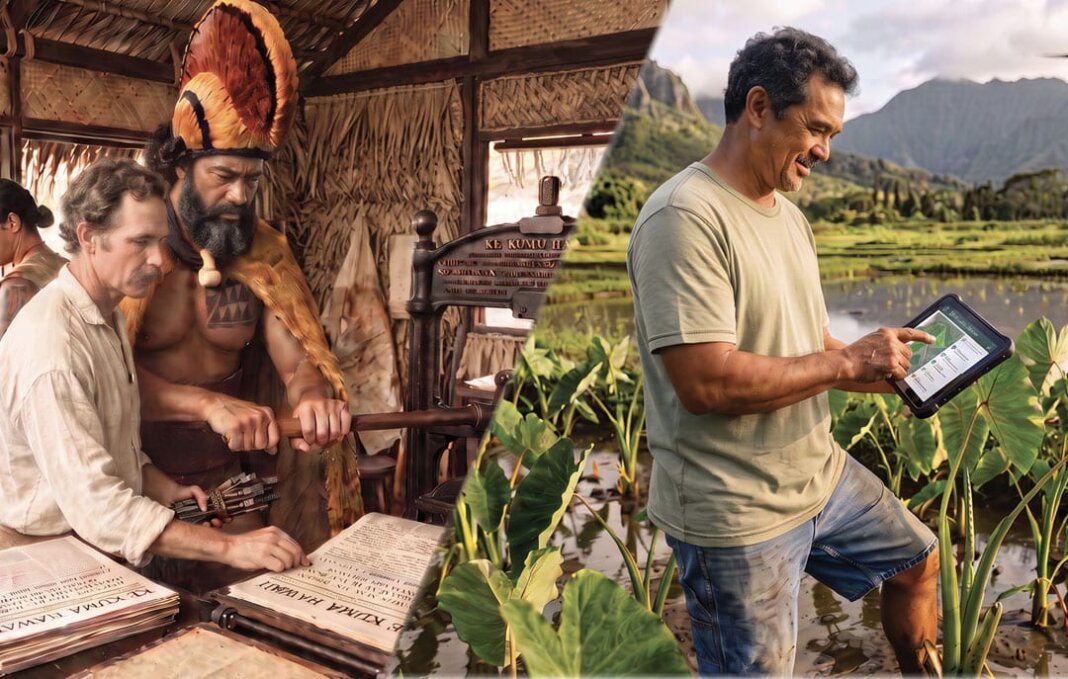
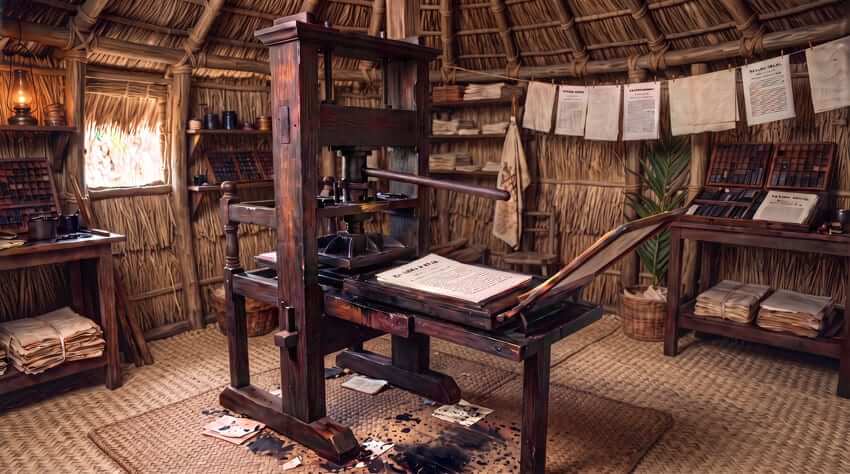
Within two years of the Thaddeus dropping anchor, ʻōlelo Hawaiʻi had a working written alphabet. On Jan. 7, 1822, the first sheet of ʻōlelo Hawaiian ever printed came off that Ramage press. The hand that pulled the lever to strike that very first sheet in Hawaiian belonged to Chief Keʻeaumoku.
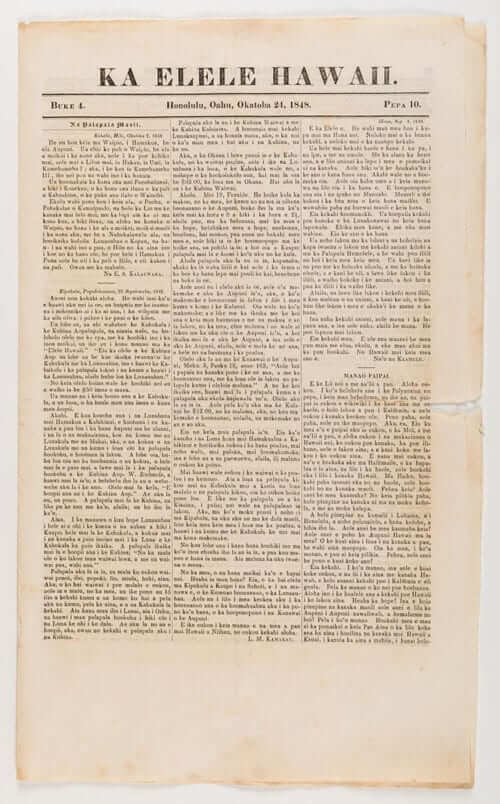
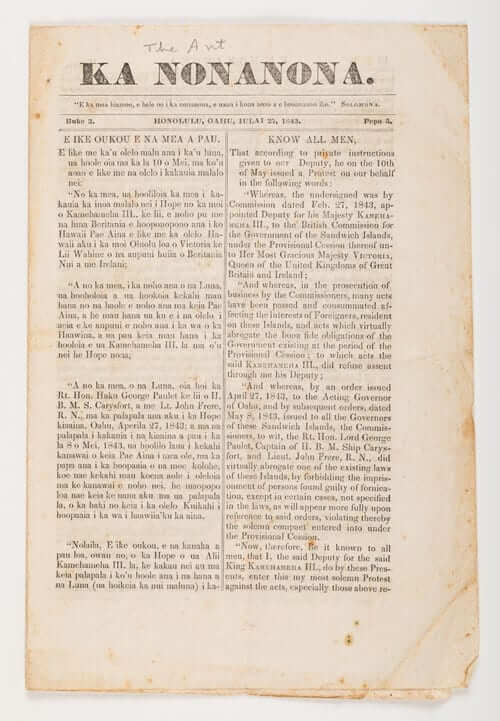
Our aliʻi leaned into literacy for all with urgency. Chiefs became students. Students became teachers. Kauikeaouli declared, “He aupuni palapala koʻu.” Mine is a kingdom of literacy. In 1840 he made it law and funded schools for every keiki in the islands. The U.S. did not catch up to universal education nationwide until 78 years later.
Schools and newspapers flourished. Just a dozen years after that first sheet of paper, adult Hawaiian literacy had exploded from near zero to 91%. On the continent, the U.S. sat around 78%.
Our kūpuna recorded moʻokūʻauhau and moʻolelo. Kanikau for the dead. The old prayers and practices. Fishing reports, love stories, political beefs, letters from kalo farmers giving government officials heat. Governance, commerce, history, weather, science. Puakea Nogelmeier says those papers held everything the internet is today.
Foreign tech landed here in 1820 with somebody else’s agenda. Inside a single generation, our kūpuna had learned it faster than any nation on earth and used it to build a national memory. They leaned all the way into a foreign technology and came out the other side still Hawaiian.
Then, in 1893, the other cargo finished unloading. Asa’s grandson and the Committee of Safety illegally overthrew the kingdom. The board that sent his grandfather had put the assignment in writing before the Thaddeus ever left the dock: your work is to be wholly a labor of love. That was the instruction. The grandson made no such pledge.
Our kingdom fell. The library our kūpuna built did not. It is still sitting there. Nogelmeier counted it. They filled 125,000 newspaper pages between 1834 and 1948, and less than 1% has been translated and published.
Almost everything written about who we were traces back to just four authors at the center of that 1%. Malo. Kepelino. Kamakau. ʻĪʻī. We have read only a tiny shelf. My mother was born Evelyn Mary Kalani Kamakau. Even I have read only a sliver of my own moʻokūʻauhau.
That is the manifest I want us to hold together. Two cargoes. Our own people on deck. A library we have barely opened. Because the second ship is already unloading at our piers.
Let me tell you two stories about what is coming. The first one keeps me up at night.
AI is not going to take your job. Something worse is coming. The companies that fully adopt it are going to compete with yours, with pressure unlike anything we have felt.
We are entering an age where a very small team can build a company doing hundreds of millions in revenue. Take Medvi. One man in Los Angeles started it with about $20,000 and a stack of AI tools. He used them to write the code, make the ads, and run customer service. Then he hired his only employee, his younger brother.
Their first full year they did $401 million selling weight loss drugs online. The New York Times went through their books. This year they are on track for $1.8 billion. Search the name and you will find an FDA warning letter and lawsuits over how that marketing was done.
Could your company compete with that? Could it compete with the Medvi of your industry, running agents that cost pennies per task? Companies like this are already knocking on your customers’ doors – and they are cheaper than you.
This second story is one reason I still have hope. I am almost embarrassed to write this because it makes me sound like a kook, but I have spent my life as a technologist calling the future, and I am calling this one too.
There are keiki alive in Hawaiʻi today who will live to see their 150th birthday. We are pointing all of this technology at the things that make us sick, and it has already started.
Take diabetes. It has hit my ʻohana hard, and probably yours too. One of its cruelest tricks is diabetic retinopathy. It scars the eyes until the lights go out. My sister lost her sight to it. I watched it happen and could do nothing. Catching it early used to require a specialist, an appointment, a referral, a long wait.
The FDA has already approved an AI that can make that call on its own. No doctor in the room. Just a photo of your eye, and an answer in minutes.
Then take cancer. Native Hawaiian women have the highest breast cancer death rates in these islands, and too often it is found late.
Look at what happened in Sweden. Researchers there ran the first randomized trial of AI reading mammograms, more than 105,000 women, with results published in The Lancet this year. The AI caught 29% more cancers with no increase in false alarms. Most of the extra ones were small and early, the kind that can still be beaten.
Same mammogram. Just a different set of eyes that never get tired, never have an off day, and keeps learning.
Now take the heart, the number one killer of our people, and often silent. Doctors at Mayo Clinic taught an AI to spot a weak pump from a single Apple Watch reading.
So where does it end? A study published this summer in the journal, Aging, asked exactly that. Suppose we cured every disease and reversed every part of aging that science can ever reach. Random errors in our DNA would still cap human life somewhere between 146 and 194 years. That is one ceiling. And if we ever learn to fix those errors, the same math points to nearly 1,800 years.
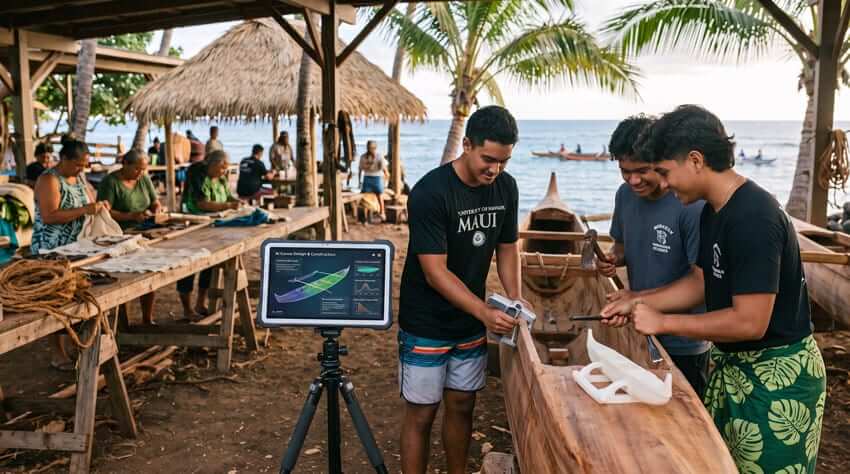
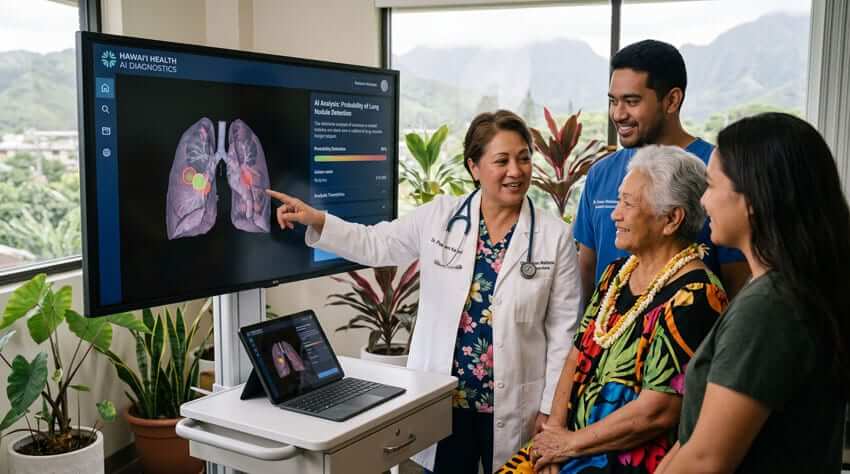
Hawaiʻi has the longest life expectancy in America at 81.9 years. Kānaka live 77.4, which is about what the average American lives. We get none of our hometown advantage. Ten years behind the longest living group in our own islands. Almost everything between where we are and whatever our ceiling turns out to be is exactly the ground AI is already changing fast. And remember, this is the dumbest AI will ever be. In medicine it has barely started.
You are going to meet a thousand more stories like these every year. A wild mix of horror and hope. Both cargoes, unloading at once.
So now what?
If I had a magic wand, I would stop the whole world from building this until we were certain it was safe. I do not have one.
So, each of us has to draw a line. Actually, there are two.
The first one you do not get to draw. The world draws it for you. You already deal with hundreds of AI systems every day, and they work for whoever built them. The phone in your pocket. The grid, the credit card swipe, the dating app, the algorithm that decides if you get the loan. And, unlike the last machine, this one does not wait for a hand. A printing press sat still until a person pulled the lever. This thing moves on its own. That line creeps closer every day whether you like it or not.
The second is yours alone. How much of this are you going to let in on purpose?
I am not telling you to do what our kūpuna did, because we cannot. They had a kingdom. They had aliʻi who could turn a nation in a decade.
What is still available to us is the posture. They did not stand on the beach arguing about whether the ship should have come. They took the machine, learned it faster than anyone on earth, and pointed it at what they loved. They came out the other side still Hawaiian.
I believe that pathway is open again, and I will tell you where I think it starts. Remember those 125,000 pages of our own ʻike, still sitting in a language most of us cannot read. Nobody on this earth is better positioned to bring that waiwai back than we are.
But nobody starts there. So, let’s start with literacy. Again. And start small.
Kilo your day, at work or at home. What do you spend hours doing that you wish went faster? Write it all down. Grant reports for your hālau? Testimony due Thursday you have not started? Hunting down and filling out scholarship applications for your keiki? Finding time to study ʻōlelo Hawaiʻi? Get a paid version of one of the main models, around $20 for one month. Feed it your list. Tell it to interview you, to understand you deeply, and only then to work the list with you until you land on one thing worth fixing. Not a party trick. Something that gives you back hours or takes a weight off your shoulders.
Then let it teach you. Ask it a million questions. Do not worry if you are not technical. When you get stuck, and you will, do not reach for the phone to call your niece. Ask the machine. Make it explain until you understand. Nobody can hand you this one. You have to build it yourself, and you can do almost anything with a patient coach that goes step by step. Keep going until it has changed one real thing in your daily life.
From there you will understand in your naʻau one manini part of what this thing is. And manini is the honest word. You will have seen the shoreline at night. What sits past it is an ocean nobody has crossed yet. But standing on that shore is enough to put the hoe uli, the steering paddle, back in your hands, where you can point this tech in any direction you choose, including away.
And if one small lever feels like it could never matter, there is one more piece of ʻike kūpuna I want you to hold. In 1897, four years after the overthrow, our kūpuna answered with the very machine the Thaddeus delivered.
They gathered signatures district by district, by horseback and canoe and on foot. When they finished, the Kūʻē petitions carried the names of more than half of our entire people. Not half the adults. Half of everybody.
And you cannot sign your name if nobody ever taught you to write it. That is the press, still working, 75 years after the first impression.
Those pages went to Washington, D.C., and helped make sure the annexation treaty never got the votes it needed. Annexation came the next year anyway, without a treaty, by a resolution we never consented to. But it did not come with our silence.
So go back to that room one last time. Jan. 7, 1822. A grass hale in Honolulu. The press stands ready, the type is set, and Elisha Loomis, the printer who crossed an ocean because of ʻŌpūkahaʻia’s book, invites a chief to step up to the machine.
Keʻeaumoku had been leaning in from the start. He housed the missionaries when they landed. He learned the new letters, and his English skills made him their interpreter. That afternoon the composing stick was placed in his hands and he set a line of type himself, shown how to place the letters, shown where to put his hand, shown when to pull.
He was not a printer. No Hawaiian was. Did he know what he was kicking off? The schools, the newspapers, the 91%, the petitions, a lāhui writing itself into memory? Nobody could have predicted all of that. But our aliʻi knew mana when they touched it. Maybe he felt the whole thing in the lever.
A ship is in the harbor again. Maybe you feel unready. Maybe this machine feels like it belongs to somebody else. It does. So did the last one.
Keʻeaumoku did not wait until he understood it all. He put his hand on the lever and pulled.
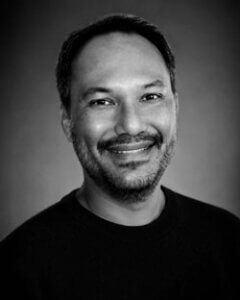
Olin Kealoha Lagon is a Kanaka ʻŌiwi technologist and kalo farmer from the Waimānalo homestead. Over three decades he has co-founded companies and organizations like Purple Maiʻa, all with the same aim: putting technology to work for the lāhui.