Honoring the Lives of MMIWGM in Hilo
POL Defends Health Scholarship Program
On May 15, the Native Hawaiian Legal Corporation (NHLC), the Native American Rights Fund (NARF), and Hobbs, Straus, Dean & Walker, LLP filed a motion to intervene on behalf of Papa Ola Lōkahi (POL) in a federal lawsuit brought by the conservative organization Do No Harm to challenge the constitutionality of the Native Hawaiian Health Scholarship Program (NHHSP).
In recognition of the U.S. government’s trust responsibilities to Native Hawaiians, Congress established the NHHSP more than 30 years ago as part of the Native Hawaiian Health Care Improvement Act to increase the number of Hawaiian health care professionals in medically underserved areas across Hawaiʻi.
“The program exists because Congress recognized a critical need and a trust obligation to address severe healthcare shortages in Native Hawaiian communities,” said Makalika Naholowaa, NHLC executive director.
Papa Ola Lōkahi jointly administers the program with the U.S. Health Resources and Services Administration. Since its creation, the program has helped more than 300 scholars pursue health care profession education.
“This program helps strengthen healthcare access in medically underserved communities across Hawaiʻi, and we remain committed to that work,” said Papa Ola Lōkahi CEO Sheri Daniels,
“The U.S. has acknowledged and affirmed its trust responsibility to Native Hawaiians for decades,” added NARF Executive Director John Echohawk. “Defending these promises is a matter of justice and dignity and is critical for the wellbeing of Native communities.”
Two ʻŌiwi Named 2026 FPF Fellows
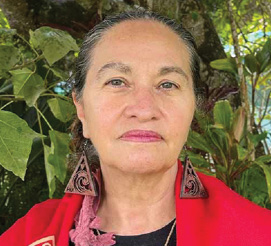

The First People’s Fund, a national organization dedicated to uplifting Indigenous artists and culture bearers, recently announced their 2026 fellows and two ʻŌiwi are among them: Pua Case was named a Cultural Capital (CC) Fellow, while Nāwāhineokalaʻi Lanzilotti was named a Native Performing Arts (NPA) Fellow.
Case, from Hawaiʻi Island, is a kumu hula, public school teacher and Maunakea kiaʻi. She has interwoven her college education with traditional teachings from her kūpuna. Active in the Maunakea movement for the past decade, Case currently serves as the lead coordinator of Mauna Kea Education and Awareness.
The CC Fellowship offers financial support and guidance to culture bearers and artists rooted in their communities and committed to passing on ancestral knowledge to future generations.
Lanzilotti is a sound artist and director from Mānoa, Oʻahu, and founder of nonprofit Pulse Oceania – an Indigenous performance incubator rooted in aloha ʻāina. Her art explores transformations of sound inspired by the movement of light across the clouds, rain and ʻāina using vocals, electronics and the cello.
The NPA Fellowship helps Native Artists create and perform in theatre, music, dance, etc. It provides network-building, professional development training, and funding to work toward a career in performing arts.
Since 1999, First Peoples Fund has honored over 550 artists, distributing over $10 million. This year, 35 artists in three categories were named FPF fellows, each of whom received a $10,000 grant to pursue their work.
Celebrating Traditional Storytelling

On June 20, the PAʻI Foundation will present a special oral storytelling event, Ola Nā Moʻolelo, featuring Kealoha Kelekolio at the PAʻI Arts & Cultural Center in Kakaʻako.
Long before adopting the Latin writing system introduced to Hawaiʻi by missionaries, our history, stories and genealogies were memorized and carried forward from one generation to the next.
In this vein, Kelekolio, a respected cultural practitioner and storyteller, invites audiences to step into the rich world of Hawaiian oral tradition as he presents an evening of moʻolelo that have been passed down over centuries.
Kelekolio will guide listeners on an immersive journey, bringing to life the epic battle between Pele and her sister, Nāmakaokahaʻi, and captivate them with the fascinating world of kupua – the demi-gods who embody the connection between nature and the divine.
Throughout his career in performing arts – which includes theatre, dance, and Hawaiian cultural education – Kelekolio has performed with Tau Dance Theatre appearing on stages across the continent including Lincoln Center. He also worked as a storyteller at Disney Aulani Resort.
For information or to purchase tickets go to paifoundation.org.
EPA Rejects Hawaiʻi’s Clean Air Plan
The Environmental Protection Agency (EPA) rejected Hawaiʻi’s Regional Haze State Implementation Plan on May 15, illegally overriding the state’s plan to clean up haze-causing pollution from aging oil-burning power plants on Hawaiʻi Island and Maui.
Without the plan in place, 8,500 tons of sulfur dioxide and nitrogen oxides will continue to pollute the air around these plants each year, adversely affecting nearby communities and resulting in dirtier air at Hawaiʻi Volcanoes and Haleakalā national parks.
“This action is another in a string of EPA efforts to keep old, inefficient power plants running no matter the costs to the people and places those facilities harm,” said National Parks Conservation Association Clean Air Program Director Ulla Reeves.
Under the Clean Air Act, states develop plans every 10 years to reduce the haze pollution that obscures views in national parks and wilderness areas. Hawaiian Electric (HECO) proposed, and agreed, to retire plants instead of installing the required pollution controls.
But then in August 2025, HECO reversed course asking the EPA to release it from its commitments, citing speculative “grid reliability” concerns. EPA accepted those claims without independent analysis.
“Once again, the law and facts don’t matter at Trump’s EPA, which would rather protect the fossil fuel industry instead of our environment,” said Isaac Moriwake, managing attorney for Earthjustice’s Mid-Pacific Office.
“What’s worse is that the EPA is letting HECO renege on its own promise to shut down these plants, which are among the costliest, most unreliable plants in the nation.”
“Their legal theory won’t hold up in court, but in the meantime, families will keep breathing the pollution the Clean Air Act was supposed to clean up,” added Abi Vijayan, senior climate attorney for the Natural Resources Defense Council.
New ʻŌiwi-Owned Soil Lab Opens in Honolulu
Pieper Named Senior VP at ASB
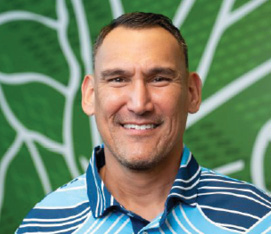
Billy Pieper has been named senior vice president, director of commercial banking at American Savings Bank (ASB). Pieper has more than 20 years of experience in the financial industry. Prior to joining ASB in 2021, he held positions at Barclays Bank and Bank of Hawaiʻi.
At Kamehameha Schools Kapālama, Pieper was a stand-out athlete in both football and baseball and won a football scholarship to UCLA. After earning his BA, he played minor league baseball for a couple of years, then enrolled at UH Mānoa earning an MBA.
Pieper serves as board chair for Hawaiʻi Community Lending and RiseHI Collective. He also serves on the boards of ʻIolani Palace, Positive Coaching Alliance, and ʻAha Pūnana Leo, and on the advisory council for Housing Hawaiʻis Future.
He has also served on the boards of Pacific Islanders in Communications and Ke Aliʻi Pauahi Foundation, as a Bishop Museum trustee, and a member of the Polynesian Voyaging Society’s advancement committee.
Pieper is an Omidyar Fellow, a Pacific Century Fellow, and in 2024 was named a Hawaiʻi Business magazine “20 for the Next 20” leader.
Lipe Appointed Poʻo Kula of KS Kapālama
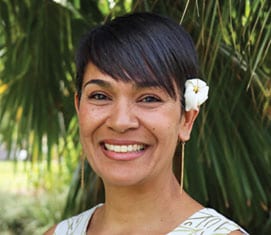
Dr. Punihei Lipe has been appointed poʻo kula (headmaster) of Kamehameha Schools Kapālama (KSK) overseeing the 600-acre campus that enrolls some 3,200 haumāna in grades K-12.
She was selected after a rigorous search that spanned months and was informed by input from more than a thousand community members including current haumāna, kumu, parents, and alumni.
Lipe has an extensive background in Hawaiian culture-based education and more than two decades of leadership within the UH system, serving in various roles including: director of Hawaiʻi Papa o ke Ao Native Hawaiian Place of Learning Advancement Office; director of the Institute for Hawaiian Language Research and Translation; and director of the Truth, Racial Healing and Transformation Campus Center.
Her own educational journey began at Pūnana Leo o Honolulu. From there she attended Ke Kula Kaiapuni o Waiau before enrolling at KSK. After graduating, Lipe attended UH Mānoa earning a BA in Hawaiian studies and later a Ph.D. in educational administration. She also holds a master’s degree in counseling psychology from Chaminade University. She begins her new role on June 15.
Award-Winning Film From ʻŌiwi Producer Lucero

Paper Bag Plan, an independent film from Blue Sun Pictures produced by Executive Producer Keʻalohi Lee Lucero, and written and directed by her husband, Anthony Lucero, is now streaming internationally.
The film has won 17 awards on the film festival circuit and was screened at Consolidated Theatres at Ward in September 2025. The poignant and moving drama tells the story of a terminally ill father who teaches his wheelchair-bound adult son to bag groceries in preparation for a life of independence once he is gone.
Lucero grew up in Kaʻaʻawa on Oʻahu, graduated from Kamehameha Schools Kapālama and went on to UH Mānoa earning bachelor’s and master’s degrees in communication. While attending school she interned at Hawaiʻi Public Television and eventually become the station’s youngest director.
After college, she moved to the continent to pursue a career in the film industry, starting as an assistant editor on Baywatch Hawaiʻi and eventually working her way up to co-executive producer of America’s Got Talent.
Paper Bag Plan can be viewed on Amazon Prime, YouTube, Google Play, and iTunes.
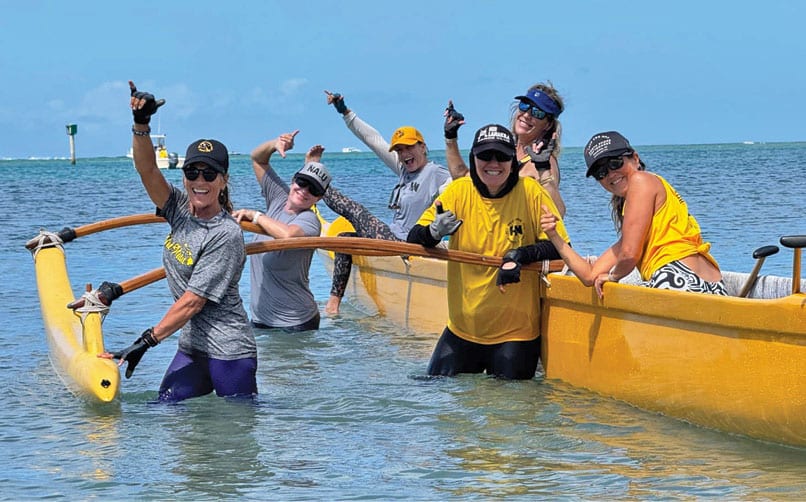
Race Honors Late Waterman Kalā Kukea
McClellan Named 2026 Communicator of the Year
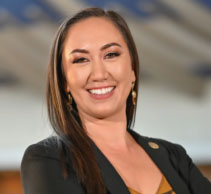
Makana McClellan, director of communications for Gov. Josh Green since 2022, has been named the 2026 Communicator of the Year by the National Association of Government Communicators (NAGC). She is the first person from Hawaiʻi to receive this honor.
NAGC advances excellence in government communications across federal, state, county, local, military and tribal governments, and recognizes leaders who demonstrate innovation, professionalism and exceptional service in public sector communications.
McClellan leads external communications for the governor’s office, coordinating with public information officers across every department in the executive branch. Under her leadership, a more unified statewide communications network has been established, improving coordination and consistency across agencies.
Prior to working for the governor, McClellan held positions at Shriners Children’s Hospital and The Queen’s Health Systems.
A graduate of Kamehameha Schools Kapālama, she has a BA in journalism from Hawaiʻi Pacific University and an MBA from Chaminade. She served on the state Board of Education for four years, was recognized in 2025 with a President’s Leadership Award from PRSA Hawaiʻi, and received a Women Who Mean Business award from Pacific Business News in 2020.
Feds Reverse NH Education Cuts – For Now
Following a request by Sen. Brian Schatz in early May, U.S. DOE Secretary Linda McMahon has agreed to keep Native Hawaiian educational programs fully funded for at least another year.
Some $46 million in federal money that Schatz, a senior member of the Senate Appropriations Committee, previously secured in Congress is guaranteed to continue funding more than 60 early childhood education sites across Hawaiʻi, along with home visiting programs for keiki under 5, workforce development for parents, and Hawaiian language immersion programs. These programs serve more than 3,000 families.
“This is good news for Hawaiʻi,” said Schatz. “This money helps thousands of young kids develop learning skills and gives Native Hawaiian families more affordable child care options.”
The looming threat of federal funding cuts put a number of Native Hawaiian programs at risk – including the popular Tūtū and Me program operated by nonprofit Partners in Development Foundation (PIDF). In April the organization announced the closure of 17 of its 25 sites.
In a formal statement in response to the May 7 announcement, PIDF CEO Shawn Kanaʻiaupuni expressed gratitude to Schatz but cautioned, “we still do not know how much funding will ultimately be released, when funds would become available, or whether PIDF will receive the support necessary to sustain all current programs, staffing, and sites.
OHA Trustees Visit Maui and Kauaʻi

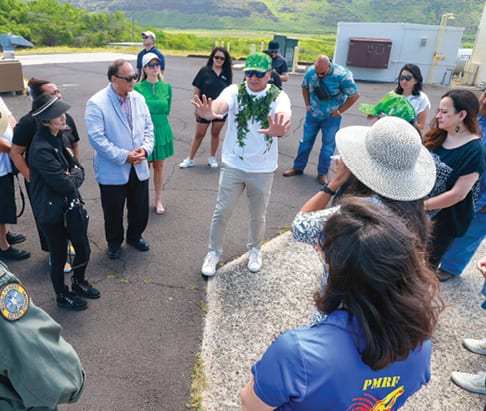
During the month of May, the Office of Hawaiian Affairs (OHA) Board of Trustees and select staff traveled to the islands of Maui and Kauaʻi for the organization’s first two annual island community meetings of 2026. While on Maui during the week of May 4, trustees traveled upcountry to the Waiohuli Community Center on Hawaiian Homes Land in Kula, and also visited the Maui Arts & Cultural Center (MACC) in Kahului – described as the artistic and educational heart of the community. In the top photo, MACC President and CEO Art Vento provided OHA with a personalized tour of the center. During the week of May 11, trustees traveled to Kauaʻi. There, they had the opportunity to visit the Peʻe Kauaʻi Farm Site on the west side of the island managed by nonprofit Kumano i ke Ala which serves as a community space for cultural education and kalo farming. They also visited the Pacific Missile Range Facility (PMRF) at Barking Sands, where they were met by Kaulana Mossman, PMRF community planning liaison officer, and a small hui of PMRF staff. In the bottom photo, Kauaʻi and Niʻihau Trustee Dan Ahuna spoke briefly to the group about Native Hawaiian concerns relative to the military’s land stewardship and questions around whether military bases make Hawai’i more – or less – safe. – Photos: Nelson Gaspar