
By Lilinoe Kauahikaua
There is something a peer can offer that no degree or credential can teach.
I’m still here. I didn’t forget where I came from. I made my way through, and I’m not letting you do it alone.
That knowing is at the heart of peer support. Because they lived it. It comes from living through substance use, incarceration, loss, recovery, healing, and rebuilding a life – and choosing to turn around and walk beside somebody else who is also struggling.
A peer supporting someone through crisis may find themselves face-to-face with reliving their own experiences. Like a mirror, shared one recent trainee, seeing someone repeat a cycle she recognized from her own life.
So, we look not only how we train peers, but also how we hold them.
In Hawaiʻi, we’ve always known this. We go to the ʻāina. We oli. We know which auntie to call. We understand that healing does not happen apart from culture, community, and place.
The 58-hour Kaʻao-Based Peer Recovery Specialist training was built from that knowing, grounded in the stories and practices of our people, and how we understand our relationships to one another and the world around us. Developed in partnership by Papa Ola Lōkahi, Lonoa Honua, and Lewin Strategies, and Funded by the Department of Health-Alcohol & Drug Abuse Division and the University of Hawaiʻi Substance Use Professional Development Board, the training weaves cultural teachings and national peer-support standards through Kaʻao.
Built by peers, for peers.
The five stages of the Kaʻao framework were taught to us by Dr. Taupōuri Tangarō and Kekuhi Kealiʻikanakaʻole. Kaʻao gives language to a journey peers already know: Hua, the seed, our why; Haʻalele, what we leave behind; Huakaʻi, the journey; Hoʻina, the return; and Hāʻina, the embodiment.
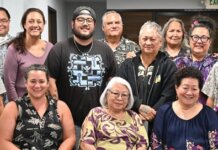
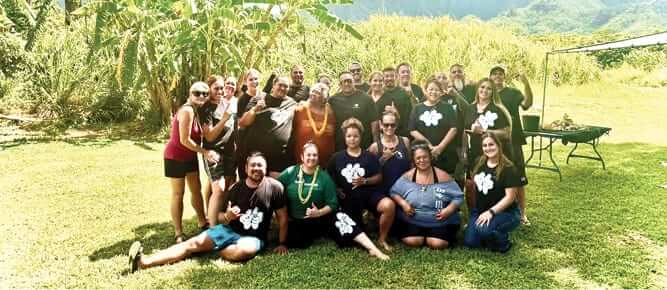
Twenty-two peers completed the pilot this summer. Sixteen had never received formal peer training.
In the loʻi, feet in the mud, memories surface. We carried away a teaching from Aunty Kekuhi: somewhere back in time, this ʻāina has already experienced what you are experiencing now.
We aren’t the first to experience what we’ve experienced. And we won’t be the last.
The ground beneath us has survived. So have our people.
And recovery is not only about surviving.
One peer pointed out how recovery can teach you to watch constantly for the negative. But healing had taught her to notice something else.
Maybe it was the sunrise … the birds in the morning … a plumeria opening.
Maybe that was the peace we were looking for the whole time.
Lilinoe Kauahikaua, MSW, is the education and training manager at Papa Ola Lōkahi.