OHA Revives ʻAha ʻŌpio Civic Engagement Program After 20 Years
RIMPAC Protested Across the Pae ʻĀina
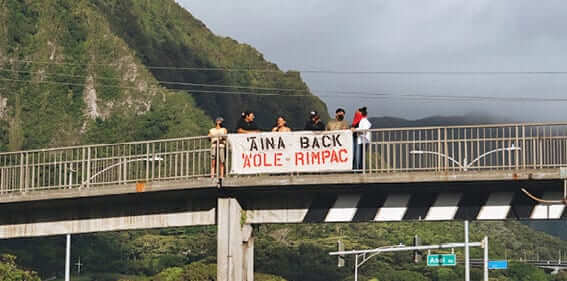
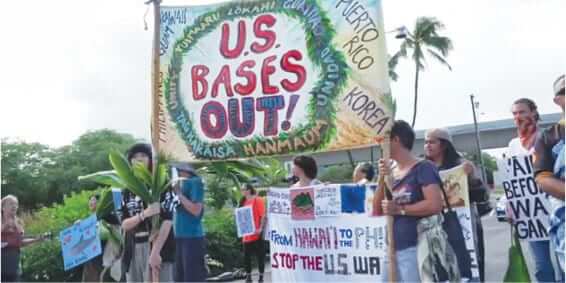
On June 24, kiaʻi from the Hoʻopae Pono Peace Project, a coalition of organizations, gathered just after sunrise outside the U.S. Pacific Fleet headquarters near Pearl Harbor to bless and honor the lands, creatures and people harmed by RIMPAC. Meanwhile, in Kailua and Kāneʻohe, members of Hui Aloha ʻĀina o Koʻolaupoko hung banners protesting RIMPAC from overpasses. On June 28, kiaʻi from Malu ʻĀina and Protect Pōhakuloa organized an afternoon RIMPAC protest along Bayfront Highway in Hilo.
RIMPAC (Rim of the Pacific), is the biennial international military exercise conducted in Hawaiʻi. This year, it began on June 24 and will conclude July 31. Military personnel from 31 countries are currently in Hawaiʻi, at the invitation of the U.S., for five weeks of war games that will include over 30 surface ships, 206 aircraft, at least five submarines and about 30,000 personnel.
The protests are part of a larger, decentralized movement of organizations and individuals working to stop RIMPAC. The Stop RIMPAC website says, in part, “the bombing of a peaceful, neutral country under an illegal occupation has already gone on too long … killing dolphins and whales, destroying sacred places, and polluting the ocean with tons of toxic chemicals to better prepare for war is unacceptable.”
In addition to raising awareness of the harm that RIMPAC causes, the movement is circulating an “END RIMPAC” sign-on letter online. Key areas of concern outlined in the letter are RIMPAC’s negative environmental, social and political impacts.
Addressed to Gov. Josh Green, Hawaiʻi’s Congressional Delegation, Admiral Samuel J. Paparo, Admiral Stephen T. Koehler, and the heads of states of all countries participating in RIMPAC, the letter calls for the immediate and permanent termination of RIMPAC, restoration of the lands and waters affected by RIMPAC, and for the return of all Hawaiian lands in safe and healthy condition once leases expire.
RIMPAC includes amphibious operations, gunnery and missile exercises, anti-submarine warfare and a sinking exercise (SINKEX) of a decommissioned naval ship. The devastation to the marine ecosystem cannot be overstated.
According to the letter, during RIMPAC, a “take” (i.e., kill) permit is granted to the military by NOAA (National Oceanic and Atmospheric Administration) allowing for the deaths of over a million marine animals per cycle as acceptable collateral damage from the missiles, explosives and gunfire deployed during live-fire exercises.
SINKEX bombing exercises release large quantities of toxins into the water including PFAS, PCBs, asbestos and heavy metals that poison fish and contaminate the marine food chain. Turtle nesting areas and coral reefs are severely harmed by amphibious landing exercises. And sonar used during naval war games terrify and disorient cetaceans like whales and dolphins, often resulting in death.
The letter states that besides the devastating environmental consequences, sex trafficking increases dramatically during RIMPAC. Bars and strip clubs even hang “Welcome RIMPAC” banners outside their establishments during the exercises. For more information or to sign the letter go to endrimpac.org.
Oʻahu Rainwater Capture Program

Nonprofit Mālama Maunalua recently launched its Get Rain Ready Rainwater Capture and Incentive Program in collaboration with the City and County of Honolulu Department of Facility Maintenance. The program’s goal is to help Oʻahu’s communities reduce flooding and pollution in our waters.
They are currently seeking applicants from homeowners for the free direct-install program. Selected applicants will receive a free rain barrel installed on their property, a rain garden, or a native tree. Each of these rainwater capture solutions help to reduce storm water runoff within that watershed.
“Rainwater catchment systems, like rain barrels, are crucial for mitigating storm water runoff, especially during heavy rainfall events like we’ve been experiencing,” said Mālama Maunalua Executive Director Doug Harper. “Whether the homeowner chooses the rain barrel, a rain garden, or a native tree, these systems will work together across a watershed to capture and manage rainwater, protecting the waterways that feed into the ocean.”
Rainwater capture solutions are a cost-effective way for residents to protect Oʻahu’s precious groundwater, reduce localized flooding, mitigate storm water pollution in streams and the ocean, and potentially save money on water bills.
For more information or to apply, go to rainwaterhawaii.com and click the “Apply Now” button. The application window is open now through July 15. Program requirements and application instructions are on the website. To qualify for the rain barrel installation, applicants must have an existing rain gutter and downspout.
Blaisdell-Brennan Receives National Honors

Blaisdell-Brennan – Courtesy Photo
Dr. Helen Kaleleonalani Blaisdell-Brennan, MD, has received multiple honors from the American Psychiatric Association (APA), including recognition as a Mental Health Equity Champion and Resident Fellow Mentor. In May she was recognized as a Distinguished Fellow of the APA and granted the 2026 APA Rural Psychiatry Award.
The Distinguished Fellow designation is among the organization’s highest honors. The Mental Health Equity Champion recognition highlights leadership in advancing culturally responsive care and reducing disparities in access, while the Rural Psychiatry Award recognizes outstanding contributions in rural and underserved communities.
Blaisdell-Brennan is a two-time past president of the Hawaiʻi Psychiatric Medical Association and has served on the boards of numerous organizations including: Ke Ola Mamo Oʻahu Native Hawaiian Health Care System; Hui Hānai; St. Andrew’s Schools; the Honolulu County Medical Society; and ʻAhahui o nā Kauka, the Native Hawaiian physicians association.
Now in private practice, she served for 17 years as a psychiatrist at Waiʻanae Coast Comprehensive Health Center focusing on mental health equity, suicide prevention, physician workforce development, and improving access to care for rural and underserved populations.
Blaisdell-Brennan graduated from Kamehameha Schools Kapālama and Harvard College. She earned her medical degree from UH’s John A. Burns School of Medicine and served as chief resident at the University of California, Los Angeles Neuropsychiatric Institute.
Freitas Appointed to UH Board of Regents

Makai Freitas has been appointed to the University of Hawaiʻi Board of Regents by Gov. Josh Green. The Board of Regents is responsible for the general management and oversight of the University of Hawaiʻi system.
Freitas is a distinguished labor leader with the International Longshore and Warehouse Union with more than 20 years of experience in organizational leadership and workforce advocacy. He has a track record of cross-sector collaboration, working with educators, public agencies and community organizations, and has spearheaded complex negotiations and strategic workforce development initiatives that have strengthened economic opportunities for Hawaiʻi families.
In addition to his leadership in the labor sector, he is the West Hawaiʻi representative on the Hawaiian Homes Commission within the Department of Hawaiian Home Lands. In this role, Freitas advocates for Native Hawaiian beneficiaries, focusing on affordable housing, community development and educational advancement.
A graduate of Kamehameha Schools Kapālama and the University of Arizona, Freitas brings a balanced perspective of statewide advocacy and local community insight. He resides in Waimea with his wife, Aulani, and their two daughters.
“Higher education plays a vital role in Hawaiʻi’s future. I look forward to strengthening the university’s mission of teaching, learning and community service,” Freitas said.
Hoʻomaikaʻi to Pūʻōhala’s First Graduating Class!

Kanakaʻole Named DLNR Chair

Ryan Kanakaʻole has been appointed by Gov. Josh Green to serve as chairperson and director of the Department of Land and Natural Resources (DLNR), effective July 7, 2026. Kanakaʻole replaces Dawn Chang who has retired.
Kanakaʻole has been acting chairperson since December 2025. Prior to that, he served as DLNR first deputy. He is on the advisory committee for military leased lands and represented DLNR on the Mauna Kea Stewardship Oversight Authority, Board of Agriculture and Biosecurity, the Agribusiness Development Corporation Board and the Commission on Water Resource Management.
Before joining DLNR, Kanakaʻole was a deputy in the Hawaiʻi Department of the Attorney General. From 2017 to 2023, he was a deputy attorney general for the Department of Hawaiian Home Lands.
Kanakaʻole is from Waiʻōhinu on Hawaiʻi Island. He graduated from Kamehameha Schools Kapālama, has a BA in Political Science from UH Hilo, and a Juris Doctor, along with a certificate in Native Hawaiian Law, from William S. Richardson School of Law at UH Mānoa.
“Serving the people of Hawaiʻi is an enormous responsibility, one I take very seriously. Our public trust duty to protect the cultural, historical and life-giving resources of these islands is the legacy we pass on to our children. I remain committed to leaving this place better than we found it,” Kanakaʻole said.
Keaulana Receives Lifetime Achievement Award
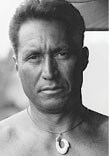
On May 16, Waikīkī Film Awards, in partnership with the Hawaiʻi Film Alliance, presented world-renowned Mākaha waterman Brian Keaulana with a Hawaiʻi Lifetime Achievement Award.
Born and raised in Mākaha, Keaulana is one of the most influential watermen of all time and is widely recognized for revolutionizing ocean safety practices, including the use of jet ski rescue techniques.
Over the decades, Keaulana’s ocean expertise in the waters of the west side was parlayed into work in the film industry when he was tapped to provide critical support and consultation to major film and television productions including Waterworld (1995), 50 First Dates (2004), Jurassic World (2015) and Hawaiʻi Five-O (2010-2020).
He has also acted, with appearances in movies including The Big Bounce (2004) and Forgetting Sarah Marshall (2008). And he played himself for two seasons on Baywatch: Hawaiʻi (1999-2001). Keaulana has also worked as a producer, a stuntman, and stunt coordinator in numerous other productions.
His work in the film industry and commitment to the Hawaiian culture and community inspired Keaulana to co-found the International Cultural Arts Network (ICAN), a nonprofit dedicated to elevating, educating and empowering diversity in Hawaiʻi’s television and film industry focusing on Native Hawaiians and Pacific Islanders.
950 Acres of Kāneʻohe

– Photo: Philamer Felicitas
ʻĀinapreneur Network Launched
Changemakers Hawaiʻi, an ʻŌiwi-led nonprofit, is launching the ʻĀinapreneur Small Business Network, a new community- rooted initiative designed to help Hawaiʻi entrepreneurs grow businesses that are connected to place, guided by values, and built for shared prosperity.
The network brings together small business owners, aspiring founders, creatives, makers, workforce participants, mentors, funders, and community partners to strengthen Hawaiʻi’s entrepreneurial ecosystem. Members will gain access to peer connection, mentorship, business education, capital-readiness support, resource sharing, visibility opportunities, and collaborative partnerships.
“For too long, our local founders have had to choose between growing their business and staying true to their cultural values. With the launch of the ʻĀinapreneur Network, we’re proving you can do both,” said Changemakers Hawaiʻi Founder Olani Lilly. “This is a collective of leaders who are as committed to the health of our ʻāina as they are to their bottom line.”
Grounded in the “4 Ps” – Place, People, Purpose, and Prosperity – the ʻĀinapreneur Network is built to help entrepreneurs move ideas into action while keeping capital, relationships, and opportunity circulating within Hawaiʻi.
“Capital should be a relationship, not just a transaction,” Lilly said. “Our goal is to see every dollar recirculate back into our islands, building a regenerative economy that honors our home.”
Changemakers Hawaiʻi hosted a virtual soft launch on June 25 for entrepreneurs and partners interested in becoming founding members.
For more info go to https://changemakershawaii.org/ainapreneurs
Another Attack on Pacific Marine Monuments
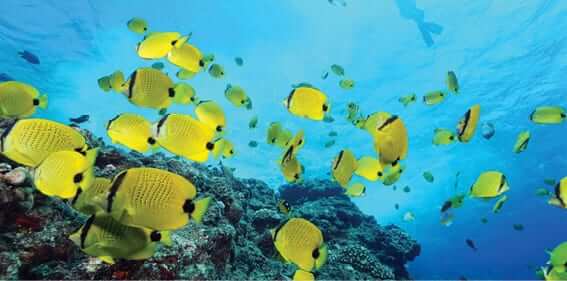
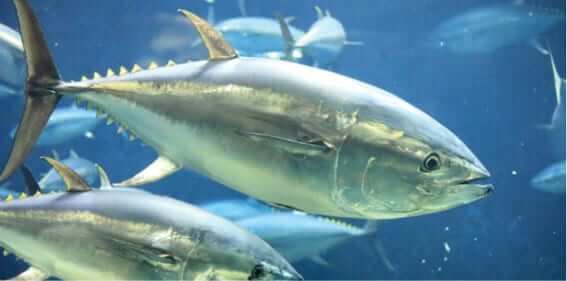
The Trump Administration wants to open Papahānaumokuākea Marine National Monument and Sanctuary to commercial fishing. – Courtesy Photos
On June 11, President Donald Trump signed a proclamation intended to allow commercial fishing in the Mau and Hoʻomalu Zones of Papahānaumokuākea Marine National Monument, as well as in the Islands Unit of the Mariana Trench Marine National Monument and the Rose Atoll Marine National Monument.
The order threatens critical species habitat within and around the monument and disregards Native Hawaiian cultural practices, beliefs and conservation efforts in the region. Environmental law firm Earthjustice will take legal action in response.
Deputy Managing Attorney David Henkin from Earthjustice’s Mid-Pacific Office asserts that not only would commercial fishing in marine monuments be disastrous for the environment, it does not help the fishing industry. “Without fishing in the monuments, U.S.-based fisheries hit their catch limits for tuna every year. Safe havens allow marine life to maintain healthy populations and prevent corporate greed from stripping the ocean of life,” he said.
Research shows that no-fishing zones in marine monuments significantly boost fish stocks. Establishing marine monuments as safe havens allow fish to grow larger and reproduce more successfully which leads to a spillover effect in which excess fish migrate to adjacent waters ultimately increasing commercial catch rates.
This latest order follows similar attacks on the environment by the Trump Administration, including the Pacific Islands Heritage Marine National Monument in early 2025. In that case, Earthjustice sued on behalf of Kāpaʻa, the Conservation Council for Hawaiʻi, and the Center for Biological Diversity, and in August 2025 a federal district court struck down the resumption of commercial fishing in the monument.