By the turn of the 20th century, ulana ʻie – the traditional art of weaving using the aerial roots of the indigenous ʻieʻie vine – had nearly disappeared from common practice. Today, that ʻike is once again taking root across the pae ʻāina as more Kānaka learn the practice and carry it into their own communities.
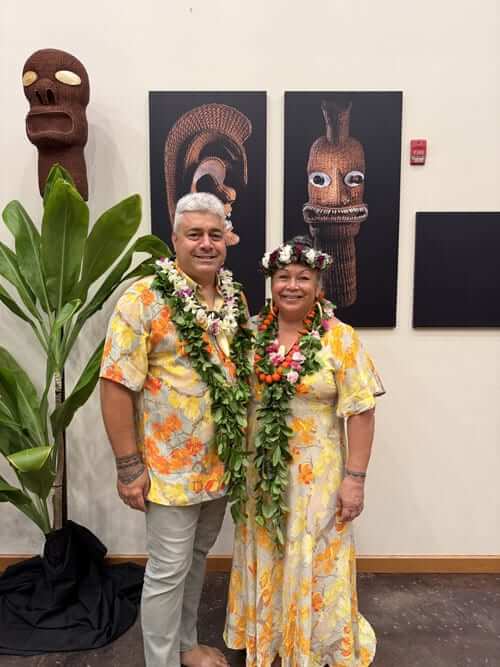
Leading the revival are Lloyd Kumulāʻau Sing and May Haunani Balino-Sing, who have spent the last two decades teaching ulana ʻie classes and workshops. Over the years, their work has evolved beyond preserving the art form; it has become an effort to restore relationships with ʻike kūpuna, the wao akua, and with one-another.
Much of what is known about ulana ʻie survived through museum collections and the research of Sir Peter Buck (Te Rangi Hīroa), the Māori anthropologist and former director of Bishop Museum. In Arts and Crafts of Hawaii, Buck wrote that the twined ʻieʻie baskets once made in Hawaiʻi surpassed comparable work elsewhere in Polynesia. His documentation later became a key resource in helping Native Hawaiian practitioners reconnect with the tradition.
For Kumulāʻau, his journey began after seeing the work of artisan Patrick Horimoto, who perpetuated ulana ʻie in the 1980s and 90s through research, museum study and careful replication of ancestral pieces. Inspired to weave a personal mahiole (chiefly helmet), Kumulāʻau began by learning to weave hīnaʻi (fish traps) before attempting more complex forms.
When another artisan, Raymond Nakama, saw Kumulāʻau demonstrate his work at Native Books and Beautiful Things and offered to mentor him, it was a turning point. For the next 14 years, Nakama shared his knowledge and encouraged both Kumulāʻau and Haunani to continue weaving and teaching so ulana ʻie would never again become a lost practice.
That encouragement became their kuleana.
In 2018, the couple began devoting more time to perpetuating ulana ʻie. They have taught workshops and completed five cohorts to date; establishing weaving communities on Maui, Hawaiʻi and Oʻahu. They welcome haumāna with little or no weaving experience.
“We take them wherever they’re at,” Haunani said. “A lot of times they don’t know anything and we build from there.”
Students spend 14 months together, meeting monthly while completing projects between classes. They learn foundational weaving techniques, create several styles of hīnaʻi and gain an understanding of harvesting and caring for ʻieʻie.
ʻIeʻie (Freycinetia arborea) is related to the hala (pandanus) tree. It is considered a kinolau (a physical form) of the god Kū. The thin-stalked, woody climber is found on all islands in wet forests on mountain ridges and slopes. Attaching itself to a host tree, it climbs using aerial roots up into the forest canopy seeking sunlight.
Because ʻieʻie are difficult to find and steward due to invasive species, the student weavers primarily use rattan which is the closest medium to ʻieʻie rootlets and allows learners to develop their skills while protecting native resources.
Although requests for traditional mahiole have increased in recent years, the Sings reserve harvested ʻieʻie for select cultural works only.
“We’re very firm about it,” Kumulāʻau said. “When we do commissioned work for people, we make it out of rattan. We don’t use the ʻieʻie.”
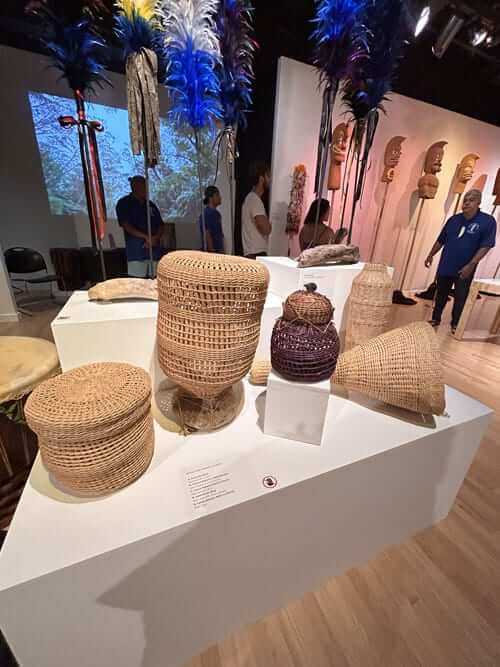
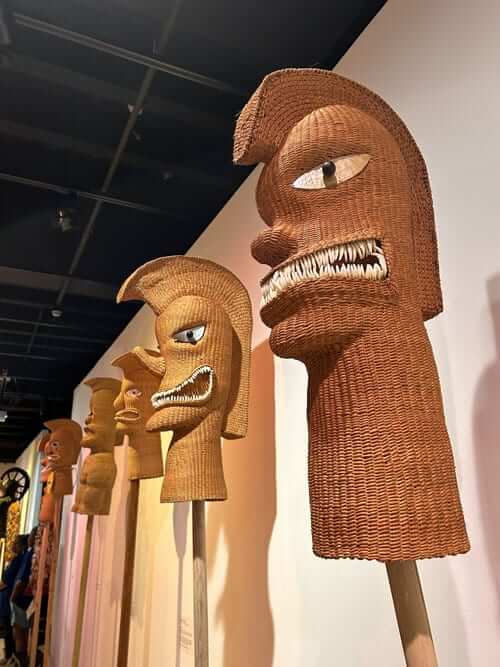
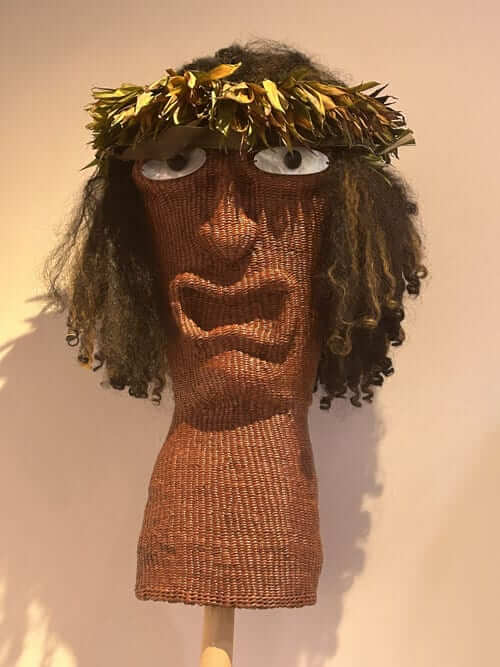
Each cohort culminates with the creation of a large woven kiʻi (figure). While traditional akua hulu manu were constructed of ʻieʻie and covered with feathers for ceremony and warfare, today’s kiʻi are more varied in form and may include male and female akua, moʻo, ʻaumakua, kupua and kūpuna.
The Sings describe their teaching approach as “neo- traditional” meaning that while the weaving methods remain rooted in ancestral practice, student practitioners are encouraged to create works that express themselves as contemporary Hawaiians. And the kiʻi they create are intentionally left uncovered to highlight the beauty of the weaving.
“We’re creating kiʻi for our Kānaka today,” Haunani said. “To uplift our people.”
Each cohort concludes with a hāʻike (closing ceremony same as a hōʻike) to honor the work and learning of the haumāna as well as to dedicate, name and enliven the kiʻi.
“They are living, in a sense, and become a part of the family,” Kumulāʻau said.
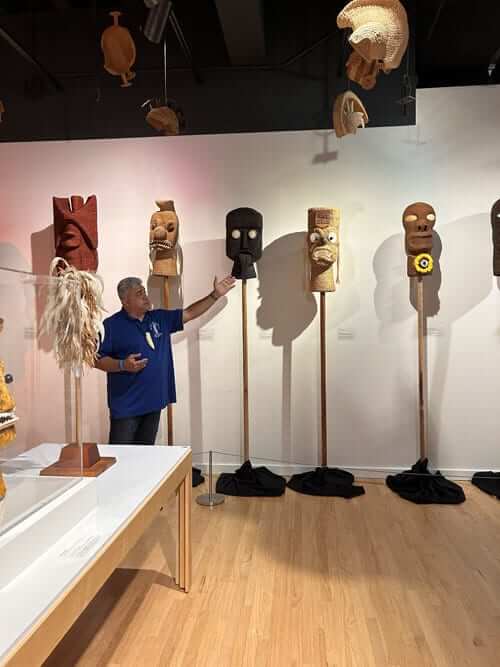
The elevation of ulana ʻie as a living artform was visible during the Festival of Pacific Arts & Culture (FestPAC) held in Honolulu in 2024, when dozens of the Sings’ haumāna carried their completed kiʻi in a procession before placing them on display at Capitol Modern (Hawaiʻi State Art Museum). The exhibit reflected not only the skill of the weavers but also the growing strength of a cultural practice returning to the lāhui.
Significantly, while only 17 traditional akua hulu manu are known to exist in museum collections, approximately 60 contemporary kiʻi have already been created by haumāna from the Sings’ five cohorts.
“There are more contemporary kiʻi ʻie today than there are stored in museum collections around the world,” noted Kumulāʻau.
The kiʻi have become familiar sights at community events, marches and ceremonies. For the past four years, haumāna have participated in the Merrie Monarch Hula Festival kuahu opening ceremony, carrying the towering woven figures in the procession.
This year, the National Endowment for the Arts is honoring the Sings with a National Heritage Fellowship for their work in supporting the revival and perpetuation of ulana ʻie. Presented exclusively to folk and traditional artists, the prestigious National Heritage Fellowship is the American government’s highest honor and includes a $25,000 lifetime achievement award.
“There are many other people who are worthy of this kind of recognition,” Kumulāʻau said. “For us to receive this award is very humbling.”
Reflecting on this honor, the Sings are quick to acknowledge the many practitioners, mentors and kūpuna whose work made the revival of ulana ʻie possible.
For Haunani, the recognition also reinforces the importance of continuing to share the ʻike. “It was a dying practice, so we took on the kuleana to share this ʻike with those interested in learning.” That kuleana is already being carried by others. Graduates from the first Maui cohort have begun teaching ulana ʻie in their own communities with continued support from the Sings.
Looking ahead, the couple hopes to offer workshops for Kānaka living on the continent, creating opportunities for members of the Hawaiian diaspora to reconnect with home through ulana ʻie.
As more teachers emerge and more haumāna become practitioners, ulana ʻie continues to move beyond revitalization. It is once again a living tradition – strengthened through community, guided by kūpuna and carried forward by the hands of the lāhui.
This month, the Sings will travel to Washington, D.C., to receive the NEA Heritage Fellowship Medal at an award ceremony on September 30 at the Library of Congress. The ceremony will be livestreamed on the NEA website.