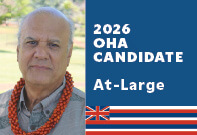
2026 Oʻahu Trustee Candidate
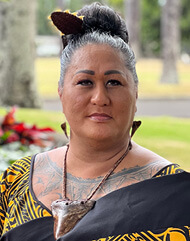
- Age – 54
- Occupation – Cultural Specialist and Educator
- Where did you grow up – Puʻunui, Oʻahu
- Schooling – Kamehameha Schools; University of Hawai‘i at Mānoa
- Current residence – Puʻunui, Oʻahu
- Website – kumuhinawongforoha.com
Write-in Responses
Question 1Question 2Question 3
OHA’s mission is to improve conditions for Native Hawaiians. What unique skills and/or experiences do you bring to this kuleana to help OHA fulfill its mission?
What is your understanding of the role of an OHA trustee and their kuleana within the agency and to the lāhui?
Share your manaʻo on the military’s use of crown and government lands in Hawaiʻi given the impending expiration of multiple military land leases and the fact that OHA derives an annual pro rata revenue share from the military’s use of those lands.
- For 36 years I have served the lāhui in public service, the private sector, and nonprofit leadership. Thirteen of those years were spent on the Oʻahu Burial Council, 11 as its chair. This work demanded thoughtfulness, patience, community advocacy, and the ability to hold space for a range of voices all at once. In every space I have entered, I have worked to listen first and build understanding before seeking agreement. Across my roles across our community, I have served as a connective presence and leader who can bring people and institutions back to a shared center. OHA’s Board deserves trustees who have active experience across our lāhui not confined only to the boardroom. I believe I bring that experience.
- A trustee’s fiduciary duty is the baseline, not the standard. The deeper work is understanding the difference between kulana and kuleana. Kulana is the position, the title, the seat at the table. Kuleana is what that position demands of you, and it cannot be fulfilled from behind a desk or only at the board table. It requires being present where our people actually are, not simply holding the title that says you represent them. My calling has always been to where our people are. A trustee who confuses kulana for kuleana cannot claim to represent a community they are not part of. Real transparency means inviting beneficiaries into the decision-making process, not simply reporting outcomes after the fact. The boardroom should function as a classroom, where our people can witness how the decisions that affect their future are made.
- These are ceded Hawaiian lands held in public trust for the benefit of our lāhui, not commercial real estate. OHA carries a constitutional fiduciary responsibility over their future, and no lease negotiation should move forward without OHA’s full agreement. The military speaks of fair market value, but no appraisal accounts for the cultural cost of continued alienation and desecration of sacred land. With leases at sites like Pōhakuloa and Mākua approaching expiration, this is not a distant policy question, it is happening now. OHA must show up prepared. The revenue OHA receives does not change this obligation. We do not let income determine our position on what is best for our ʻāina and our lāhui. Any path forward, including the terms of continued use or return of these lands, must be set by beneficiaries.
Yes/No Questions
Question 1Question 2Question 3Question 4Question 5
Do you support mandatory federal consultation with the Office of Hawaiian Affairs on all federal actions and processes concerning Native Hawaiian affairs?
In light of major cuts to Native Hawaiian-serving programs and OHA’s finite trust resources, do you believe OHA should play a role in helping address resulting Native Hawaiian community impacts through advocacy, partnerships, or other mitigation strategies?
Should telescope/observatory development on Maunakea and Haleakalā be stopped at least until mismanagement and legal claims to summit lands have been resolved?
In its role as an asset manager, OHA currently utilizes funds to purchase land with particular cultural, historical or ecological importance for their protection and preservation as needed.
Do you believe OHA should continue investing in these legacy land acquisitions when it determines those investments meaningfully advance its fiduciary obligations and long-term benefits to Native Hawaiian communities, even alongside other pressing beneficiary needs?
Do you believe OHA should continue investing in these legacy land acquisitions when it determines those investments meaningfully advance its fiduciary obligations and long-term benefits to Native Hawaiian communities, even alongside other pressing beneficiary needs?
Should the U.S. military be prevented from live-fire training in Hawaiʻi – both on land and in the surrounding ocean? Do you believe OHA should actively challenge or seek changes to military training activities in Hawaiʻi when those activities are perceived to negatively impact Native Hawaiian trust interests, cultural resources, environmental health, or access to culturally significant lands and waters?
< Back to Candidates