
2026 Trustee At-Large Candidate
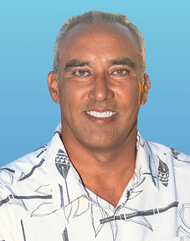
- Age – 47
- Occupation – Self-Employed
- Where did you grow up – Mililani, Oʻahu
- Schooling – Mililani High School; UH Hilo; Hawaiʻi Pacific University
- Current residence – Makiki, O‘ahu
- Website – KOA4OHA.com
Write-in Responses
Question 1Question 2Question 3
OHA’s mission is to improve conditions for Native Hawaiians. What unique skills and/or experiences do you bring to this kuleana to help OHA fulfill its mission?
What is your understanding of the role of an OHA trustee and their kuleana within the agency and to the lāhui?
Share your manaʻo on the military’s use of crown and government lands in Hawaiʻi given the impending expiration of multiple military land leases and the fact that OHA derives an annual pro rata revenue share from the military’s use of those lands.
- I have firsthand experience living and working alongside Native Hawaiians across the Hawaiian Islands. I was born in Honolulu, raised on Oʻahu, and have lived in Hilo (Hawaiʻi Island), Kahului (Maui), Hoʻolehua (Molokaʻi), and Hanapēpē (Kauaʻi) through various educational and professional opportunities. These experiences have given me a deep understanding of the diverse needs, priorities, and perspectives of Native Hawaiian communities statewide. I earned both a bachelor’s and a master’s degree in communication and have applied my education in various community service endeavors and community planning efforts statewide. I have provided public testimony opposing unsustainable development proposals that do not benefit Native Hawaiians or the people of Hawai‘i. I want to bring OHA a voice that reflects the broader Hawaiian community, including many individuals and families who feel they have been overlooked by OHA for years.
- OHA trustees have the important responsibility to assist and support Native Hawaiian individuals, families, and communities. Their kuleana is to make decisions that enhance the wellbeing of their beneficiaries. Trustees are fiscally obligated to ensure that OHA’s resources are utilized in the best interests of Native Hawaiians. They are also morally obligated to uphold the rights of the Hawaiian people to land access, ocean access, cultural practices, self-sufficiency, self-determination, and sovereignty. It is in the best interest of the Hawaiian community that all OHA trustees collaborate and cooperate to ensure beneficiaries receive high-quality resources, services, and opportunities in a timely and effective manner.
- I believe the military leases scheduled to expire in 2028 and 2029 should be allowed to expire and should not be renewed until the needs of the Hawaiian people are fully addressed. Since 1875, military activities have destroyed, polluted, and damaged important cultural sites, fishponds, loʻi kalo, natural waterways, and other irreplaceable resources across the islands. Reclaiming these lands for housing, agriculture, cultural practices, recreation, and greater self-sufficiency is more valuable than the revenue OHA receives from military leases. OHA must be a strong advocate at the negotiating table with the State of Hawaiʻi and the military to ensure that environmental restoration, cultural preservation, public access, and the long-term interests of Native Hawaiians are prioritized before any future military leases are considered.
Yes/No Questions
Question 1Question 2Question 3Question 4Question 5
Do you support mandatory federal consultation with the Office of Hawaiian Affairs on all federal actions and processes concerning Native Hawaiian affairs?
In light of major cuts to Native Hawaiian-serving programs and OHA’s finite trust resources, do you believe OHA should play a role in helping address resulting Native Hawaiian community impacts through advocacy, partnerships, or other mitigation strategies?
Should telescope/observatory development on Maunakea and Haleakalā be stopped at least until mismanagement and legal claims to summit lands have been resolved?
In its role as an asset manager, OHA currently utilizes funds to purchase land with particular cultural, historical or ecological importance for their protection and preservation as needed.
Do you believe OHA should continue investing in these legacy land acquisitions when it determines those investments meaningfully advance its fiduciary obligations and long-term benefits to Native Hawaiian communities, even alongside other pressing beneficiary needs?
Do you believe OHA should continue investing in these legacy land acquisitions when it determines those investments meaningfully advance its fiduciary obligations and long-term benefits to Native Hawaiian communities, even alongside other pressing beneficiary needs?
Should the U.S. military be prevented from live-fire training in Hawaiʻi – both on land and in the surrounding ocean? Do you believe OHA should actively challenge or seek changes to military training activities in Hawaiʻi when those activities are perceived to negatively impact Native Hawaiian trust interests, cultural resources, environmental health, or access to culturally significant lands and waters?
< Back to Candidates



 Crabbe.)