
By Kyle Kajihiro and Kauluponookaleilehua Luʻuwai
From June 24 through the end of July, the biennial Rim of the Pacific (RIMPAC), the world’s largest multinational training exercise, will conduct war games on Hawaiʻi’s land, in its surrounding oceans, and across its skies. RIMPAC is a spectacle of sinking ships in the waters off Kauaʻi, artillery explosions at Pōhakuloa, amphibious invasions at Mōkapu and Waimānalo, and droves of sailors from more than 30 countries descending on Waikīkī. This month-long occasion is a mere trace of the military’s sweeping historic footprint in Hawaiʻi.
Even as the war with Iran and genocide in Palestine have dominated headlines, a military buildup in the Pacific aimed at containing China persists subliminally. This policy positions Hawaiʻi, with its heavy concentration of military bases and personnel, at the center of U.S. Indo-Pacific war planning.
Pro-military interest groups zealously lobby for ever-increasing military spending in the name of national security yet never provide an accurate accounting of the costs and consequences of such extensive militarization.
This year, the Trump administration brazenly requested $1.5 trillion for the military – the largest military budget ever – as costs of living rise and safety net programs are slashed. The collision of those pressures is bringing new scrutiny to what the military presence in Hawaiʻi actually costs and, more importantly, who bears that burden.
Last month, the Institute for Policy Studies, along with ʻĀina Aloha Economic Futures, ʻĪlioʻulaokalani Coalition, Sierra Club Hawaiʻi, and other national organizations, co-produced the first multi-faceted report critically examining the military’s impacts in Hawaiʻi.
The True Cost of the U.S. Military in Hawaiʻi: A Comprehensive Analysis of the Economic, Environmental, Strategic, and Social Impacts of the U.S. Military Presence in Hawaiʻi, thoroughly reveals groundbreaking findings in nine areas: historical land use and sovereignty, strategic doctrine, environmental harm with a focus on PFAS contamination, public health, economic impact, employment, housing affordability, land valuation, and base conversion.
This report comes as national discourse is increasingly critical of Pentagon spending and the statewide debate over the future of military leases on 46,000 acres of Hawaiian trust lands that expire beginning in 2028 intensifies. The report’s key findings include:
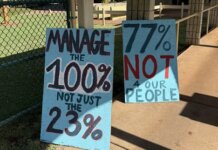
- The military’s actual economic contribution to Hawaiʻi is 30% less than federal and state officials claim: $7.2 billion, not $10 billion, or 6.4% of Hawaiʻi’s GDP rather than 9.2%. That sum does not even accommodate for the steep, in some ways incalculable, costs to the environment, public health, and the islands’ long-term economic security.
- The health care, education, housing, food production, and energy-efficient housing sectors create more than 12 jobs per $1 million investment, whereas only 5 jobs are produced by the same level of military spending. More spending from those non-military sectors also remains within Hawaiʻi’s economy since most military personnel are only stationed in Hawaiʻi temporarily.
- The estimated fair market rent for these 65-year military leases totals $133.7 billion rather than $1 per lease.
- Military demand for off-base housing inflated average rents on Oʻahu by 7.1% in 2024, costing non-military renters an additional $234.8 million, or about $1,848 annually per household.
- The toxic waste legacy is largely unaddressed – including the Red Hill fuel disaster – and PFAS remediation at just three installations is conservatively estimated at $493 million, with indirect costs, including elevated cancer rates, water filtration, and lost food production potentially reaching into the billions.
- The bloated U.S. military presence in Hawaiʻi is inflated by imprecise threat assessments and an offensive doctrine that increases the risk of war with China. A defensive strategy would reduce escalation risks and free Hawaiʻi’s land and resources for the islands’ pressing ecological and social needs.
For decades, Native Hawaiians have led efforts to hold the U.S. military accountable. Now, this report gives policymakers, business leaders, and the broader public the tools to demand both accountability and a fundamental change in Hawaiʻi’s relationship with the U.S. military.
The people of Hawaiʻi, especially Native Hawaiians whose claims to these leased Kingdom lands remain unrelinquished, are entitled to engage in decisions that will affect future generations with full knowledge of the true costs, risks, and benefits.
In the words of Dr. Jonathan Kay Kamakawiwoʻole Osorio, “Doubtless, there is much beyond our horizon and reach for we who love Hawaiʻi. But that has never really discouraged our willingness to try and protect our ʻāina and our communities, to maintain our peaceful resistance to the American empire. In the end, The True Cost of the U.S. Military in Hawaiʻi [report] is not so much an indictment as a blueprint for reclaiming our nation here, in hope and faith in one another.”

, the world’s largest multinational training exercise, will conduct war games on Hawaiʻi’s land, in its surrounding oceans, and across its skies.)