

By Rose Angelo
I’ve always wondered why groceries are so expensive in Hawaiʻi – given that its climate is suited to year-round agriculture – and what local communities (and I) could do about it. So, I decided to learn about Native Hawaiian self-determination, mālama ʻāina, and food sovereignty from experts in Maui County.
Today, 1.4 million people live in Hawaiʻi. And, according to the Hawai‘i Food Bank, 43% of Native Hawaiians suffered from food insecurity in 2024. But this wasn’t always the case.
Prior to western contact, the ahupua‘a system produced food for a million people. This system established a reciprocal relationship between people and land and was completely self-sufficient.
Georgia Pinsky, director of the Maui Farmer Support Network, lives off grid in Kaupō, Maui, with her husband and son. They steward their home farm with a passion for organically grown and sustainable foods. “The Hawaiian Islands import 90% of their food, making the islands’ food supply system vulnerable to supply chain disruptions,” Pinsky noted.
How has there been such a drastic change in food production and security in Hawaiʻi, and how can Hawaiians come together to steward the land and their communities?
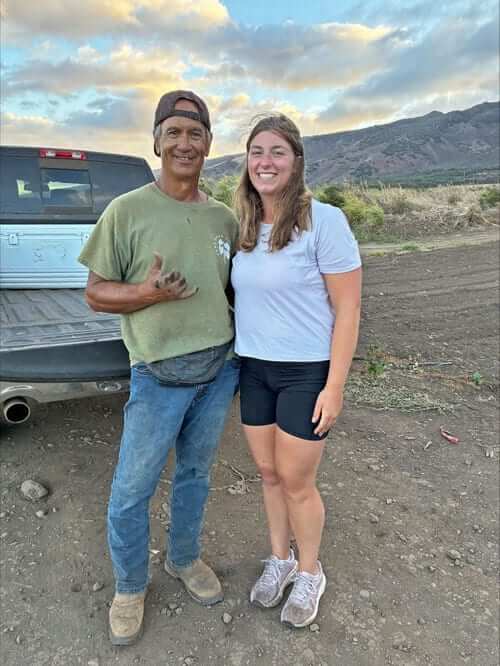

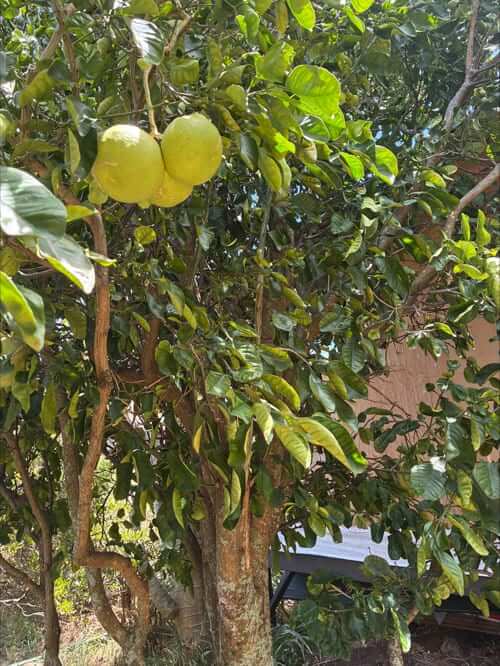
For more than a century, the historical – and contemporary – colonization of Hawaiʻi has made access to agricultural land, and the freshwater necessary to grow crops, extremely difficult for traditional farmers.
The dispossession of Native Hawaiians from the land, and diversion of streams for corporate sugar and pineapple plantations, undermined the ahupua‘a system, degraded soil health, disconnected communities from their ancestral lands, and complicated Native Hawaiians’ ability to steward land and produce food self-sufficiently.
Over time, limited access to land and water affected traditional food production and the adoption of processed, imported western foods created health disparities for Native Hawaiians.
“A lot of the health issues that we see in our rural communities are a direct result of the food they’re consuming – or the food they’re not consuming,” Pinsky said. Re-establishing widespread cultivation of, and access to, traditional foods such as kalo, ‘ulu, and mai‘a (banana) can help close the health gap.
On Maui’s southeastern coast is the rural community of Kīpahulu. There, the Kīpahulu ‘Ohana, a community-run nonprofit, is stewarding state lands and restoring lo‘i kalo. Utilizing the traditional ahupuaʻa system, they are producing food for their geographically isolated community while also providing protected environments for native and endemic species.
Communities like Kīpahulu prove that re-establishing Native Hawaiian stewardship practices encourage abundant and healthy ecosystems, while providing physical, cultural, and spiritual benefits.
Beyond, its power to heal the land and its people, restoration of ahupua‘a practices can also benefit climate resilience.
Dr. Scott Fisher is a professor at Maui College and the director of ‘Āina Stewardship for the Hawaiʻi Land Trust (HILT). One of their projects includes restoring loko i‘a (fishponds) at Waihe‘e Refuge. Dr. Fisher explained that sea level rise and intensifying storms, precipitation, and drought all affect coastal capacity for agri- and aquaculture.
By restoring loko i‘a, sediment deposition from freshwater runoff into the ocean is reduced by 93%, protecting coral reefs and surrounding marine life. As a result, healthy reef systems can better mitigate coastal damage from intensifying storms.
Self-determinism is tied directly to the revival of Hawaiian cultural practices. Bobby Pahia owns 300 acres in Waikapū, Maui, that he leases to individuals and commercial farmers below market rate to increase community food production. “We need to build a mindset around kākou,” Pahia said. “Excessive individuality broke the Indigenous mindset of cooperation.”
As exemplified by individual and community action on Maui, Hawai‘i’s current ecological conditions necessitate re-establishment of ahupua‘a practices. Doing so will not only increase self-determination and the self- sufficiency of Hawaiian and local communities, but also support food security, environmental resilience, cultural preservation, and environmental conservation.
Re-establishing food sovereignty for Hawaiʻi is a kākou effort. Everybody can – and should – mālama ʻāina and take steps to increase their individual capacity for self-sufficiency.
To start, Pahia encourages the community to acknowledge past injustices and move forward. “Don’t be mad at the system. Fruit of bitterness doesn’t bear good fruit,” he said, adding that the duality of acknowledging wrong while moving forward to create a better system makes space for self-determination, mālama ʻāina, and continuation of culture.
Pahia believes that harboring resentment and bitterness regarding the injustice of past and present colonialism prevents forward progress towards achieving more food-sovereign communities.
He also points out the need to adapt traditional knowledge to modern colonial landscapes. In his work, Pahia has created a “sphere of regenerative knowledge” to encourage his lessees to work with the land and soil biology, rather than utilize commercial and extractive methodologies.
On Molokaʻi, Hanohano Naehu, head kiaʻi loko of nonprofit Hui o Kuapā, lives by the ʻōlelo noʻeau, “He ali‘i ka ʻāina, he kauwā ke kanaka; the land is chief, people are its servant.” Emphasizing that the ahupua‘a system created sources of abundant food and environmental benefits, he uses fishponds as educational tools for the island’s youth.
Another way to establish food sovereignty is to support and engage with local food producers by participating in fruit stand systems to share the abundance.
“Fruit stands emulate ma uka to ma kai exchange, keep food within rural communities, and reduce food waste and rural community dependence on grocery stores in central Maui,” said Pinsky. Fruit stands increase food sovereignty by allowing communities to dictate methods of food acquisition, rather than reinforcing our reliance on imported food.
Finally, Pahia emphasizes that active political engagement at both the local and state levels will increase pressure on politicians to support, and pass, environmentally and socially beneficial policies.
“We need to encourage local communities to vote,” he said, noting that voting community-oriented Native Hawaiians into government positions can increase government support for environmentally beneficial policies.
This article is based upon research for the author’s undergraduate honors thesis, “Creating a Food Sovereign Maui: Indigenous Land Management and Agricultural Practices.” Please feel free to contact me at [email protected] to talk story, share experiences, or for a copy of the thesis.


 could do about it.)