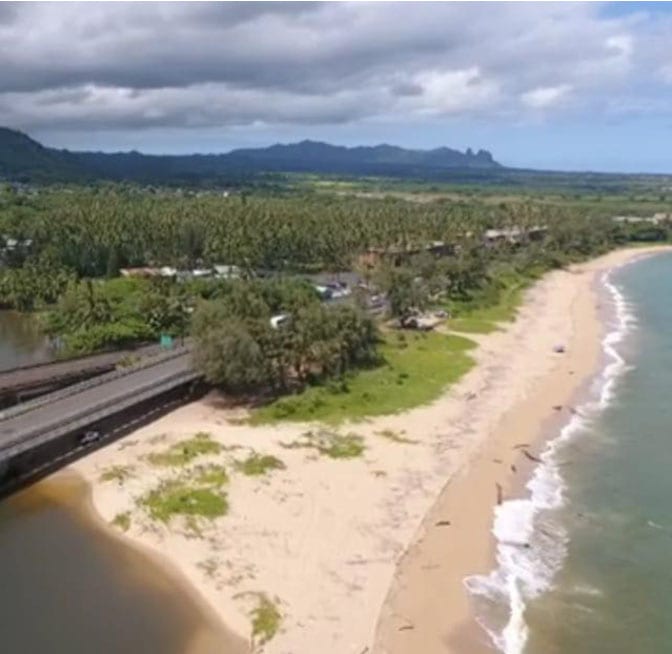
The drive on Kūhiō Highway between Līhuʻe and Kapaʻa often slows to a crawl through Wailua, especially in the afternoon when pau hana hits. Congestion peaks between 4:30 and 6:00 p.m., with traffic backing up near the Wailua River Bridge as it moves through the Wailua-Kapaʻa corridor.
In those moments, sitting in pau hana traffic offers a pause to reflect on the magnitude of that place.
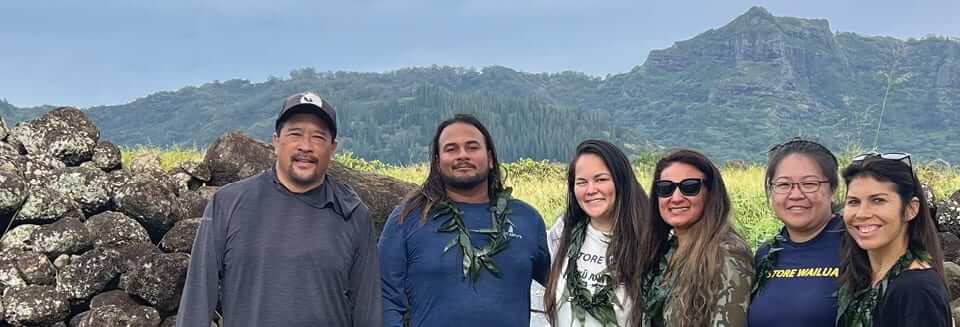
“What I think is important is Wailuanuiahoʻāno in its entirety,” said Mason Chock, who is from Wailua and serves on the Board of Directors for the nonprofit I Ola Wailuanui. “It’s been my own experience growing up here in terms of how disconnected we are from how important Wailua is.”
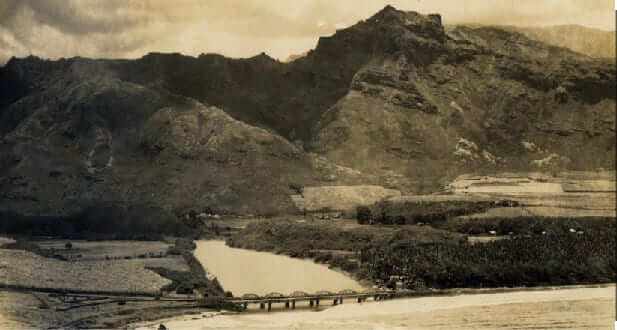
One of Kauaʻi’s most sacred and historically significant landscapes, Wailua is home to a complex of seven heiau and was designated a National Historic Landmark in 1962. The area is historically known as Wailuanuiahoʻāno and served as the principal residence of the island’s aliʻi. The Wailua River, a rare 20-mile navigable waterway, further shapes its cultural and physical landscape.
“I mean, Wailua is a place where if you throw a rock, get major, major kinds of things right there,” added Chock. “What I think is most prominent are the 34 iwi found there.”
Wailua is also famously known for what was built on the Mahunapuʻuone burial grounds.
Many are familiar with the Wailua Kai area, where the iconic Coco Palms Resort opened in 1953 and became a popular and iconic tourism destination, particularly for its featured role in the 1961 Elvis Presley film Blue Hawaii. By the 1970s the 24-room resort had expanded to over 400 rooms.
In 1973, during construction of the resort’s north wing, 34 sets of iwi were unearthed. The remains were later reinterred and marked on the property.
Additional accounts, including a 2004 interview cited in an environmental impact statement, suggest that as many as 81 iwi kūpuna were exhumed during earlier phases of the resort’s original construction, underscoring the site’s location within the extensive Mahunapuʻuone burial grounds.
After being severely damaged from the force of Hurricane ʻIniki in 1992, Coco Palms shut down and has sat in disarray for three decades.

“That property was so important to who we were back in the day,” said Sue Kanoho, the recently retired longtime Kauaʻi Visitors Bureau Executive Director. “To this day, we still have people ask about Coco Palms. That’s how much of an impact it’s had on people.”
That kind of legacy is one that developers continue to pursue. Despite several attempts to restore it to its former glory, none have succeeded. Still, visions of its Hollywood heyday continue.
Utah-based Reef Capital Partners took ownership of Coco Palms in 2022. It partnered with IHG Hotels & Resorts which, in June 2024, stated in a news release: “Following a historically sensitive restoration of the iconic property, Coco Palms, A Kimpton Resort, will once again become an inspiring tropical retreat for travelers and the Kauaʻi community to explore the expansive experiences the destination has to offer. The transformed resort is anticipated to open in 2026.”
The next month, the state Intermediate Court of Appeals ruled a 2020 foreclosure deal involving a previous developer was invalid because it was filed by the loan servicer, not the lender.
Since the late 1990s, a growing community effort led by lineal descendants and long-time residents has focused on restoring the cultural significance of the Wailuanuiahoʻāna district and reshaping the future of the Coco Palms property, including efforts to acquire and steward the area. About three years ago those efforts were formalized into the nonprofit I Ola Wailuanui.
“It’s a multiple organization kind of approach, but more importantly, a vision that’s led by the community. And I am talking about the community that has ties to that particular place,” said Chock. “Part of it is how we manage our tourist experience to learn about these important places.”
The Kauaʻi Destination Management Action Plan, which aims to guide tourism in a way that prioritizes community values and resource protection, also reflects community sentiment against hotel development in that area.
“From the community’s standpoint, we’re hearing that there is strong support for a community cultural facility rather than a hotel,” said Kanoho, who added that many are also concerned about traffic congestion.
“That particular area has become an important access point for the North Shore to the airport and the hospital. Any development in that area needs very close scrutiny so as not to become a bottleneck for our residents and visitors.”
Reef Capital Partners Chief Financial Officer Jon Day, who could not be reached for this story, addressed those concerns last year telling KHON2, “We expect very few guests to bring cars, we are going to charge a pretty high rate for any guest who wants to park a car on sight … The real traffic problem is at rush hour. Our hotel shifts will not coincide with rush hour; our guests don’t come and go at rush hour.”
Reef Capital Partners plans to invest $400 million for the Coco Palms Resort redevelopment which includes rebuilding a 350-room hotel, three swimming pools, a spa, and a cultural center.
County permitting records indicate that the project is not moving forward in any visible or active construction phase, but it has not been terminated. The project remains in a holding pattern, with past approvals in place but no clear recent momentum.
Late last month, I Ola Wailuanui sent a letter to the county requesting revocation of the construction permits, based on the premise of ongoing lawsuits tied to the project.
“My connection to this is to make sure that this waihona (depository) of information, knowledge and cultural presence is honored,” Chock said.