Part 2 of a two-part series
By J. Kara Dumaguin
Adaptation is often spoken about as something new, a response to climate change, declining fisheries, or shifting policy. But for places like Kaʻūpūlehu, adaptation has always been part of how people relate to land and sea.
Long before the language of “adaptive management” entered environmental discourse, our kūpuna practiced stewardship guided by pono and balance, shaping when and how resources were taken – not because a model told them to, but because responsibility to ʻāina and kai commanded restraint and care.
At Kaʻūpūlehu today, this way of responding continues not as theory, but as daily practice.
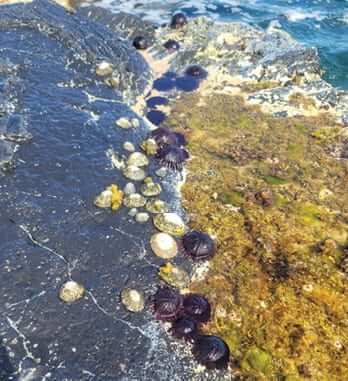
Hui Kahuwai does not operate from a fixed rulebook. Its work is guided by kilo, careful and intentional observing over time, of the coastline, the currents, the iʻa, and the subtle changes that signal when the place is thriving and when it needs rest. Decisions are shaped by what is seen and felt on the shore, not only by what appears in reports.
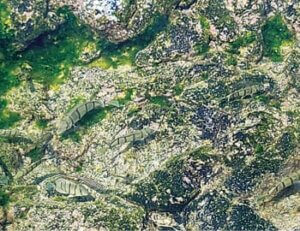
These observations are made with an awareness that what flows from ma uka to ma kai carries with it the health of the entire ahupuaʻa, reminding the community that nearshore stewardship is inseparable from the care of lands and waters above it.
Hui Kahuwai’s work is guided not only by what can be measured, but by what is remembered. Moʻolelo passed through families and tied to specific places along the coastline carry lessons about abundance, loss, and responsibility. These stories do not sit apart from governance. They inform it, reminding the community how previous generations responded when the place was stressed and how balance was restored.
In this way, adaptive stewardship is not only about responding to present conditions, but about carrying forward what has already been learned through story, experience, and place.
This is what adaptive stewardship looks like on the ground. A cycle of paying attention, acting with care, reflecting, and adjusting. Not as a rigid plan, but as a living relationship with place.
In this sense, what contemporary systems now call “adaptive management” looks, in many ways, like a return to something much older. Konohiki did not govern through fixed prescriptions, but through responsiveness to the rhythms of land and sea, guided by deep knowledge of place and responsibility to community. Hui Kahuwai’s approach today echoes that logic, not by replicating the past, but by carrying forward its principles in a modern context.
One of the strengths of Hui Kahuwai’s work is its refusal to separate ʻike Hawaiʻi from contemporary science. Fish counts, spawning observations, long-term monitoring, and community-based research are all part of how Hui Kahuwai understands what is happening along the Kaʻūpūlehu coastline. But these tools are not treated as replacements for lived knowledge. They are companions to it.
This allows stewardship to remain grounded in relationship rather than be reduced to metrics alone. Data informs decisions, but it does not displace kuleana.
Adaptive stewardship also requires navigating worlds that were not designed with Indigenous governance in mind. Hui Kahuwai works with agencies, researchers, and conservation partners, not as a stakeholder group seeking permission, but as a community asserting responsibility for place. These relationships are not always simple. They require translation, patience, and a constant re- centering of community values.
As the Try Wait period moves toward its next phase, Hui Kahuwai is working not toward an end, but toward continuity. This includes engaging in a formal rulemaking process, not to replace community stewardship, but to protect it within systems that have rarely been built to recognize Indigenous authority. In doing so, the community is not relinquishing its role. It is extending it into another arena.
Here again, adaptation is not about yielding tradition to modernity, but about allowing tradition to remain alive and effective in changing conditions.
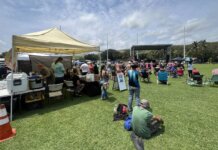
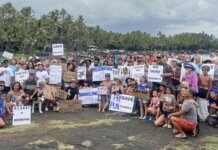
Perhaps what is most powerful about Kaʻūpūlehu’s approach is that it refuses the idea that stewardship belongs only to experts or institutions. It is carried through ʻohana, lawaiʻa (fishers), cultural practitioners, and those who carry kuleana to place over time. Stewardship here is not a project. It is a practice.
In this way, lāhui is not only remembered as identity or ancestry, but enacted through collective responsibility, through people choosing, again and again, to place care for ʻāina and kai at the center of how they live together.
It is sustained through aloha kekahi i kekahi, the reciprocal care that allows people to hold one another accountable to the work, even when it is slow or difficult. And like all practices, it depends on people being willing to show up, to learn, to adjust, and to care even when the outcomes are uncertain.
What Kaʻūpūlehu offers Hawaiʻi is not a template to be copied, but a way of being that invites us all to slow down, listen more deeply, and remember that caring for ʻāina and kai is inseparable from caring for each other.
In a time when solutions are often framed through speed, scale, and efficiency, Kaʻūpūlehu reminds us that endurance is built through relationship. Through patience. Through restraint. Through the quiet and persistent work of stewardship in motion, carried forward so that those who come after us may know how and why care was given.