
By Mahesh Cleveland
“Hānau ka lauʻīpala noho i ke kai, kiaʻi ʻia e ka lauʻī noho i uka.”
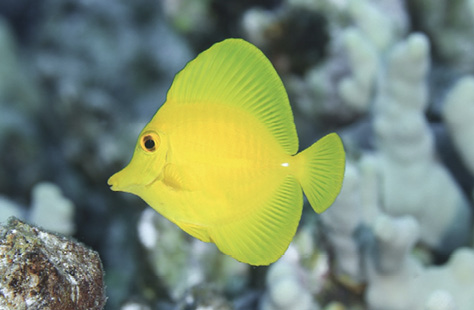
Born is the yellow tang living in the sea, watched over by the kī leaf living on land.
This line from the Kumulipo underscores the connections our people recognize between ocean resources and the land and, by extension, with kānaka. Lauʻīpala, like other fish and marine life, come before us in our origin story, nurturing us while commanding our respect.
The tale of Hiʻiakaikapoliopele provides another glimpse into lauʻīpala’s cultural importance. When she met a woman whose grandchild was ill, Hiʻiaka instructed her to apply a poultice of maʻo flowers and feed him ʻuala and lauʻīpala, so that he would be healed. The lauʻīpala signified “an abundance of food.”
“What these mentions tell me is that lauʻīpala are an indicator of our marine ecosystem,” says Uʻilani Naipo, an advocate for traditional stewardship with genealogical ties to Kapalilua in South Kona. “If lauʻīpala are bountiful, it means we as a people will be fine. These are the foundational pieces of our universe that have to be there, so when they’re threatened, it’s up to us to go fix it.”
Naipo’s uncle, Willie Kaupiko of Miloliʻi, was taught by his uncles to look for the schools of lauʻīpala coming in over the reef, because other fish would be close behind. “When you see the yellow cloud, that’s when you go grab your net.”
Reef fish like the lauʻīpala are the foundation of our traditional diet. But like so many of our natural resources, they have been abused for financial gain.
In 1953, the Territorial legislature passed a law allowing the capture of Hawaiʻi’s reef fish for sale as aquarium pets. Legislative records reveal that the law was based on the fundamental lie that the fish sought after by aquarium collectors – like lauʻīpala, kole, pākuʻikuʻi, and others – have “no value as food fish.” But, the legislature said, “they will sell … on the mainland market.”
This old 1953 law remains on the books, despite its false premise. For decades, our juvenile reef fish have been extracted, maimed, starved, and air-freighted in plastic bags to pet shops on the continent. Most die within a year, even though they can live over 40 years in the wild.
These fish, which have sustained our people for millennia, are treated as disposable playthings, victims to the whims of hobbyists and the greed of sellers and the collectors that supply them.
“This is the only industry that’s exporting our reef fish, and that’s what bothers me so much about it,” says Uncle Charlie Young of Kealia. “If these fish were being caught to feed our ʻohana, that would be one thing. But this industry just wants to make money off our public resources.
“We Hawaiians are the ones that will always need to speak up for our environment and ways of life,” Young added. “As the Indigenous people, we’re the ones attached to this place, who can recite moʻolelo and tap into our ancestry to understand why is this fish called that, or why is this resource important from a cultural standpoint.”
Since 2012, diver and cultural practitioner Mike Nakachi has been part of a hui that banded together to protect Hawaiʻi’s reef fish from the aquarium pet trade. Although they won a landmark legal victory in 2017 that required the pet industry to examine its environmental impacts, Nakachi says that in many places, coral and fish populations damaged by commercial collection may never recover.
“When we dive where the water’s rough or in more remote areas, we still see places that spiritually uplift you because of the amazing life that is present,” Nakachi shared. “But on the other hand, there are a lot of places that bring you down because of the damage that has been inflicted.”
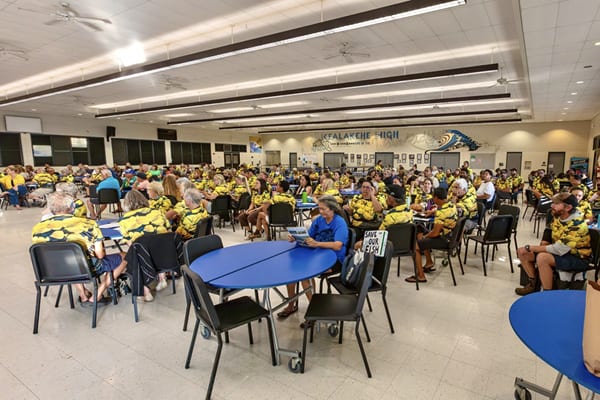
Kaupiko, Young, Naipo, and Nakachi, were among hundreds of Moku o Keawe residents gathered at Kealakehe High School in April to oppose re-opening West Hawaiʻi to commercial aquarium collection; a unanimous community outcry to prioritize natural resources over the financial interests of a handful of collectors. But the Department of Land and Natural Resources plans to move forward with permitting anyway.
Earlier this year, the hui and their allies from across the islands joined the Office of Hawaiian Affairs in urging the state legislature to ban commercial aquarium collection. A ban bill made it all the way to the end of the legislative session, only to be killed behind closed doors.
Since 2023, advocates from across Hawaiʻi have also urged the Board of Land and Natural Resources to adopt regulations banning commercial collection statewide. The Board will revisit those requests this summer.
“These lawmakers, policymakers, and decision-makers – they are our modern-day konohiki,” says Nakachi. “But they still aren’t listening to the people.”
Meanwhile, the pet industry is also pushing to resume collecting on Oʻahu, where reef fish populations collapsed after Hurricane ʻIniki in 1992 and have never recovered.
Nevertheless, Elena Bryant, a Koʻolaupoko kamaʻāina and member of the Kāneʻohe Bay Regional Council, remains hopeful for the future.
“It’s inspiring to see the energy building among our communities, and especially the ʻōpio. This is an issue that affects so many people, but not [one] that many people know about. It’s going to be up to our youth to ensure a future Hawaiʻi where they can enjoy the ocean’s bounty like their kūpuna before them.”
Mahesh Cleveland, born in Honokalā, East Maui, is an attorney with the Honolulu office of nonprofit environmental law firm Earthjustice. Mahesh believes that Kānaka co-management of natural resources is the key to a sustainable future for Hawaiʻi. For more information about the advocacy efforts discussed above, visit earthjustice.org/experts/kylie-wager-cruz/the-latest-on-commercial-aquarium-collection-in-hawaii.