
If you grew up in Miloliʻi, you did not know poverty – at least not in the way Western society defines it.
There, wealth is measured by the company you keep, the fish you reel in, and your willingness to give back to community. In Miloliʻi, abundance is rooted in kaiāulu. Neighbors look out for one another. No one called it generosity; it was simply a way of life. Care for the kai, care for each other, and in return they will take care of you.
This reciprocity has been the foundation of Miloliʻi; enduring for generations and defining the place that has been called the “Last Hawaiian Fishing Village.”
To outsiders, Miloliʻi can appear quiet, isolated, even forgotten. However, those who know it understand that its greatest treasures cannot be measured by western standards of living.

The richness of Miloliʻi is found on an open chair on a neighbor’s lanai, in the sound of keiki jumping into the bay from the docks, or in the sound of singing from the village church on a Sunday morning.
It is also found in the ʻike of our kūpuna; knowledge as old as the ʻaʻā. Spend enough time in Miloliʻi and you will see the relationship between ʻāina and ʻŌiwi is so deeply intertwined that one cannot exist without the other.
The people of Miloliʻi have spent decades protecting not only their fishing traditions but their very place on the land.
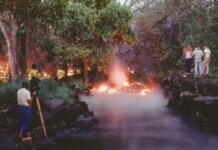
After the 1926 Mauna Loa eruption buried the nearby fishing village of Hoʻōpūloa, many families relocated to Miloliʻi. Four years later, the territorial government designated the area as a public park, with the vision of creating a “Hawaiian Village.”
Post-statehood, in 1968, that designation was rescinded and the land reverted to the ownership of the state. It was later slated for transfer to the Department of Hawaiian Home Lands (DHHL). However, that exchange never happened, as DHHL guidelines dictate they can only lease to Native Hawaiian beneficiaries with a blood quantum of 50% or more.
Decades of uncertainty over land tenure would follow, though the community endured.
In 1982, legislation finally recognized residents’ longstanding ties to the area, authorizing long-term leases for the residents of Miloliʻi displaced by the lava flow. Today, those leases continue to provide stability for many families but they carry an underlying problem: they have an expiration date.
Many of these leases were structured as 65-year terms beginning in the early 1990s and set to expire in the late 2050s. This means that within one more generation, the leases that have kept Miloliʻi’s families on their land will be at risk.
At the time, a long-term lease was the most workable compromise available to both the state and residents. It provided stability after decades of uncertainty and recognized the historical displacement caused by the eruption. But because lessees do not own the land they live on, their long-term security depends entirely on lease renewal.
Though this may sound like nothing more than a land-ownership issue, it is anything but.
When people speak of Miloliʻi, they speak of the ocean and the people in the same breath. The two have never been separate. Remove one, and the other inevitably withers.
Proof of this is right next door. The community adjacent to Miloliʻi Village, known as “Miloliʻi Beach Lots,” is a private community. The land there was developed and sold as individual parcels. The parcels were mostly purchased by out-of-state buyers seeking (relatively) inexpensive land in Hawaiʻi.
That influx of new homeowners has coincided with damage to the surrounding reef, a result of excessive wastewater runoff that state water-quality monitoring has linked to the area.
Furthermore, state lawmakers have continued to toy with legislation that would allow aquarium fishing in Hawaiʻi waters, directly threatening the accomplishment of Miloliʻi residents’ to establishing the area as a Community-Based Subsistence Fishing Area (CBSFA) – state-protected fishing reserve.
The question facing the people of Miloliʻi is not simply who will own the land decades from now, it is whether an established community can continue to exist if its foundation remains unsettled. That question deserves thoughtful discussion now, not when the leases expire.
More than mere land title, this issue is about whether future generations of the families who have sustained Miloliʻi for more than a hundred years will continue to have a place within it. Whether those lands remain under state stewardship or are entrusted to another entity, the outcome has the potential to shape Hawaiian land rights, even beyond the village shores.
Across Hawaiʻi, we celebrate places like Miloliʻi because they remind us of the past. We photograph them. We tell visitors about them. We call them “cultural treasures” and invoke their preservation.
But real preservation demands more than protecting cultural or natural resources, it demands protection of the people who have sustained that culture for a century.
Their future should not depend on a lease’s expiration date, but on the principles of stewardship.
Mālama those who gave their hearts and bodies in service of Miloliʻi. Its people have cared for this place without owning it, loved it without possessing it, and protected it since the days of the Hawaiian Kingdom.
If Miloliʻi is a treasure worth protecting, then so, too, are the people who have stewarded it.