OHA Delegation Travels to D.C.
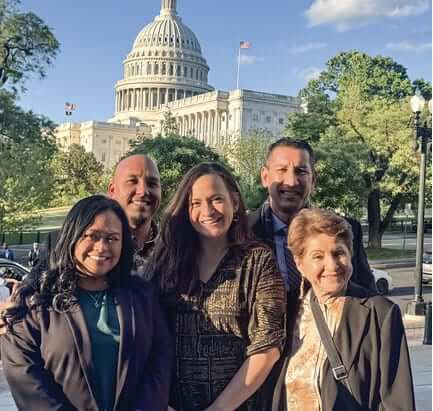
Office of Hawaiian Affairs Chair Kaialiʻi Kahele led a delegation to Washington, D.C., the week of April 20 to engage with congressional leaders and Department of Defense officials on critical issues impacting Native Hawaiians, including military-leased lands in Hawaiʻi and proposed federal funding cuts to Native Hawaiian programs. The delegation met with Hawaiʻi’s congressional delegation, bipartisan lawmakers on the House and Senate Armed Services Committees, and other senior federal leaders. The delegation included (l-r): Associate General Counsel Rozelle Agag, Trustee Keoni Souza, Interim Chief Administrator Summer Sylva, Kahele, and Trustee Carmen “Hulu” Lindsey. – Courtesy Photo
Kamāwaelualani and UIHI Collaborate on Survey

Kamāwaelualani Corp and the Urban Indian Health Institute (UIHI) are collaborating on a survey to better understand how traumatic brain injury (TBI) impacts American Indian, Alaska Native, Native Hawaiian and Pacific Islander survivors of domestic violence, sexual assault, or both. The information gathered will help improve culturally relevant services, prevention efforts, policy, and healing support for Indigenous communities. Kamāwaelualani is a Kauaʻi-based nonprofit that stewards Missing Murdered Native Hawaiian Women, Girls and Māhū research and education efforts here in Hawaiʻi. UIHI is a nonprofit committed to decolonizing data for Indigenous people by Indigenous people. The survey, which takes about 15 minutes to complete, begins with a vetting process to ensure that survey questions are being answered by actual human beings (not bots) who meet the requirements to take the survey. Individuals who complete the survey will be offered a gift card. To complete the survey, scan QR code or go to uihi.org.
Conservation Grants for Maui Nui
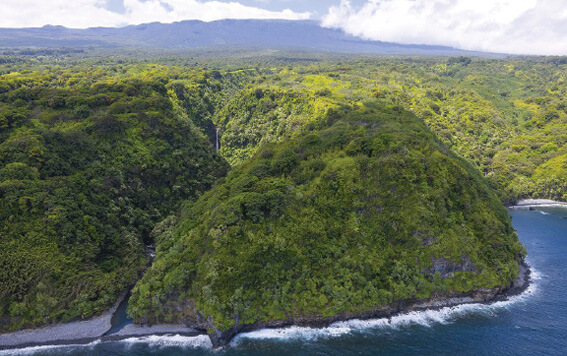
The Board of Land and Natural Resources (BLNR) approved recommendations in March from the state Legacy Land Conservation (LLC) Commission and the DLNR Division of Forestry and Wildlife (DOFAW) to award up to $7 million in state grants for five conservation projects across Maui and Molokaʻi.
LLC grants provide state funding for land acquisition, supporting the preservation and protection of pristine coastal areas, culturally significant shorelines, native forest habitat and lands that support traditional practices and community access. The five projects, and their respective grantees, are:
Honolua Bay (Save Honolua Coalition): A 17.8-acre collection of parcels, both coastal and ma uka, in Lahaina, Maui. The area supports critical habitat, cultural sites and public use. Protection will enable coordinated access management, natural resource restoration, and cultural preservation.
Mālama Kaunakakai (Hui Waʻa o Molokaʻi): About 23 acres on Molokaʻi’s south shore including wetlands, native waterbird habitat, and a traditional canoe landing area. The project will protect open space and establish a permanent base for Molokaʻi’s voyaging community.
Kalokoʻeli Shoreline (Ka Honua Momona International): A 7.2-acre stretch of shoreline parcels on Molokaʻi adjacent to Kalokoʻeli Fishpond. The area forms a cultural and ecological corridor supporting traditional aquaculture, shoreline habitat and community-based stewardship.
East Maui Coastal Forest (DLNR DoFAW): More than 540 acres along Maui’s Hāna Highway. This mixed native forest provides habitat for endangered plants, native seabirds and the Hawaiian hoary bat, and protects streams and nearshore ecosystems. The acquisition will maintain critical watershed functions.
Haneoʻo ʻĀina (Ke Ao Haliʻi): About 115 acres in Hāna, Maui, including areas with significant cultural and historical significance, including burial sites and other wahi pana. The project will help preserve Hāna’s rural character, protect cultural landscapes, and support stewardship and education.
The legislature established the LLC grant fund in 2005 to provide permanent, dedicated funding for land conservation through a portion of the real estate conveyance tax. Since then, the program has helped protect 37,000 acres statewide.
Hawaiian Scholarship Program Challenged
Last month, Bloomberg Law reported that the U.S. Department of Health and Human Services’ (HHS) scholarship for Native Hawaiians has been hit with a federal lawsuit by “Do No Harm,” a Virginia-based group that fights affirmative action efforts in health care and medical education.
Do No Harm claims that the HHS Native Hawaiian Health Scholarship Program violates both the due process and equal protection clauses of the Fifth Amendment. The complaint was filed in the U.S. District Court for the District of Columbia.
The organization, comprised of conservative-leaning medical professionals and “concerned citizens,” was formed in 2022 By Dr. Stanley Goldfarb to “expose and advocate against the invasion of identity politics in healthcare” and to “ensure that harmful ideologies are not degrading the quality of medical education” according to its website.
Claiming they are fighting to protect health care, Do No Harm exists to “counteract divisive trends in medicine, such as ʻDiversity, Equity and Inclusion’ and youth focused gender ideology.”
The challenge directly impacts funding for nonprofit Papa Ola Lōkahi (POL), founded in 1988 to improve the comprehensive health and wellbeing of Native Hawaiians. Responding to the challenge, POL CEO Dr. Sheri Daniels said, “Efforts to dismantle programs like this ignore both the historical context and the ongoing need to safeguard equitable access to care throughout Hawaiʻi.”
The group’s board includes conservative affirmative action opponent Edward Blum whose organization, “Students for Fair Admission” filed the lawsuit challenging Kamehameha Schools’ Hawaiian preference admissions policy last August.
FEMA Assistance After Kona Low Storms
Federal disaster assistance is now available to help individuals and households recover from the impacts of the Kona Low storms and subsequent flooding that occurred March 10-24. Via a Major Disaster Declaration, the Federal Emergency Management Agency (FEMA) is authorized to extend its individual assistance program to residents of Hawaiʻi, Maui and Honolulu counties.
Those with homeowners or renters’ insurance should file claims as soon as possible, as FEMA cannot duplicate benefits for losses covered by insurance. FEMA can assist with damages not covered by insurance.
In addition, U.S. Small Business Administration (SBA) low-interest disaster loans are also available for businesses of any size and nonprofits. Like FEMA, SBA cannot duplicate benefits for losses covered by insurance.
To apply for FEMA assistance, go to DisasterAssistance.gov or call their toll-free hotline at 1-800-621-3362. To apply for an SBA low-interest disaster loan go to sba.gov/disaster. For assistance call 1-800-659-2955 or email [email protected].
The deadline to apply for FEMA and SBA disaster assistance is June 14, 2026.
Supporting Flood Recovery in Waialua
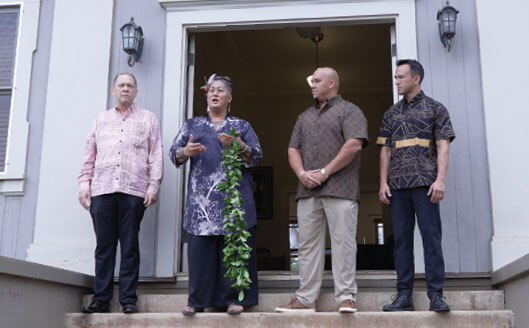
17 Tūtū and Me Sites to Close
Partners in Development Foundation (PIDF) has announced that 17 of its Tūtū and Me sites will be closed at the end of August after it lost $15 million in federal funding due to the assault on DEI (diversity, equity and inclusion) programs by the Trump administration.
Across the board federal funding cuts for Native Hawaiian programs has hit hard, affecting everything from education to health to housing. Tūtū and Me currently has 24 sites across five islands. Hardest hit will be ʻohana in remote, rural communities.
Tūtū and Me Traveling Preschool is an internationally recognized, high-quality early childhood education program dedicated to supporting the critical early years of childhood development using Hawaiian culture-based curriculum and instruction. Since it began in 2001, the program has served tens of thousands of keiki and their caregivers throughout the pae ʻāina.
Hawaiʻi already has a severe shortage of early childhood education providers and facilities, especially for keiki ages 0-2. The extreme downsizing of Tūtū and Me due to funding leaves a glaring gap in services, especially to ʻohana in neighbor island communities.
Kamakau Haumāna Travel to NYC
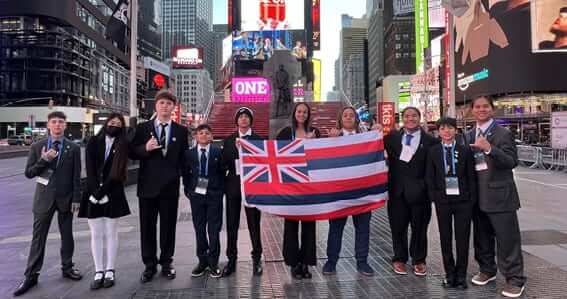
Ten middle school haumāna from Ke Kula ʻo Samuel M. Kamakau Laboratory Public Charter School (Kamakau) in Heʻeia, Oʻahu, recently traveled to New York City (NYC) to participate in the Montessori Model United Nations (MMUN) conference March 11-14, 2026.
This is the third year that Kamakau has participated in the conference – the only Hawaiʻi middle school to do so. MMUN is a multi-day global education experience designed to nurture the next generation of leaders through peace education. The program helps students develop empathy, critical thinking, negotiation and leadership skills.
This year, for the first time, MMUN hosted the United Nations (UN) Permanent Forum on Indigenous Issues as part of their conference, representing the perspectives and positions of 16 different Indigenous People groups from around the world.
As part of this learning experience, the Kamakau students had the opportunity to “represent” the following Indigenous People groups: The Wiradjuri (Australia); the Māori (Aotearoa); the Sami (Russian Federation); the Cree (Canada) and the Greenlandic Inuit. MMUN topics follow the UN agenda, focusing on real-world global issues like sustainable development, human rights, peace security, and international law.
This year, students were assigned to study one of two topics: 1) Financing the future: the financial needs of Indigenous Peoples to support their actions for biodiversity, climate and the protection of Mother Earth and; 2) Guiding principles for the implementation of Indigenous Peoples’ rights to autonomy and self-government.
Kamakau’s MMUN program leads are Coordinator Kuʻulei Akaka and Kumu Kaipoʻi Kelling. The students are grounded in a Hawaiian worldview and from this foundation they build on ʻike kūpuna such as mālama ʻāina and mālama lāhui to deepen their understanding of the perspectives of the Indigenous Peoples they were assigned to represent.
“Hawaiʻi’s independence was recognized by England and France on Nov. 23, 1843, via the Anglo-Franco Proclamation which affirmed Hawaiʻi as an independent nation among other civilized nations. Hawaiʻi was the first non-European nation recognized,” noted Kelling. “Diplomacy is a legacy rooted in our moʻolelo and now we have a road to follow and to pave at the same time. Timoteo Haʻalilio, who led the delegation to Europe, spent a good amount of time in New York City and to have our haumāna in the same space is surreal.”
Normalizing ʻŌlelo Hawaiʻi at HoMA
In February, the Honolulu Museum of Art (HoMA) marked Mahina ʻŌlelo Hawaiʻi by creating its first-ever publication in ʻōlelo Hawaiʻi to accompany a featured exhibition.
“We wanted to celebrate Mahina ʻŌlelo Hawaiʻi at the same time we were mounting Toshiko Takaezu: Worlds Within and brainstorming ways we could enhance the exhibition experience,” said Lesa Griffith, HoMA senior PR and communications manager. “The artist’s close connection to ʻāina and the influence the Hawaiian landscape has on her work made the show the ideal focus for a self-guided tour in ʻōlelo Hawaiʻi, with multiple layers of connection and meaning.”
The exhibition, which runs through July 26, highlights the work of the late Toshiko Takaezu, an internationally recognized artist born in Pepeʻekeo and raised on Maui. Known for reimagining the ceramic vessel as a form of artistic expression, she approached her sculptures as three-dimensional abstract paintings, using clay as her canvas. Takaezu was an instructor at Princeton University from 1967 to 1992.
“Visitors to the show have said they appreciate the brochure and the way it added meaning and connection for them,” said Griffith.
As HoMA approaches its centennial in 2027, visitors can expect more initiatives that bring a Hawaiian perspective to the interpretation of the museum’s collection, exhibitions, and programs.
Cazimero to Receive Honorary Doctorate
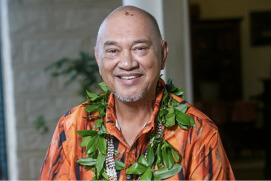
Renowned musician and Kumu Hula Robert Cazimero will be awarded an Honorary Doctorate of Humane Letters from the University of Hawaiʻi during Leeward Community College’s fall convocation.
The UH Board of Regents approved the honor at its April 16 meeting.
Cazimero is known for his leadership of Hālau Nā Kamalei o Līlīlehua, his influence on generations of haumāna, and his celebrated career in Hawaiian music. His work has helped strengthen the continuity and global reach of Hawaiian cultural traditions.
Throughout his career, he has been a steadfast partner to UH, supporting its mission to nurture knowledge, improve cultural identity and inspire future generations. Across UH’s 10 campuses, he has shared his time and expertise through guest lectures, workshops, performances and mentorship. Cazimero’s engagement in cultural learning and mentorship has helped deepen students’ experiences with ʻike Hawaiʻi.
The honorary doctorate recognizes individuals of national or international distinction whose contributions have had a significant impact in areas such as business, public service or scholarship.
Got a Minute for Mele?
Kāhuli Leo Leʻa, a nonprofit that aims to accelerate aloha ʻāina through the education, composition and presentation of mele and other cultural practices, has recently introduced a new social media series, Mele Minute.
Designed to use mele as a teaching tool using social media, over the next few months, Mele Minute will promote the educational value of mele through 1-minute social media “challenges” incentivized with prizes.
The idea is to spend 1 minute a day to test your knowledge of Hawaiian mele. Each post will present the lyrics to a mele (in both Hawaiian and English), pose a series of questions about the mele (e.g., places mentioned in the mele), and then share additional moʻolelo about the wahi pana or history represented in the mele. The final slide asks a special question.
People who take the time to answer have a chance to win a prize. The first Mele Minute post dropped in mid-April and the prize was a pair of tickets to Hawaiian Airlines’ May Day concert.
To participate, check out @kahulileolea on IG or search #meleminute.