“We love Haleakalā. It is in our bones. It is in our body. It’s in everything about us that we know we must protect Haleakalā,” said Mikahala Helm, long-time Maui community leader, educator and activist, speaking in March at Hanohano ʻo Haleakalā, a community-created forum.
“Uncle Les [Kuloloio] shared with us the wisdom of our kūpuna: You don’t just go up there any old time and do whatever you want [because of] the wai, the water. You do anything on top, it’s going to affect the wai down below.”
Helm and Leiʻohu Ryder, both members of Kilakila ʻo Haleakalā, represented the forebears of a decades-old movement to protect the sacred summit at the event, which drew about 100 people.
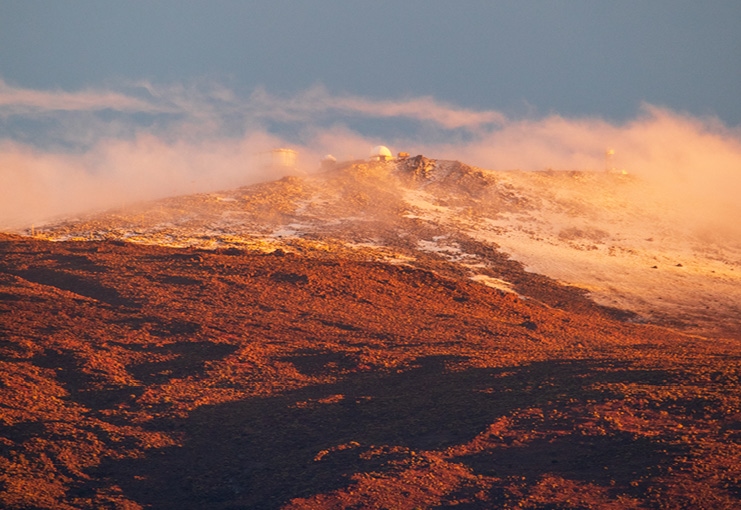
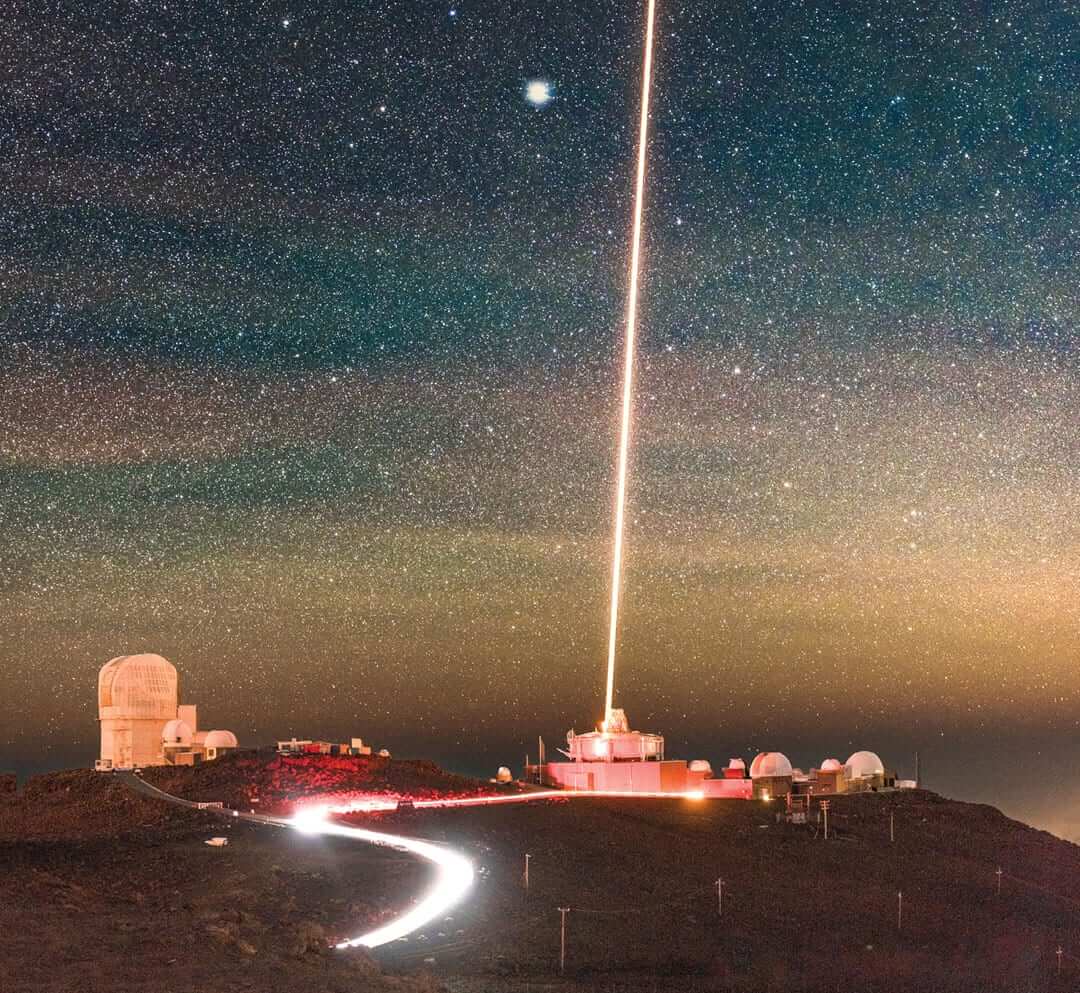
Hanohano was organized in protest to the military’s desire for more development on the summit. The U.S. Air Force (DAF), which has been operating a surveillance complex on Haleakalā since the 1960s, wants to construct up to seven more telescopes to maintain what it calls “space domain awareness.”
DAF released its draft environmental impact statement (DEIS) for the proposed project, known as the Air Force Maui Optical and Supercomputing Site Small Telescope Advanced Research Facility (AMOS STAR) in January 2026, with plans to begin construction this year.
For many Native Hawaiians, the DAF proposal is the latest chapter in a generational struggle.
Kilakila ʻO Haleakalā was formed in 2005 to protest the installation of a telescope on the summit of Haleakalā. “The motivation to stand up for Haleakalā is simply put: Haleakalā is sacred. That’s what led us to the 20-year journey of standing and honoring and breathing this knowing from eons ago,” Ryder said emotionally, speaking at Hanohano.
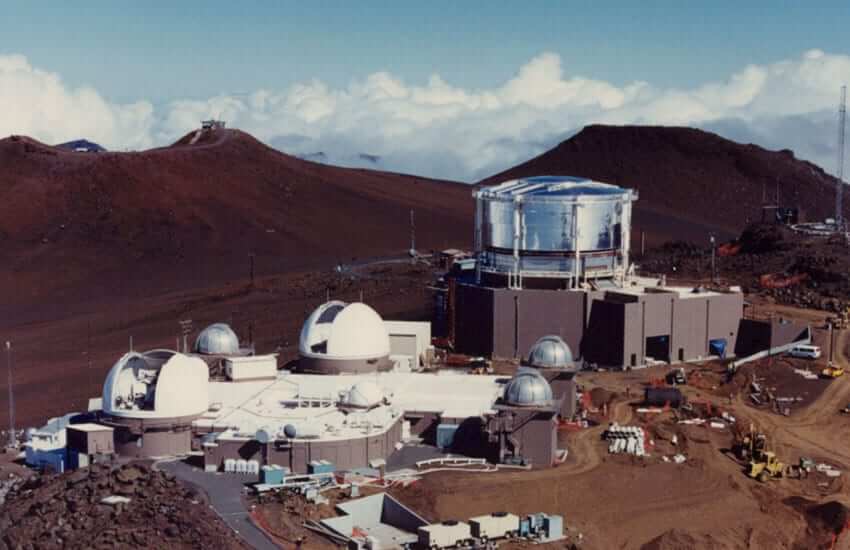

Construction of the telescope (later named the Daniel K. Inouye Solar Telescope) was completed in 2021 despite community objections. But in the intervening years, the movement to protect Haleakalā survived and grew.
There are now three community groups representing multiple generations of kiaʻi who are pushing against further development on Haleakalā. In addition to Kilakila, there are Kākoʻo Haleakalā and Hoʻoulu Lāhui. The groups, collectively known as the Protect Haleakalā Community Coalition, organized the March forum.
“We created Hanohano ʻo Haleakalā as a way to break out of the mold of engagements that have been the same for years,” said Hina Kneubuhl, coalition member and event speaker. “We created it to lay down a challenge in front of them [the military]: Will you engage with us on our own terms? Do you care enough to listen to information we consider important about our place?”
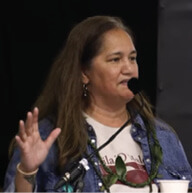
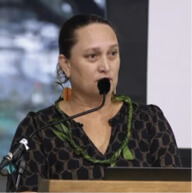
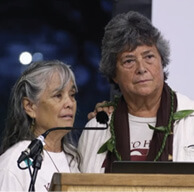
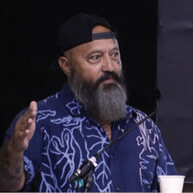
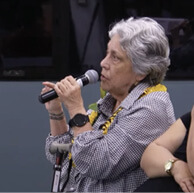
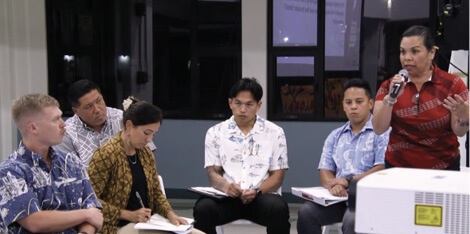
Hanohano ʻo Haleakalā was a community-led forum in March to discuss the U.S. Air Force’s plans to build seven more telescopes on Haleakalā. It was a way to engage with the military on the community’s terms, instead of through the military-controlled draft EIS public process as in the past. Instead of limiting testifiers to 3-minutes, the forum allowed cultural practitioners and kiaʻi time to fully express their mana’o. Speakers included (l-r) UH Maui Interim Associate VP for Academic Affairs Kahele Dukelow; cultural practitioner and entrepreneur Hina Knuebuhl (representing Protect Haleakalā Community Coalition); UH Maui Professor Emeritus Mikahala Helm with composer/musician and peace educator Leiʻohu Ryder (representing Kilakila ʻo Haleakalā); and UH Maui Associate Professor of Hawaiian Studies Kaleikoa Kaʻeo. On the far right Kumu Hula Hōkūlani Holt Padilla asks a question at the forum. – Photos: Courtesy of Protect Haleakalā
Until that point, the U.S. Air Force controlled the DEIS public process, wherein testifiers were each given three minutes to speak. But Hanohano ʻo Haleakalā shifted these dynamics and gave cultural practitioners, educators and kiaʻi the time they needed to convey the importance of Haleakalā as a spiritual-cultural- environmental connection point.
“[The summit] is where Haleakalā was connected to its mother, Papa … The symphony of life we talked about earlier, which includes us as Kānaka, is nourished through this critical point of connection,” said Kneubuhl who spoke for about 15-minutes.
“This is at the heart of why obstructions and developments at the summit, in particular, are highly detrimental” (see related story Why is Haleakalā a Sacred Place).
“One of the things that came out of [Hanohano] was [that the U.S. Air Force] engaged with Hawaiians on the terms that we set, which was huge for us,” Kneubuhl said.
“Another thing that was accomplished is they heard perspectives out of our mouths, face to face. The Air Force having to answer our questions was a huge outcome. There is nothing in their process that mandates they answer our questions,” she added.
Senior military advisor Noelani Kalipi attended the event along with members of the 15th Space Surveillance Squadron – the DAF group that operates the surveillance complex – including its commander, Lt. Col. Doug Thornton.
Responding to a question about whether AMOS STAR will increase Hawaiʻi’s vulnerability as a target in war, Thornton said, “I understand the fear and a military presence can make a location a target … we’re not here [on Maui] about directing weapons. Our purpose is to watch and protect objects in space. This capability serves as a power deterrent across the world, making conflict less likely to extend in space by ensuring the stability of the space environment.
“We believe this defensive mission contributes more to the safety of Hawaiʻi by deterring conflict than it does [by] creating risk,” Thornton added.
Kalipi, who runs the newly formed Hawaiʻi Coordination Cell under the Office of the Secretary of Defense, said she believes Hanohano was the first event of its kind (public-led with military participation) on Maui. She added that other groups on Oʻahu have expressed interest in hosting similar events.
“What I really appreciated about the Hanohano event was the opportunity to humanize the discussion. For the community to say, ʻthis is our place, and so let’s talk about it. Let us ask you the questions so that everybody can hear what the answers are,’” she said.
Preston Schlachter, strategic outreach chief for Combat Forces Command Public Affairs issued a subsequent statement saying, “We appreciated the opportunity to attend the Hanohano ʻo Haleakalā event and hear the community’s feedback firsthand. These perspectives provided valuable context for the EIS process. The written comment period closed April 15, 2026. The next step is to conduct a thorough review of the officially submitted input. Public feedback will be incorporated and considered in the final EIS, scheduled for publication in the Fall of 2026 with a Record of Decision to follow.”
By all accounts, residents, community leaders and elected officials vehemently oppose any further development on Haleakalā.
A public scoping memo at the end of DAF’s 516-page DEIS reflected that 89% of all public testimony was in opposition to the military’s proposal.
This past March, the Maui County Council unanimously passed a second resolution (the first was passed in June 2025) urging the U.S. Air Force to stop its plans and urging federal land managers to deny any permits for the project.
“As council members, we are the representatives of our community, and I’ve only heard testimony in opposition [to this proposal]. It’s our responsibility to ensure that, as their representatives, we are amplifying their voices and getting it on the record,” said Keani Rawlins-Fernandez, the Maui County councilwoman who introduced both resolutions.
Along with the cultural significance of Haleakalā that Kneubuhl expressed in her remarks, the strong opposition to the military’s proposal is because Haleakalā’s summit is at the top of the ahupuaʻa where downstream water originates – as well as being home to several endangered and endemic species.
“The Air Force wants to build seven telescope domes on one of the most sacred mountains in the Pacific which is ecologically and environmentally very sensitive. And while the Air Force admits it will cause significant and irreversible harms, it’s still asking the public to trust that telling contractors to be respectful is enough to mitigate those harms,” said Maxx Phillips, Hawaiʻi and Pacific Islands director and senior attorney for the Center for Biological Diversity.
“One of the glaring deficiencies with the DEIS, from an environmental standpoint, is that a federal biologist walked the site and found two (burrows) of our endangered petrels – and this is exactly where they want to put the telescopes. The Air Force’s response was to call that a ʻnon-significant’ impact,” Phillips said.

Two other endangered species found on the summit are the ʻāhinahina or Haleakalā silversword and the ʻōpeʻapeʻa (Hawaiian hoary bat), Hawaiʻi’s only native mammal. “Haleakalā silversword has already lost 90% of its population to climate change,” Phillips noted. “The Air Force wants to add construction traffic through its last remaining critical habitat and call that ʻdiscountable.’”
Coupled with the intertwined cultural and environmental concerns for Haleakalā are fears rooted in the military’s documented history of poor environmental stewardship. In 2023, about 700 gallons of diesel fuel leaked from a generator at the Maui Space Surveillance Complex (MSSC). DAF said the spill would take seven years to clean up.
“The U.S. military has polluted and destroyed this land for far too long with places like Kahoʻolawe, which even to this day has yet to be cleared and cleaned in totality,” said UH Maui Associate Professor Kaleikoa Kaʻeo, speaking at Hanohano. Above him, as he spoke, was a presentation slide entitled: “A Pattern of Military Destruction & Harm.”
“There’s the U.S. Navy who continues to lie to this day over the poisoning [at Red Hill]. Let’s be clear, this is poisoning of our water; that which gives us life is the most sacred. That’s why places [like Haleakalā] were set aside as sacred.”
Another issue is the legitimacy of land ownership and management on the summit.
The proposed project site is part of a larger Federal Aviation Administration (FAA) parcel that was set aside for federal use in October 1957 via executive order 1808, signed by Territorial Governor William Quinn. But whether the federal government and its agencies actually had legal claim to do that is debatable.
“The United States’ assumption of control over Hawaiian Kingdom government and crown lands in 1898 remains the most significant of the unresolved claims of the Hawaiian people,” said Maui attorney Lance Collins.
The Protect Haleakalā Community Coalition introduced two petitions to slow or stop the Air Force’s plans for the summit. One petition, which collected nearly 2,000 signatures, unsuccessfully sought to extend the DEIS public commentary for an additional four months. Their other petition is to deny the MSSC lease renewal in 2031.
The online petitions, coalition website, and social media accounts show how new generations of kiaʻi are using technology to reach more people.
Hanohano ʻo Haleakalā was livestreamed to 170 viewers, and the archived video on Protect Haleakalā’s website has garnered hundreds more views since then. Though plans for construction on Haleakalā have changed over the years, the resistance endures. This gives movement leaders hope for the future.

“There’s a whole new crew of voices. This is the power of aloha ʻāina. The U.S. military doesn’t understand this,” said Kaʻeo. “We have awakened. Our souls have been born again, and we’re going to do whatever is necessary.”