Read this article in ʻŌlelo Hawaiʻi
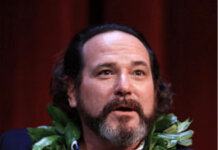
Na Roy McGrath, Kumu Pilikanaka, Ke Kula ‘o S.M. Kamakau
It would be hard to deny the expansion of ʻōlelo Hawaiʻi in recent years. No matter where you go in Hawaiʻi today, if you look carefully, you can find a connection to ʻōlelo Hawaiʻi there. Hawaiian speakers can no longer trust that their gossip spoken in public will fall on deaf ears!
But it’s not just the ʻōlelo of ʻōlelo Hawaiʻi that is finding fertile ground. A whole host of new opinions and ideas about ʻōlelo Hawaiʻi are being spread across the pae ʻāina. From keiki to kūpuna, awareness of ʻōlelo Hawaiʻi’s growth in contemporary society is now commonplace.
Of the many topics related to ʻōlelo Hawaiʻi being discussed, one of the most animated debates surrounds the differences between the ʻōlelo Hawaiʻi being spoken and taught today and the ʻōlelo Hawaiʻi being spoken a few generations ago.
Between proponents of the Hawaiian language revitalization movement today, this is certainly a sensitive topic that can rustle feathers and create division within the relatively small population of ʻōlelo Hawaiʻi speakers. This debate touches on delicate and often personally meaningful questions about the authenticity of one’s ʻōlelo Hawaiʻi, the authority to dictate what ʻōlelo Hawaiʻi is and is not, and to what degree the ʻōlelo Hawaiʻi of generations past is being respected.
Often, the most animated and emotional debates are centered on a seed of truth. It’s true, Hawaiian immersion school students’ ʻōlelo Hawaiʻi fluency is not at the same level as the kūpuna who wrote in the nūpepa and taught Sunday school classes. It’s true, not all Hawaiian language immersion teachers’ ʻōlelo Hawaiʻi is as fluent as their English-language counterparts.
A complete stranger to ʻōlelo Hawaiʻi could probably hear the differences in confidence, tempo, articulation, and pronunciation between the ʻōlelo Hawaiʻi spoken today and the ʻōlelo Hawaiʻi spoken a generation ago.
However, we shouldn’t simply give up and give “new Hawaiian” a label to separate it from “old Hawaiian.” We shouldn’t forget that, when listening to a recording of a native speaker describing their life in the early 20th century, the same beautiful memories and stories that would have been incomprehensible a generation ago can be understood clearly again.
At the same time, we cannot deny the work yet to be done. Hawaiian immersion schoolteachers should cherish the wealth of free and accessible native language repositories such as the Ka Leo Hawaiʻi recordings and the Papakilo newspaper database and use them to their full potential.
And for the highly fluent kumu ʻōlelo Hawaiʻi at our colleges and universities, come visit immersion schools so the youngest and most impressionable Hawaiian language speakers can learn from your ʻōlelo Hawaiʻi nani loa!