
By Hannah Kaʻiulani Coburn and Puanani Fernandez-Akamine
A famous moʻolelo of Kūpeke speaks of the kupua heʻe (supernatural octopus) who watches over Kūpeke Loko Iʻa (fishpond). This is notable because the fishpond at Kūpeke is the only loko iʻa known to be guarded by a kupua heʻe. Most are protected by moʻo (lizard) or puhi (eel) deities.

These days, the ahupuaʻa of Kūpeke is also being watched over by Laʻa Poepoe, the kiaʻi poʻo (lead caretaker) for Kūpeke Ahupuaʻa.
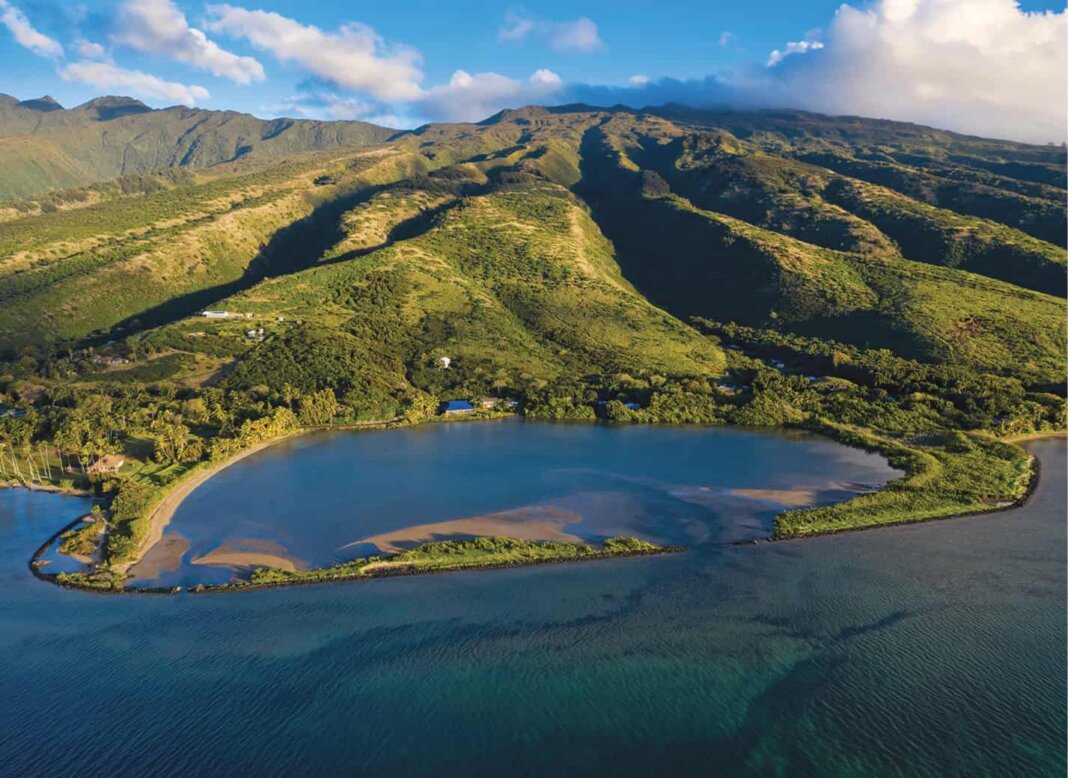
Located on the east end of Molokaʻi, the ahupuaʻa of Kūpeke includes about 300 acres, from the top of the mountain to the shoreline and out to the fishpond wall. Poepoe’s stewardship of Kūpeke is the confluence of his Molokaʻi lineage, aloha for his community, a passion to mālama ʻāina, an unshakable work ethic, and his foresight.
The designation of Kūpeke Ahupuaʻa as the protector of this wahi pana (storied place) is itself a remarkable story. But Poepoe is quick to point out that “we do not own the ahupuaʻa. Kūpeke owns itself. I am just a caretaker.”
Pilina to Place

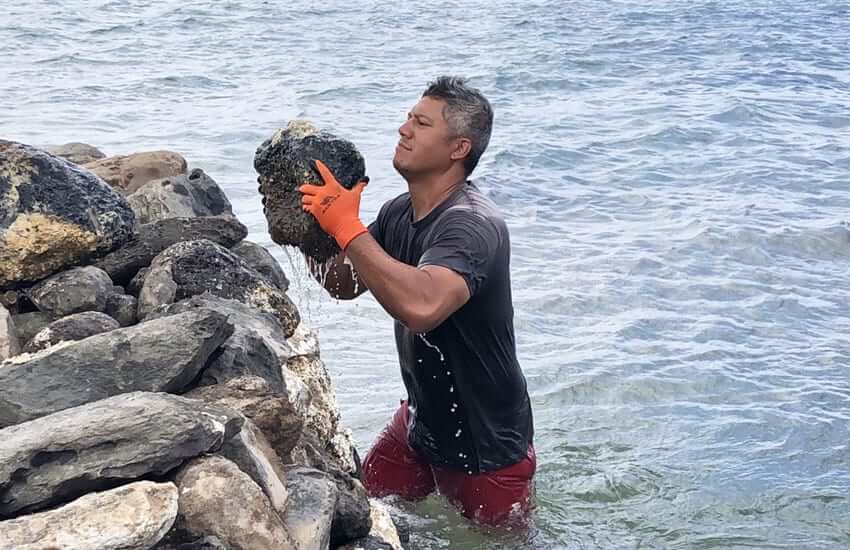

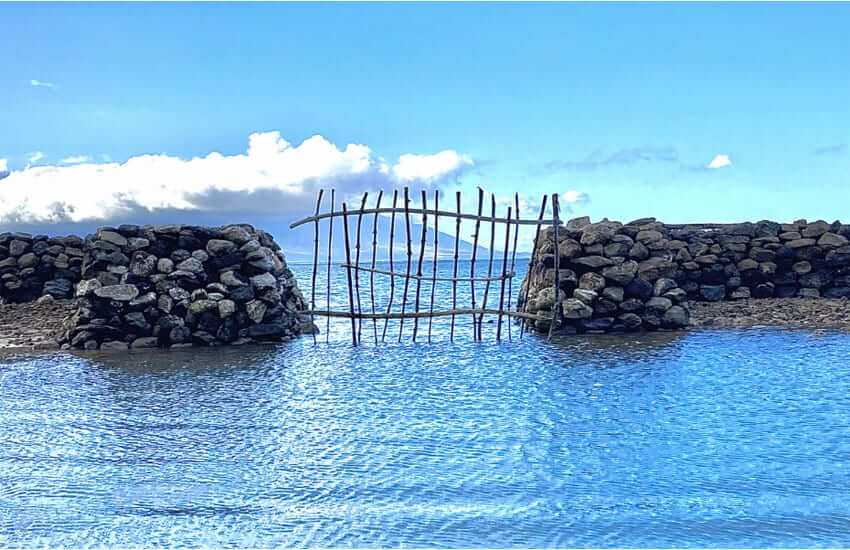

Poepoe is native to Molokaʻi and the fishpond at Kūpeke figures in some of his earliest memories. He recalls going to the beach there with his paternal grandparents, and his grandmother pointing out important sites in the area, including her birthplace.
Growing up on Molokaʻi, Poepoe was taught lawaiʻa (fishing) the traditional way: follow behind, no talking, observe actions, carry the fish. As a young adult, he would visit the fishpond from time to time on his way to the shoreline to go fishing.
Over the years, he was increasingly drawn to mālama ʻāina work across Molokaʻi, influenced by the efforts of his father, Mac Poepoe.
In the early 2000s, the senior Poepoe, a long-time leader of Hui Mālama o Moʻomomi, helped inspire the creation of the mālama ʻāina initiative Kua ʻĀina Ulu ʻAuamo (KUA) whose mission is to support community-based organizations who protect, restore, and care for Hawaiʻi’s unique native species and ecosystems.
Ultimately, Poepoe was drawn to Kūpeke and his stewardship there evolved organically. No one was actively managing the land or the fishpond. The ʻāina near the shoreline was overgrown with invasive plants like mangroves, the kuapā (fishpond wall) needed repair, and invasive limu and fish were pushing out native species.
There was also silt in parts of the fishpond – an unfortunate byproduct of degraded ma uka lands diminished by a combination of overgrazing, out-competition by non-native plants, and unstable weather patterns that have left swaths of the uplands denuded and vulnerable to severe soil runoff during heavy rains.
When Poepoe began stewarding Kūpeke, the ahupuaʻa was jointly owned by Namahana Buchanan Estate and Buena Ventura Properties. Both entities were controlled by Stanwood Formes.
Poepoe reached out to Moku Buchanan, a relative of Formes. Together, Buchanan, his wife Lori, and Poepoe began building the grassroots organization that would eventually become the steward of these lands.
Wanting to be pono in their intentions and increasingly invested in the maintenance work that the fishpond required, Buchanan contacted Formes and obtained verbal permission for Poepoe to continue his work rehabilitating and managing the loko iʻa at Kūpeke.
Poepoe started small. “I picked a spot to anchor from with no clear plans or specific objectives in mind,” he recalled. “I just let the work guide the way, cleaning the property on a loose verbal agreement because it was the right thing to do.”
Returning Kūpeke to Kūpeke
For generations, the ahupuaʻa of Kūpeke was owned by the Buchanan ʻOhana. Looking ahead, Poepoe anticipated that the land would eventually be put up for sale.
He already had a long-term vision to restore and rehabilitate Kūpeke and hoped they would be able to formalize an agreement with the owner. Poepoe was concerned – as most Molokaʻi residents are – about developers buying up land to build multi-million-dollar estates that gentrify and ruin the rural character of the island.
When Formes passed unexpectedly in 2018, Poepoe, his wife Mahina, and the Buchanans founded Kūpeke Ahupuaʻa, an organization dedicated to the restoration and management of the ahupuaʻa. It was registered as a nonprofit in 2020, and their goal was to position the organization to purchase the land and protect Kūpeke from unwanted development.
Years passed, and as they waited for the estate to move through the probate process, Poepoe continued to mālama Kūpeke.
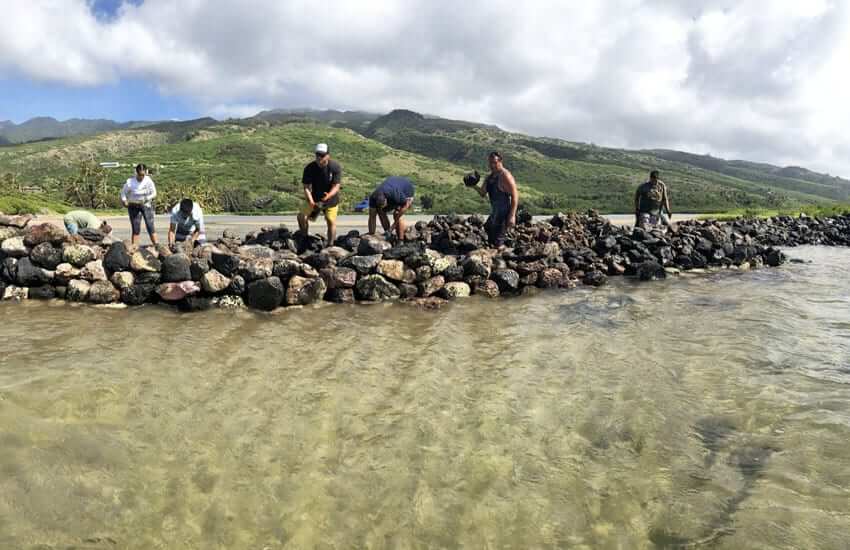
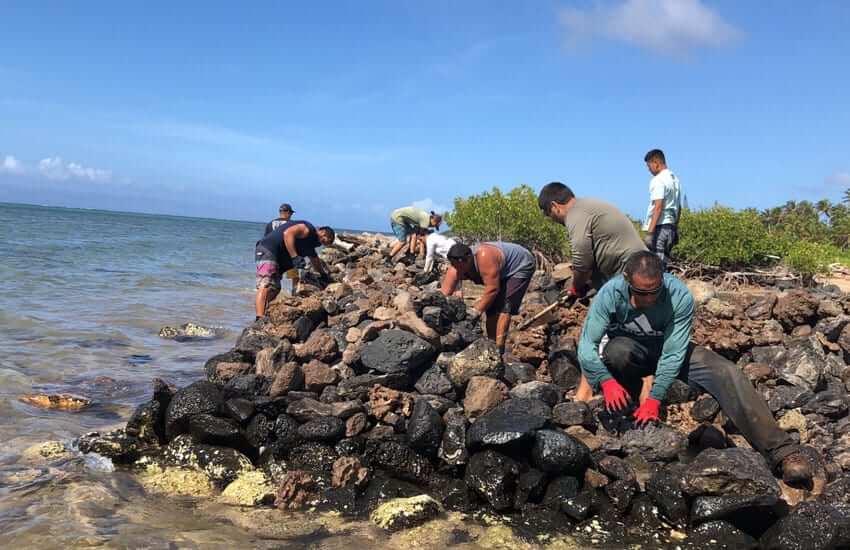
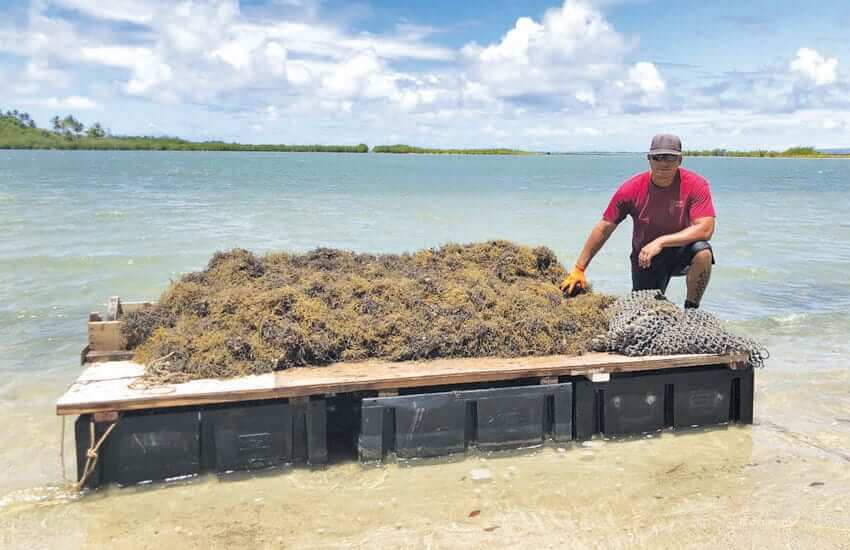
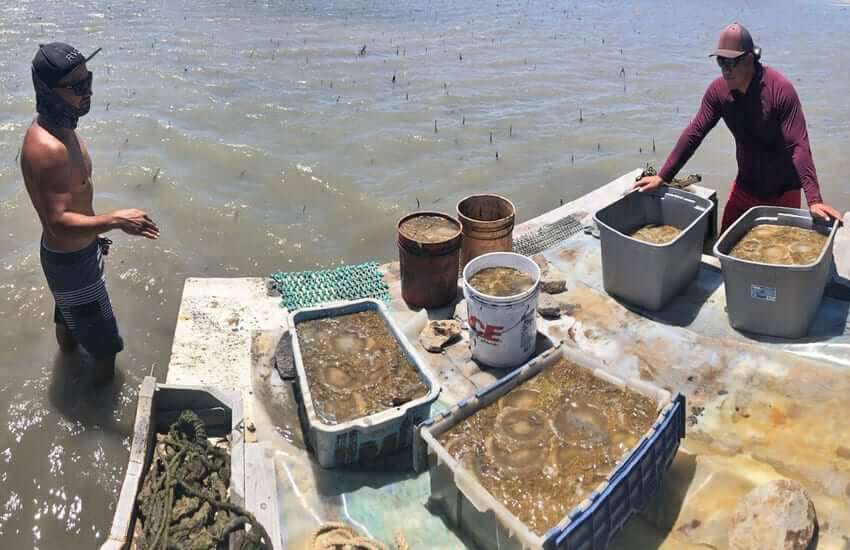
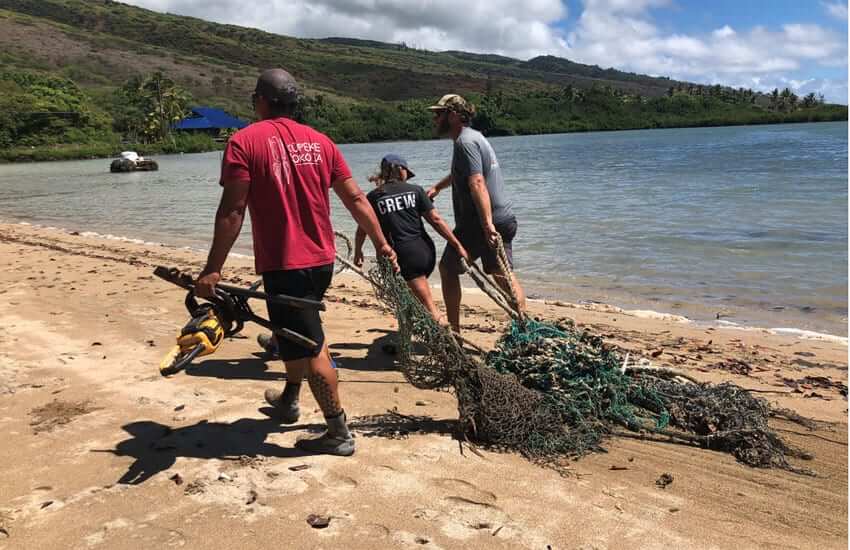
Repairs were made to the kuapā, invasive seaweeds and Upside-down Jellyfish were collected from the loko iʻa, red mangrove was cleared, and truckloads of plastic marine debris – an ongoing problem due to the fishpond’s location and prevailing ocean currents – were removed.
Kūpeke Ahupuaʻa hosted visits from haumāna from schools across the island, welcomed scientists from various institutions to conduct lab sampling of fishpond conditions, and invited the community to come kōkua during workdays.
Poepoe also invested time in building relationships with neighbors from the area; with community-focused organizations such as KUA, Sustainable Coastlines, and the Trust for Public Lands; and with government agencies like the Department of Land and Natural Resources (DLNR).
A Maui County fireman by profession, Poepoe has invested years of his time and energy in restoring and maintaining Kūpeke fishpond because of his aloha for and commitment to this wahi pana. He has never been compensated (or sought compensation) for his labor or time. Poepoe has also taken paid vacation to work at the fishpond and used money from his paycheck to purchase the tools and equipment needed to do that work.
In July 2024, when the probate process for Formes’ estate was completed, the ahupuaʻa of Kūpeke was listed by Corcoran Pacific Properties for $1.8 million.
For five years, Kūpeke Ahupuaʻa had worked to raise funds to purchase the land through large conservation organizations, but those processes take a very long time and with the land now listed on the open real estate market, their time had run out.
“We were informed that there was a potential buyer for the land. Someone from outside of Molokaʻi had put in a serious offer that was being considered,” Poepoe recalled.
Kūpeke Ahupuaʻa pivoted to a direct community fundraising campaign, seeking donations from organizations and individuals to purchase the land.
The years Poepoe had spent faithfully stewarding the loko iʻa and building a good reputation within the community had not gone unnoticed. “Those who knew us and had been following our work and believed in our mission felt comfortable enough in our abilities to support the cause,” he said.
The community came through and, against all odds, in January 2025 Kūpeke Ahupuaʻa was able to purchase the ahupuaʻa for $1.5 million.
“Had the other offer been accepted, all our years of work would have been at risk and the loko iʻa would have faced an uncertain future with a new, unknown owner,” said Poepoe.
Fishponds as Part of a Larger Ecosystem
Within a healthy ahupuaʻa, fishponds are part of a carefully managed and balanced ecosystem.
Hawaiian loko iʻa represent a highly sophisticated form of aquacultural engineering unlike anything else in the world. They are impressive features of Hawaiʻi’s traditional food system, and this speaks to the brilliance of our ancestors.
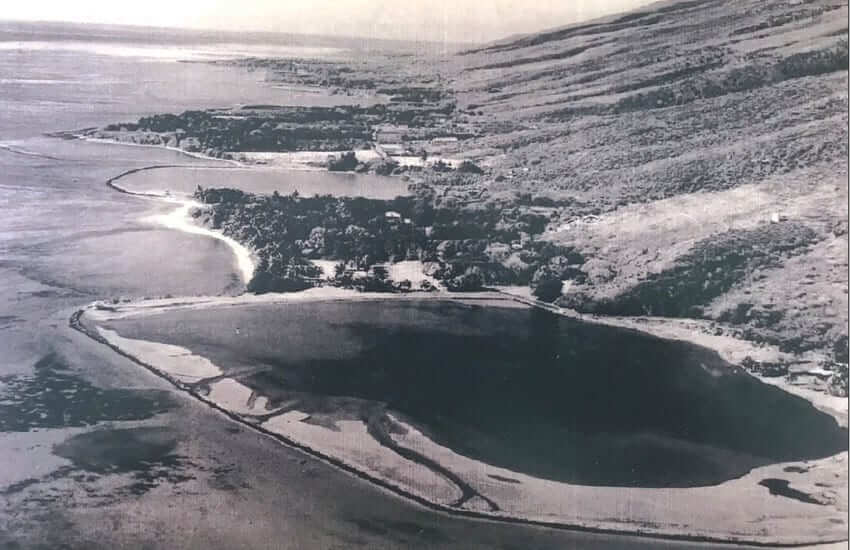
The loko iʻa at Kūpeke is a kuapā style fishpond with three mākāhā (sluice gates). Its wall is more than 2,200 feet long and connects the land at either side of Kūpeke, encompassing nearly 34 acres.
For centuries, an uninterrupted chain of fishponds stretched for miles along Molokaʻi’s southern shore. It is estimated that about 75 fishponds were once in production on the island but during the 20th century many fell into disrepair.
Hawaiian fishponds are not merely places to trap and harvest fish. They function as one hānau, (birth sands). Juvenile fish biologically imprint on Kūpeke by the hundreds of millions.
“It’s a mistake to believe loko iʻa primarily function as an industrial feed lot to mass produce a specific number of pounds of fish per acre,” Poepoe said. “That’s why they are called fish ponds not fishing ponds – a loko iʻa, not a loko lawaiʻa. There’s a balance to maintain and a kuleana for knowing that balance.”
Many of the fish born in healthy fishponds make their way out to sea, become part of the wild fish population, and ultimately part of the food chain ecosystem all the way to pelagic (deep water) fish.
Through fishponds, our kūpuna not only created a productive and sustainable nearshore food resource, they amplified the wild fish population as well.
Ongoing Mālama ʻĀina at Kūpeke

With Kūpeke now safe from development, Poepoe continues to work towards his vision of aloha ʻāina and restoration of the ahupuaʻa beginning with the rehabilitation of the loko iʻa.
Kūpeke Ahupuaʻa remains a small operation. It has a three-member volunteer board and no permanent full-time staff. Poepoe continues to do much of the work himself, but now has a helper thanks to Kupu, a conservation-focused nonprofit that provides environmental stewardship opportunities to young people.
Kupu is sponsoring an intern at Kūpeke Ahupuaʻa for an entire year and this has afforded Poepoe more time for handling the administrative duties a nonprofit requires.
The ongoing maintenance work at Kūpeke Loko Iʻa includes invasive species (both plant and animal) removal, marine debris clean-up, water quality monitoring, and limu monitoring. Biomass from the invasive plants and animals removed from the pond is composted and will be used to fertilize the mala (garden).

Poepoe has recently planted a small loʻi kalo near the loko iʻa and is caring for several varieties of niu (coconut) that were planted along the coastline years ago. In May, Kūpeke Ahupuaʻa welcomed partner organizations to help survey and catalog varieties of coconuts among the ulu niu (coconut grove).
“We wanted to elevate the social and cultural revival of niu by connecting people with the places that provide ceremonial meakanu (plants) used in our traditional and cultural practices,” Poepoe said.
One variety of coconut tree growing at Kūpeke is particularly special and known to cultural practitioners on the island. It is a variety called niu hiwa and its shell is valued for ʻapu ʻawa (cups used in ʻawa ceremonies).
As invasive plant species are removed from the fishpond and the surrounding area, they are being replaced by native and endemic plants. Poepoe gathers the seeds of plants like alaheʻe (a small hardwood tree) and ʻūlei (a spreading shrub) to eventually restore the native forest.
He also has plans to cultivate plants like hala (for lauhala weaving), wauke (for kapa-making), ʻōlena (turmeric) and iliahi (sandalwood). “Aside from growing lāʻau (medicine), we would like to have these plants readily available if needed for iwi kūpuna reburial ceremonies,” Poepoe explained.
Kūpeke Ahupuaʻa is also active in water rights advocacy and water use on Molokaʻi. Natural springs supply fishponds and important fishing grounds with a constant flow of fresh water – an essential component of healthy estuarine and marine habitats.
Finally, Poepoe is looking to repair a small building at the site adjacent to the loko iʻa that was filled with mud after the recent Kona Low storms in March. He is reimagining the building as a lab fitted with basic equipment that can be used as a gathering space in support of established monitoring and research projects.
Through implementing managed access along with ongoing habitat maintenance and monitoring, a gradual increase in fish populations has been observed at Kūpeke with a notable increase in the number of ʻamaʻama (indigenous mullet) finding refuge in the fishpond.
Despite these efforts, and early success, the fishpond continues to face challenges including native habitat loss, increased erosion from rainstorms leading to massive topsoil runoff settling in the pond, and higher-than-average tides that now regularly breach the fishpond wall.
A Mālama ʻĀina Practitioners Network
Anticipating that their work will become increasingly difficult given existing conditions that are being magnified by climate change, Poepoe is working with Hui Mālama Loko Iʻa to find solutions.
Hui Mālama Loko Iʻa – which operates under the umbrella of KUA – is a network of fishpond practitioners and organizations. This alliance allows members to connect, leverage each other’s skills, and share knowledge about fishpond restoration and management to support ongoing stewardship efforts across the pae ʻāina.
Brenda Lima is the Hui Mālama Loko Iʻa coordinator at KUA, and she emphasizes the important role that fishponds play in reflecting the overall health of surrounding ahupuaʻa.
“Common problems facing fishponds are related to water quality and invasive species,” Lima said, noting that they are the direct result of mismanagement or neglect of broader ahupuaʻa systems.
“It shows the gaps in management that have allowed invasive species to become established. Another consequence of historical land use mismanagement in ma uka areas are fishponds being filled in with sediment.”
She counts Poepoe’s success at Kūpeke as part of a growing movement of fishpond practitioners finding ways to acquire or secure long-term access to the lands they are already caring for. Lima said that Kūpeke Ahupuaʻa’s permanent stewardship of the ahupuaʻa represents the ideal situation.
“Someone with knowledge of the place – those are the people who should be managing these fishponds,” Lima said. “The people that have worked for years to take care of these places, especially if they are a family that has a generational relationship … they should be the managers providing long-term stewardship.
“That’s really the long-term vision that we have for fishpond management.”
Moving Forward
Kūpeke Ahupuaʻa’s mission is to eventually restore – and maintain – the entire ahupuaʻa, and Poepoe draws inspiration from his maternal grandmother, Marilyn Kahalewai, the artist behind the iconic ahupuaʻa poster found in classrooms across Hawaiʻi.
Poepoe said that, for now, the loko iʻa is the focal point of their work. In time, they will gradually move their restoration work both upland and out to the reef, following the natural movement of the ahupuaʻa.
His approach, based on the konohiki framework of traditional land and resource management, reinforces the idea that fishpond rehabilitation is not just about increasing fish populations; it’s about maintaining the entirety of an ahupuaʻa’s ecological and cultural systems. When these elements are in balance, communities can thrive.
With an eye to the future, Poepoe is also looking at succession planning and hopes that one day someone from the next generation will step up and take over stewardship of the ahupuaʻa “so I can step back and just be the yard man,” he laughed.
But for the time being, Poepoe continues his kuleana for maintaining the land, rehabilitating and restoring habitat, managing ʻāina, and reducing the spread of invasive species.
His is a lifelong commitment to aloha ʻāina.
Looking back on Kūpeke Ahupuaʻa’s accomplishments over the past few years, Poepoe notes that while protecting this wahi pana from development is a great achievement, what he is most proud of is “being able to give Kūpeke back to itself.”
To learn more about Kūpeke Ahupuaʻa go to kupekelokoia.com

 who watches over Kūpeke Loko Iʻa (fishpond).)