
By Melissa Kahili-Heede
Today, more than half of Native Hawaiians reside outside of the pae ʻāina. Some leave in search of opportunity, education, or stability. Others leave because staying has become too difficult.
Rising housing costs, limited economic mobility, and generational inequities make it unattainable for many families to remain in place. These conditions are not isolated. They are rooted in histories of dispossession, land loss, and political upheaval that reshaped Hawaiian life as we know it.
At Papa Ola Lōkahi, we understand our kuleana to improve Native Hawaiian health wherever Hawaiians live, work, play, and age. Therefore, in response to more Kānaka living on the continental U.S., we established He Alo a He Alo in August 2024 to explore how Hawaiian identity is lived, carried forward, re-envisioned, and challenged in all 50 states.
Through this project, our hope was to build pilina and expand our current understanding of Hawaiian identity and thus, the needs of Hawaiian wellbeing within Hawaiʻi and beyond.
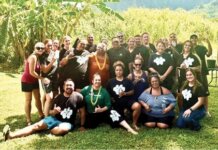
He Alo a He Alo was a year-long project in which our CEO, Dr. Sheri Daniels, hosted face-to-face gatherings across the continent and in Hawaiʻi. The project was named He Alo a He Alo (face-to-face) to set the intention and methodology for our listening tour.
We believed that sitting, listening, and talking story face-to-face with Hawaiians across the U.S. would establish pilina and generate unity in our collective kuleana of being well for our future generations.
We partnered with hula hālau, Hawaiian civic clubs, college alumni, and Hawaiian-serving organizations across the continent to recruit and host talk story sessions with Native Hawaiian adults to unpack Hawaiian identity and the strengths and challenges that come with being Hawaiian.
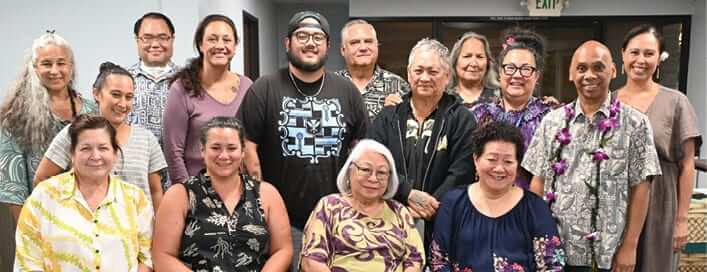
Rather than positioning community members as subjects, the project was grounded in reciprocal learning. Participants were recognized as ʻike holders and collaborators in creating understanding.
Each region brought unique perspectives and stories, reminding us that while our experiences may differ, our connections to one another remain unwavering. Recognizing what affects our people’s ability to sustain identity as Kānaka within and beyond Hawaiʻi enables Papa Ola Lōkahi to strategically build relationships and promote awareness. We learned what will help guide future engagement, programming, and opportunities to strengthen connections across our lāhui.
Since the conclusion of listening/talk-story sessions, we have worked to prepare final reports with deep aloha and care for our continental ʻohana and hoa. We are currently in the process of reporting back to the communities who so graciously allowed us in, reporting regionally starting with the Pacific-West and working our way east.
We see these reports as a starting point rather than a conclusion. With the reports come recommendations from community members, rooted in participants’ voices. Our hope is that other Native Hawaiian-serving organizations will join us in caring for the health of Kānaka wherever they are, he alo a he alo.
E ola mau ka lāhui Hawaiʻi!