
On June 15, key provisions within the Fiscal Year 2027 National Defense Authorization Act (NDAA) was passed by the U.S. Senate Armed Services Committee. These provisions address the future of military-leased lands in Hawaiʻi, including lands at Pōhakuloa Training Area and Kahuku Training Area.
The Office of Hawaiian Affairs (OHA) specifically recognizes the significance of Section 2864, which establishes direction for the Department of the Army to pursue lease renewals on terms acceptable to both the State of Hawaiʻi and the Department of the Army, while also requiring critical environmental review and congressional reporting requirements.
Most encouraging is the NDAA’s movement away from condemnation and toward negotiated solutions. The process outlined is consistent with OHA’s long-standing position opposing condemnation – whether forcible or “friendly” – and insisting that lands held in public trust remain in the public trust and continue benefiting Native Hawaiians and future generations of Hawaiʻi’s people. Senate language reflects important progress toward a more collaborative and constructive path forward.
OHA has also repeatedly emphasized the importance of addressing unresolved deficiencies in the EIS previously rejected by the Hawaiʻi Board of Land and Natural Resources (BLNR) in May 2025, and continues to advance its work to ensure that Native Hawaiian customary and traditional practices, natural and cultural resources, and public trust obligations, are fully documented and considered in any land use decisions affecting public trust lands leased by the military.
As part of this effort, OHA is actively moving forward with a comprehensive Ka Paʻakai Analysis (KPA) for the Pōhakuloa Training Area. The Board of Trustees has approved a Permitted Interaction Group allocation of $60,000 to support this work.
OHA also notes that the NDAA contemplates the pursuit of future lease arrangements. As discussions continue regarding potential lease terms, community benefit commitments, land-back and lease-back models, and other components of any future agreement, OHA believes those arrangements must remain consistent with Hawaiʻi’s environmental laws and public trust obligations.
Any benefits derived from renewed use of these lands should reinforce the purposes of the public trust, protect traditional and customary Native Hawaiian practices, honor the history and significance of these lands, and preserve the value they were intended to provide for Native Hawaiian beneficiaries and future generations of Hawaiʻi’s people.
This legislative development follows OHA’s recent high-level engagement in Washington, D.C., where OHA leadership met with members of Hawaiʻi’s Congressional Delegation, senior senate staff, and key stakeholders.
Notably, the Senate Armed Services Committee’s action reflects meaningful progress in acknowledging Hawaiʻi’s unique legal and cultural context. The removal of condemnation as an option and the requirement for renewed environmental review are consistent with what OHA has long advocated – that these lands must not be permanently alienated and that Hawaiʻi’s concerns must be fully addressed in good faith.
Congress appears willing to respect Hawaiʻi’s laws and institutions. The opportunity before us now is to fully embrace the responsibilities and authorities those laws entrust to us. OHA will continue to ensure Native Hawaiian rights and public trust responsibilities remain central to any future decisions.
The FY2027 NDAA is expected to advance to the full U.S. Senate for consideration by the end of July. OHA will continue to closely monitor the bill’s progression and engage with federal and state partners as appropriate to ensure that the final legislation preserves protections for Native Hawaiian rights, cultural resources, and public trust lands.
OHA will also continue its coordination with DLNR and congressional offices to ensure that the EIS resubmission process is substantive, responsive, and consistent with Hawaiʻi law and prior state findings.
OHA remains committed to ensuring that any future disposition or renewal of military leases on Hawaiʻi lands: protects Native Hawaiian traditional and customary rights; upholds public trust obligations for kingdom and crown lands; avoids permanent alienation of public trust resources; ensures meaningful state and Native Hawaiian beneficiary consultation; and incorporates rigorous environmental review, including traditional and customary practices.
OHA will continue to provide technical support, policy input, and community engagement at the state and federal levels as this process advances in Hawaiʻi and Washington, D.C.


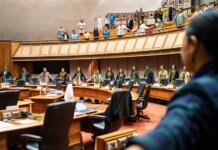
 was passed by the U.S. Senate Armed Services Committee.)