OHA Hosts the Revival of Lā Kūkahekahe
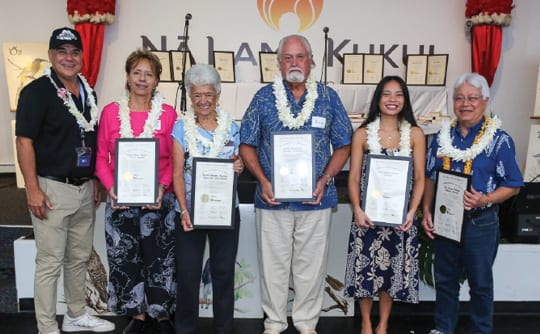
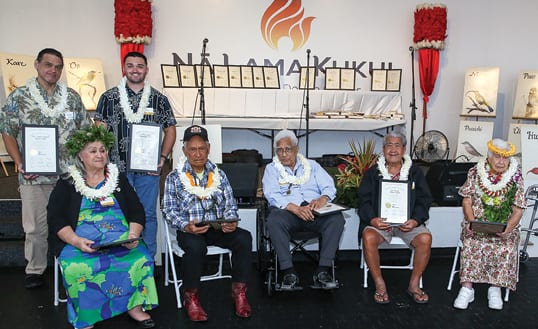
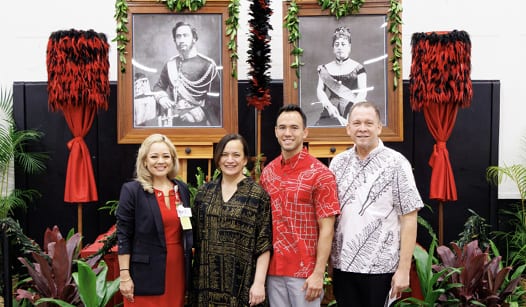
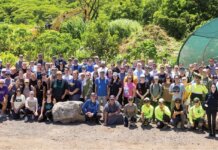
Auhea ʻoukou e nā manu, nā alo leo o ka ʻāina. Lele mai! Lele mai! E nā manu lele mai i ka Lā Kūkahekahe! On February 14, as part of the month-long celebration of Mahina ʻŌlelo Hawaiʻi (Hawaiian Language Month), the Office of Hawaiian Affairs (OHA) hosted the first Lā Kūkahekahe in nearly a decade. First established in the 1970s by ʻAhahui ʻŌlelo Hawaiʻi, Lā Kūkahekahe was a day dedicated to celebrating ka leo o ke ola (the voice of life) through meaningful conversation, friendly competitions, live music, games, and food. OHA presented Lā Kūkahekahe in partnership with ʻAhahui ʻŌlelo Hawaiʻi, ʻAha Pūnana Leo, Hawaiian Council, Ka Haka ʻUla o Keʻelikōlani, Kamehameha Schools Kapālama, Kanaeokana, Kāhuli Leo Leʻa, Kui Leo Hawaiʻi, and Kuini Piʻolani Hawaiian Civic Club. It was one of a series of gatherings last month that support the strengthening of Hawaiian language efforts and relationships across the pae ʻāina. Notably, this Lā Kūkahekahe honored our mānaleo (native speakers) and the original members of ʻAhahui ʻŌlelo Hawaiʻi for their contributions to the perpetuation of our language. In the top photo, representatives of the original steering committee that met in May 1972 and eventually established the ʻAhahui ʻŌlelo Hawaiʻi are honored. (L-R): OHA Trustee Dan Ahuna, Marvi Rosehill Ching (representing her mother, Violet Māhela Rosehill), Sarah ʻIlialoha Keahi, ʻAimoku McClellan (representing his mother, Esther Waiheʻe McClellan), Kamaluapāwehi Abad (representing her grandfather, Fred Cachola), and Dr. Larry Kimura. Also remembered at Lā Kūkahekahe were late steering committee members Dorothy Kahananui and Carinthia Harbottle. In the bottom picture, our remaining manaleo (native speakers) are honored. Sitting (l-r) are Louella ʻŌpuʻulani Albino, Karin Haleamau, Kahu David Kaupu, Kahu Charles Milikaa Yabui, and Carnation SaiFarr Harvest. Standing behind the manaleo are (l-r) Keala Kaupu, representing his aunt, Mable Paupalai Kaupu Boyd, and Kanoah Stevens representing his grandmother, Irene Nohokaha Midel. – Photos: Nelson Gaspar
Waimea Valley Indigenous Economic Resiliency Project
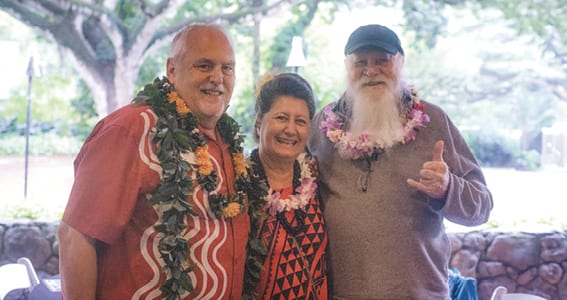
In a joyful January blessing ceremony, Waimea Valley launched its Indigenous Community Economic Resiliency Project, Hoʻopōmaikaʻi ʻĀina a Papa Hana o Waimea Ma ʻĀina Puʻukua – one of the most significant investments in the valley in over 50 years.
The process began in 2021 with the U.S. Economic Development Administration grant of $3.75 million, augmented by funding from the State of Hawaiʻi Grant-in-Aid program, the Hawaiʻi Legacy Lands program, the City Clean Water Natural Lands program, and generous community contributions.
These funds will be used to create a Hawaiian educational complex featuring an agroforestry garden and traditional Hawaiian hale – a multi-million-dollar investment in cultural education, infrastructure, environmental stewardship, and long-term community resilience.
“This project will help prepare Waimea Valley for the next 20 years, ensuring the valley thrives while continuing to support the nearly 200 individuals and their ʻohana who rely on Waimea Valley for their livelihood. Community and community partners have always been central to who we are. The work being done through this project is for the community,” said Waimea Valley Executive Director Richard Pezzulo.
The Indigenous Community Economic Resiliency Project is more than a capital improvement – it reflects a long-term commitment to cultural perpetuation, environmental stewardship, workforce development, and community wellbeing. The creation of educational spaces, infrastructure modernization, and preservation of sacred lands, allows Waimea Valley to continue its mission to serve as a living cultural landscape.
Waimea Valley is owned and managed by Hiʻipaka LLC, a subsidiary of the Office of Hawaiian Affairs.
Old EIS Used to Approve Kahuku Development
A lawsuit filed in February challenges the City and County of Honolulu Department of Planning and Permitting’s approval of a new Ritz-Carlton resort at Kuilima on Oʻahu’s North Shore.
The lawsuit, filed by Earthjustice on behalf of the Center for Biological Diversity, Conservation Council for Hawaiʻi, and community group Kūpaʻa Kuilima, asserts that the county relied on an outdated supplemental environmental impact statement issued in 2013.
Meanwhile, another parcel closer to Kahuku and the James Campbell National Wildlife Refuge is also slated for development. The cumulative stressors on the area’s ecosystem were never properly analyzed.
“Hawaiʻi’s environmental laws exist to protect our ʻāina and the native species that are inseparable from Native Hawaiian culture and identity,” said Jonee Kaina Peters, executive director of Conservation Council for Hawaiʻi.
“When agencies allow large-scale resort development to move forward without accounting for impacts to endangered species and culturally important ecosystems, they are failing both the law and their kuleana to future generations.”
New information about native wildlife in the project area includes the presence of endangered yellow-faced bees, a breeding colony of Mōlī (Laysan albatross) established at nearby Kahuku Point, and the use of the beaches fronting the development area by endangered Hawaiian monk seals to birth and rear their pups. None of this was addressed in the 2013 environmental review.
“Hawaiʻi’s environmental review laws are only as strong as the government’s willingness to enforce them,” noted Earthjustice attorney Dru Hara.
Sproat Honored by HILT
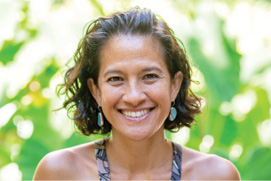
Kapuaʻala Sproat, Director of the Ka Huli Ao Center for Excellence in Native Hawaiian Law and a professor of law at UH Mānoa’s Richardson School of Law was honored by the Hawaiʻi Land Trust (HILT) at its 24th Annual Buy Back the Beach benefit lūʻau on January 24 on Maui.
Each year, HILT recognizes people or organizations that have made a substantial impact on the health of Hawaiʻi’s lands and communities with its Champion of the Land award.
Sproat and co-awardee Earthjustice attorney Isaac Moriwaki worked for years on Maui’s landmark Nā Wai ʻEhā case which helped restore stream flows and water rights on Maui and provided a powerful legal and community precedent for other water restoration cases across the islands.
Sproat joined the law school as an assistant professor in 2007. She currently teaches courses in Native Hawaiian and environmental law, and legal research and writing. She is also co-director of the Native Hawaiian Rights Clinic.
Prior to that, she served for almost a decade as an attorney with Earthjustice’s Mid-Pacific Office. She has worked to preserve the resources necessary to perpetuate Native Hawaiian culture by litigating state and federal cases under the Endangered Species Act, Clean Water Act, State Water Code, and various Hawaiʻi environmental laws. Sproat is from Kauaʻi’s North Shore in Kalihiwai, but now resides on Oʻahu with her ʻohana.
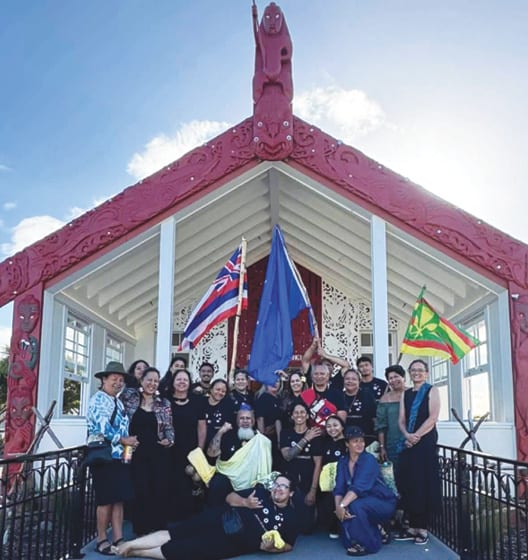
Ka Lāhui Travels to Waitangi Standing in Solidarity with Māori
Mahuna Appointed Police Chief
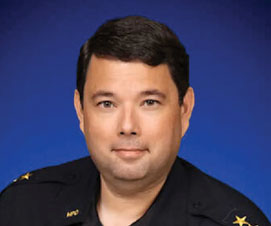
Following a nationwide search, on January 30 the Hawaiʻi County Police Commission named Hawaiʻi Island kupa Reed K. Mahuna the Hawaiʻi Police Department’s (HPD) new police chief.
Mahuna has served as interim chief since last September. He was appointed deputy chief in January 2024.
He was selected from a competitive group of eight finalists. Members of the commission said that Mahuna’s extensive experience in the department, as well as community input, were major factors in their decision.
He joined HPD in 1998 and, in addition to serving as deputy police chief, Mahuna has served as an officer, detective, lieutenant, and captain in multiple districts and divisions. More recently he served as major of the Technical Service Division overseeing criminal investigations, communications, records and traffic operations.
Born and raised on Hawaiʻi Island, Mahuna has an associate’s degree in liberal arts and administration of justice from Hawaiʻi Community College and a bachelor’s degree in criminology and criminal justice from Lindenwood University. He is the son of retired Hawaiʻi Police Chief Lawrence Mahuna who led HPD from 2002-2008.
Federal Funding for Pūnana Leo
The office of Sen. Brian Schatz has announced that $1.3 million in congressionally directed funding has been secured for ʻAha Pūnana Leo. The funding will be used to train teachers, support families, and develop new early childhood educational Hawaiian language teaching materials such as books and videos to help keiki build literacy and math skills.
Schatz, a senior member of the Senate Appropriations Committee, said, “This new earmark funding will help revitalize the Hawaiian language while making sure more kids have the resources to learn and grow.”
ʻAha Pūnana Leo CEO Kaʻiulani Neff Laeha expressed gratitude towards Schatz and the rest of Hawaiʻi’s Congressional delegation for their support saying, “ʻAha Pūnana Leo was built from the ground up by families and community members committed to restoring and strengthening ʻōlelo Hawaiʻi, and this funding continues that vision … ensuring that ʻōlelo Hawaiʻi continues to flourish in our classrooms, homes, and communities statewide.”
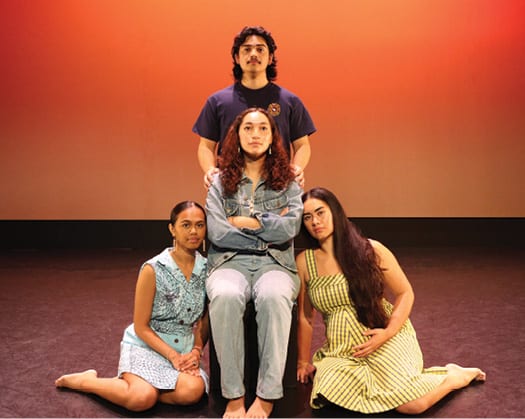
Hana Keaka’s Lele Wale Premieres in March
FEMA Assistance Extended for Maui
The Federal Emergency Management Agency (FEMA) has approved a one-year extension of its temporary housing assistance to survivors of the 2023 Maui wildfires through Feb. 28, 2027. The housing assistance, set to expire in February 2026, was extended under the Robert T. Stafford disaster Relief and Emergency Assistance Act at the request of the State of Hawaiʻi.
The program extension was deemed necessary as Maui continues to face severe housing supply constraints following the wildfires combined with prolonged rebuilding timelines and limited affordable rentals, which has made it difficult for many displaced households to secure permanent housing without continued FEMA support.
Survivors with demonstrated need residing in any FEMA-provided temporary housing may remain for another year, provided they maintain eligibility. Additionally, households participating in FEMAs rental assistance program may continue receiving financial assistance to help pay their rent if they continue to demonstrate need and meet eligibility requirements.
FEMA is working with state and county officials to help ensure all survivors transition to permanent housing in the next year. For more information call your Recertification Advisor or the FEMA Helpline at 1-800-621-3362.
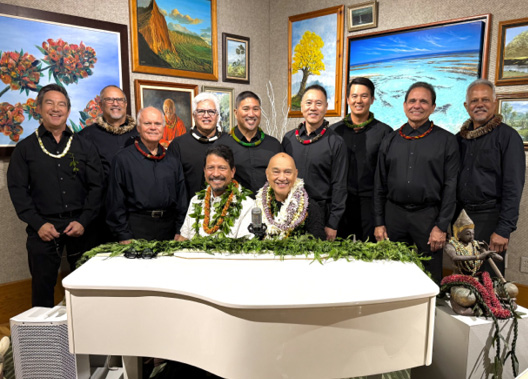
Ke Kilo Lani Exhibit at WCC Honors the Life and Legacy of Robert Cazimero
Hāpai Women Sought for Research Study
ʻŌiwi Ph.D. candidate Christina Young is seeking participants for a UH Mānoa research study centered on strengthening the health and wellbeing of our lāhui through a deeper understanding of hānai waiū (breastfeeding) experiences among Kānaka ʻŌiwi.
Her research entails conducting talk-story sessions with ʻŌiwi women who are hāpai for the first time to learn about their perspectives around infant feeding practices.
This work is grounded in the understanding that Hawaiian health and infant nutrition are deeply connected to ʻohana, community, and culturally aligned practices. Young hopes to use this research to uplift the voices of Kānaka ʻŌiwi mothers and contribute to research that reflects our values, informs future programs, and supports initiatives that prioritize Native Hawaiian health across the pae ʻāina.
Native Hawaiian women who are currently pregnant may be eligible to participate in this study. For more information, please complete the screening form or contact Young at [email protected].
Lono Ku Mana Hawaiian Gods Calendar

As we move from Lono into Kū, a unique wall calendar by artist Jackie Kahookele Burke offers a fresh way to track the passage of time. The calendar features an original painting of “unity and aloha” by Burke. Her vision was to create a representation of Hawaiian gods that would “vibrate a message that would bring together and create a unifying moment in time that reflects ancient wisdom and ritual into modern day consciousness.” Her artwork is abstract and symbolic and represents the connection of energies. Presented on a single sheet, front and back, the calendar begins with the current Makahiki season and ends in November 2026 when the next Makahiki season will begin. For more information or to purchase go to jackieburkedesigns13.com or email [email protected].
ʻIolani Celebrates the Birthday of Kamehameha IV