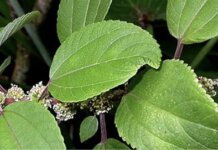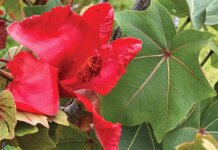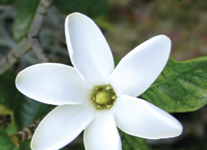


But … which one? Of our mea ʻāpaʻakuma, endemic things, those found only in our pae ʻāina, we have 50 species of Melicope. Fifty. According to geneticists, one propagule, a seed or plant, arrived here millions of years ago and evolved into our 50 different ʻalani, of which the mokihana (Melicope anisata) of Kauaʻi is one. Relatives are found on nearly all other islands.
Part of the citrus family, ʻalani are scented like anise, which make their lau a favorite for tucking into layers of kapa. I used to love picking up fallen lau and hand-crushing them to surprise walking companions.

As the floral “symbol” of Kauaʻi, lei are made with green, cube-shaped seed capsules of mokihana. Please remember to be frugal and take only enough so they are symbolic. Let most remain on the sprawling shrub or small tree so they can ripen and perhaps start new plants. Excessive use of resources, whether it’s 50 strands of lei pūpū, or 25 strands of pīkake, or 20 strands of maile draped to the floor does not help to conserve and preserve mea makamae.
Mokihana seed capsules contain a chemical, furanocoumarin, that, upon contact with perspiring sunlit skin, can cause a rash. Entwined with maile lauliʻi, as they often are, our skin is partially shielded from lei mokihana, but in any case, be aware, and be careful.