
One day, Māui, the demigod son of Hina, saw smoke rising from the coast and decided to investigate, for at that time, no man knew how to make fire.
He discovered that Elehuapī, the leader of the ʻalae ʻula, and her fellow moorhens were secretly cooking on an open flame while Māui and his brothers were out fishing. The next morning, Māui cleverly pretended to be at sea and hid nearby, watching the birds roast their bananas.
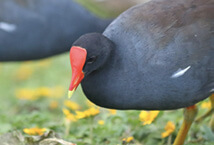
When he confronted Elehuapī, she withheld the fire’s origin until Māui squeezed her legs so hard she finally revealed the secret: rub two dry hau sticks together until they ignite. Furious at her initial deceit, Māui burned the top of her head, forever marking all ʻalae ʻula red for everyone to see.
From that day, the imu was made, and travelers to the uplands could have sustenance while on their bird-catching and tree-finding journeys. This is one of several stories of how the ʻalae gave fire to humans.
ʻAlae ʻula (Gallinula galeata sandvicensis) are noted in many moʻolelo and kaʻao as family mediums, in hoʻopiʻopiʻo (a form of sorcery), and as a kinolau of the goddess Hina.
Once abundant in areas rich with freshwater, they are recognized today as biocultural indicators of healthy and productive wetlands. Today, the endemic and endangered ʻalae ʻula are found only on Kauaʻi and Oʻahu, with hopes for future translocations to Hawaiʻi Island.