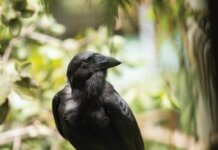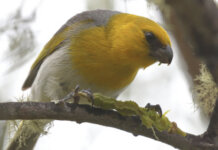
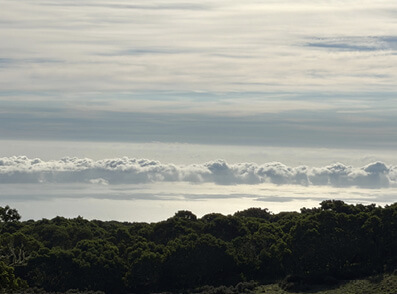
On the eastern slope of Maunakea, within the ahupuaʻa of Hakalau Nui and near the corridor of Kanakaleonui, lies the Hakalau Forest National Wildlife Refuge. Known as the place of “many perches,” Hakalau shelters some of Hawaiʻi Island’s rarest endemic forest birds. Here, critically endangered species like the ʻAlawī, ʻĀkepa, and ʻAkiapōlāʻau persist in some of their strongest remaining populations.
In the early mornings, birdsong fills this heavenly forest with pulses of vitality, accompanied by deeper echoes of mourning for what is vanishing elsewhere across our islands. As the decline of Hawaiʻi’s native honeycreepers accelerates, we must ask: could species like the ʻAkikiki, ʻAkekeʻe, and ʻAnianiau of Kauaʻi, or the Kiwikiu and ʻĀkohekohe of Maui one day also find refuge here?
Standing beneath the expansive canopies of ʻōhiʻa and koa, a question arises in response: why not?
Translocation is a bold and necessary tool in a changing world. Yet resistance to moving species between islands remains.
Even here, lower elevations face growing threats from avian malaria and ecological instability. Still, Hakalau represents possibility, supporting the most robust community of native honeycreepers in all of Hawaiʻi.
We must not limit these precious birds’ chances for survival, embrace hope, and re-ground ourselves with the strength that Hakalau offers.
Our precious manu are calling out to remind us of the power of place that is the essence of who we are as Hawaiʻi.