


Hauʻoli and Kenika Lorenzo-Elarco
On March 24, 2026, despite massive opposition and historical environmental abuses, the Western Pacific Regional Fishery Management Council (WESPAC) voted to restore commercial fishing in culturally and ecologically vital ocean areas across Moananuiākea including Papahānaumokuākea, Pacific Islands Heritage (PIH), Muliava (Rose) Atoll, and Marianas Trench Marine National Monuments.
Though the meeting was scheduled to adjourn by 5:00 p.m., the highly debated topic brought an overwhelming amount of written and public comments, running the meeting past 8:00 p.m. Comments came from both sides, however, it was clear that the majority were Indigenous voices from across the Pacific collectively opposing commercial fishing in protected marine areas.
Individual community members and organization representatives provided powerful testimonies on upholding the strongest protections in these places for the benefit of future generations. Many also highlighted the irreversible consequences of over-extraction and exploitation of ocean resources. Others pointed out that commercial fishing risks repeating past mistakes that continue to cause harm today.
Despite the obvious public opposition, WESPAC still voted to allow commercial fishing in all four Pacific marine monuments. Specifically, for Papahānaumokuākea, they voted to open the 3-200 nautical miles (nm) area for bottomfish and pelagic fisheries.
The delegate representing Hawaiʻi was the only WESPAC member who voted “no” to allow commercial fishing in any of the marine monuments. All others voted “yes.”
WESPAC members continue to advance their commercial fishing agenda in the Pacific through three recurring claims: 1) commercial fishing is a cultural practice and right of Indigenous Pacific Island peoples; 2) these protected areas are “American waters, and American fishermen have the right to fish there;” and 3) Pacific Island peoples carry an unfair burden of global marine conservation goals.
These claims are misleading, and fundamentally distort Indigenous values, histories, and responsibilities.
First, there is nothing culturally Indigenous about the industrial exploitation of our seas. Fishing alone does not make a practice Indigenous. What is Indigenous is the kuleana to ensure abundance endures so that future generations may thrive. “Pono fishing” is not a slogan; it’s at the core of our cultural practice.
Second, invoking “American waters” to justify extraction erases the deeper and ongoing realities of Indigenous relationships to these places. It reduces ancestral ocean spaces to political and economic boundaries while the council selectively invokes Indigeneity only when it serves their commercial interests. This contradiction reveals WESPAC’s argument for what it is: opportunistic and unprincipled.
As the late Tongan-Fijian writer and anthropologist Epeli Hauʻofa reminds us, “No people on earth are more suited to be guardians of the world’s largest ocean than those for whom it has been home for generations.”
Stewardship is not a burden imposed on us as Pacific peoples – it is a responsibility, privilege, and right carried forward with intention and pride. These protected places exist because our ancestors inherited an understanding of the ocean’s significance from their ancestors and thus, acted to safeguard the ocean as the most valuable resource for us, their grandchildren.
To frame protection as a “burden” and exploitation as a “right” is to invert the very values that have sustained our Pacific ancestors and ecosystems for generations.
Though this was expected from the WESPAC vote, the outcome does not yet make commercial fishing legal.
There are still several steps and consultations that are lawfully required. We are continuing to organize and remain vigilant to ensure commercial fishing does not gain any legal ground, and that our oceans protected in perpetuity – for the benefit of our grandchildren.
Follow us on FB and IG @papahanaumokuakea.cwg and @papahanaumokuakea.coalition to stay updated and get involved.

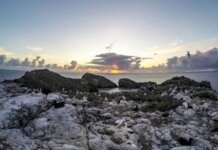
 voted to restore commercial fishing in culturally and ecologically vital ocean areas across Moananuiākea including Papahānaumokuākea, Pacific Islands Heritage (PIH), Muliava (Rose) Atoll, and Marianas Trench Marine National Monuments.)