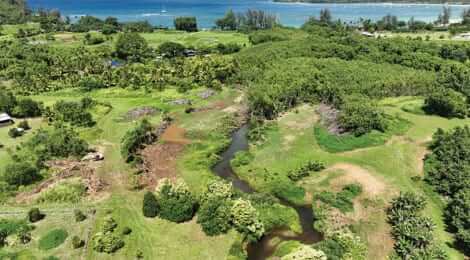
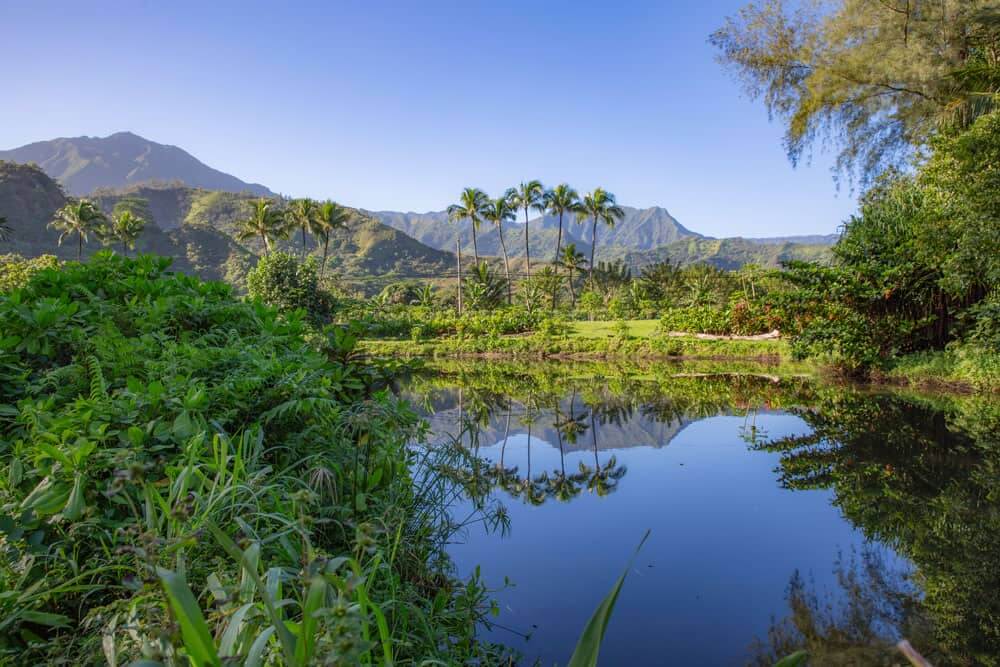
At the base of a lush valley in northern Kauaʻi, where rain clouds gather and rivers wind their way to the sea, is the ahupuaʻa of Waipā. It is more than a place. It is a living system, a reminder of what Hawaiʻi once was and what it can still become.
Long before visitors arrived with cameras and itineraries, this ahupuaʻa fed a thriving population through extensive loʻi systems nourished by ʻauwai, and ʻohana lived in deep relationship with the ʻāina that sustained them. Waipā was abundant, not in excess, but in balance.
Over time, that balance was broken. From sandalwood extraction to rice farming, the valley changed, and by the 20th century, development threatened this once food- producing land. Plans were in motion to transform Waipā into a resort landscape, reshaped for visitors rather than rooted in community. But Waipā did not disappear, even as the community that once lived in deep relationship with it began to be displaced.
In 1982, led by LaFrance Kapaka Arboleda, ʻohana from Kauaʻi’s north shore came together to oppose that future. They envisioned something different. A living learning center where Hawaiian culture, food systems, and ways of life could continue.
Alongside Kapaka Arboleda, community members including Cathy Kalehua Ham Young, Akita Harada, Harry Hoe, George Kaona, Samson Mahuiki Sr., Eddie Puʻulei, William Puʻulei, Dukie Puʻulei, Charlie Spencer, and David K. Sproat helped carry that vision forward. Others, including Gladys Brandt, Patrick Kelekoma Sr., Eugene Lum, Atwood Makanani, and Francis X. Warther, were instrumental in protecting Waipā from development and helping establish the Hawaiian Farmers of Hanalei.
They obtained the lease for Waipā in 1986 from Kamehameha Schools and today Waipā is one of the few ahupuaʻa in Hawaiʻi that remains whole and under a single steward.
The Waipā Foundation, established in 1994, assumed the master lease and nearly all operations by 2005. It now cares for more than 1,600 acres, managing the valley as a living system rooted in stewardship, cultural resiliency, and agriculture.
For Waipā Foundation Executive Director Stacy Sproat, the work is deeply personal. “We’ve always been entrepreneurial,” Sproat said. “But it’s always been about how do we sustain this work and still stay true to who we are.” She reflects on her life’s work as a blessing, being able to restore and sustain her community while continuing the practices she grew up with.


Over decades, she worked alongside kūpuna leaders to help build Waipā as a place where Hawaiian community could thrive. Though those kūpuna are now passed, their work and knowledge live on across the ʻāina. There are more ʻoʻopu swimming in the stream, less damage from floods, the soil continues to improve, and there are abundant harvests from lands that were once overrun by hau bush. It’s also seen in the people themselves. Young people who were raised at Waipā are now returning as adults with their own keiki, maintaining that pilina to ʻāina.
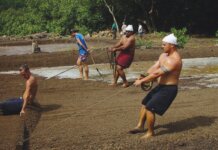
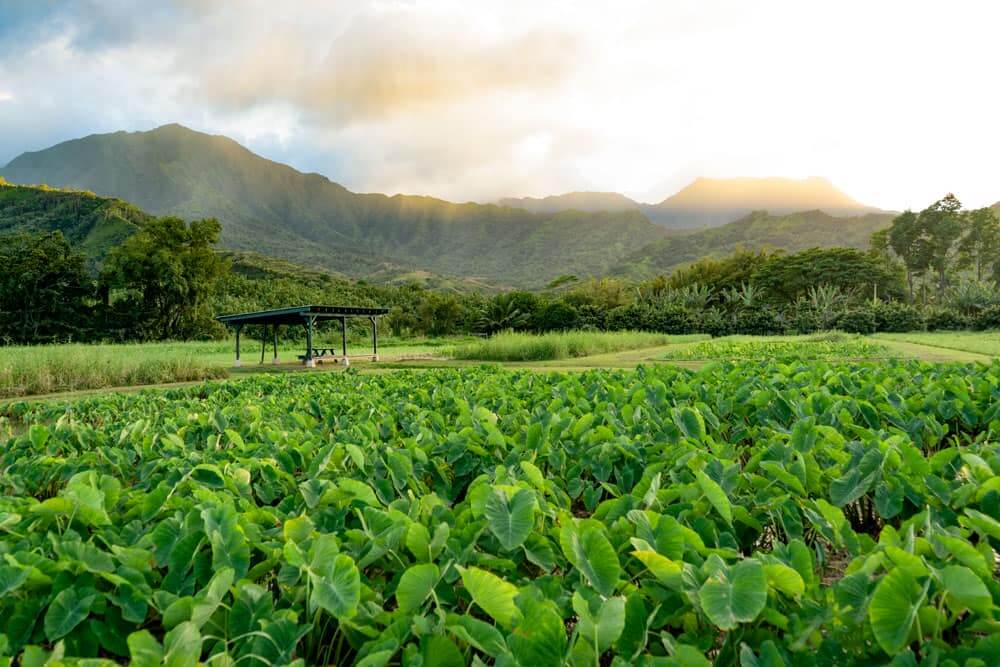
Feeding the community through cultural practice and a continued relationship with the land remains central to this effort. Every Thursday morning, Waipā’s staff and community volunteers gather to process cooked kalo into poi, continuing a food justice tradition started more than 40 years ago by the Hawaiian Farmers of Hanalei. Today, Waipā distributes an average of 800 pounds of poi each week to kūpuna and ʻohana at or below cost.
Every Thursday morning for Poi Day, the community gathers to process cooked kalo into poi. What began over 30 years ago as a food justice effort has grown into a vital resource, with Waipā distributing an average of 800 pounds of poi each week to kūpuna and ʻohana at cost.
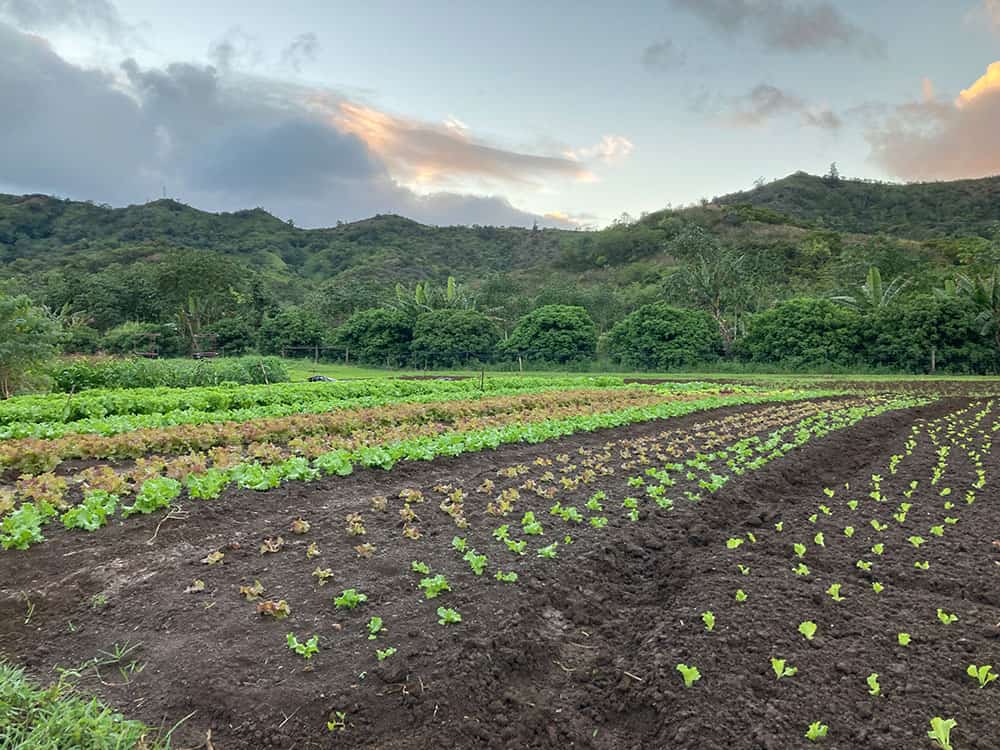
That same relationship is reflected in the weekly farmers market, where fresh produce grown in the valley is shared directly with the community. Food leaves Waipā not as product, but as nourishment for the community. Waipā hosts events like Eat the Invasives, where hunters, fishers, chefs, and community members highlight invasive species through a culinary experience that helps attendees understand how to manage them, and the annual Waipā ʻĀina Festival which brings the community together through locally sourced food, cultural activities, and local vendors in support of the foundation and participating entrepreneurs.
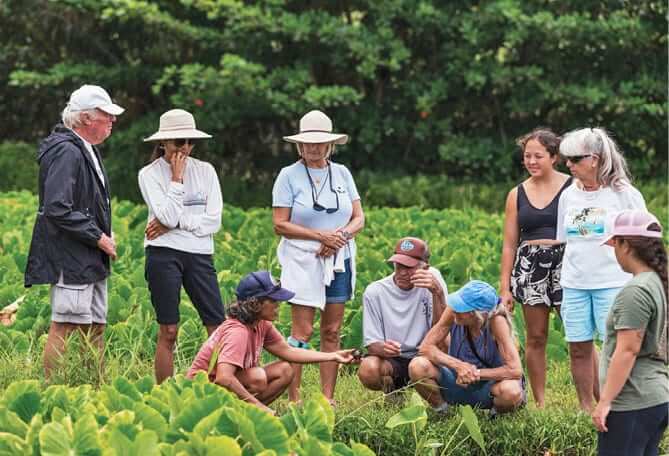
Waipā’s efforts have expanded beyond growing food. They are also raising future farmers and community advocates. The valley serves as an outdoor classroom, providing educational programs for schools, families, and community members. Participants learn directly from the land, gaining hands-on experience in farming, resource management, and cultural practices. Group visits and volunteer opportunities invite people to step into these practices, whether in the loʻi, helping to mālama the land, or supporting the local community.
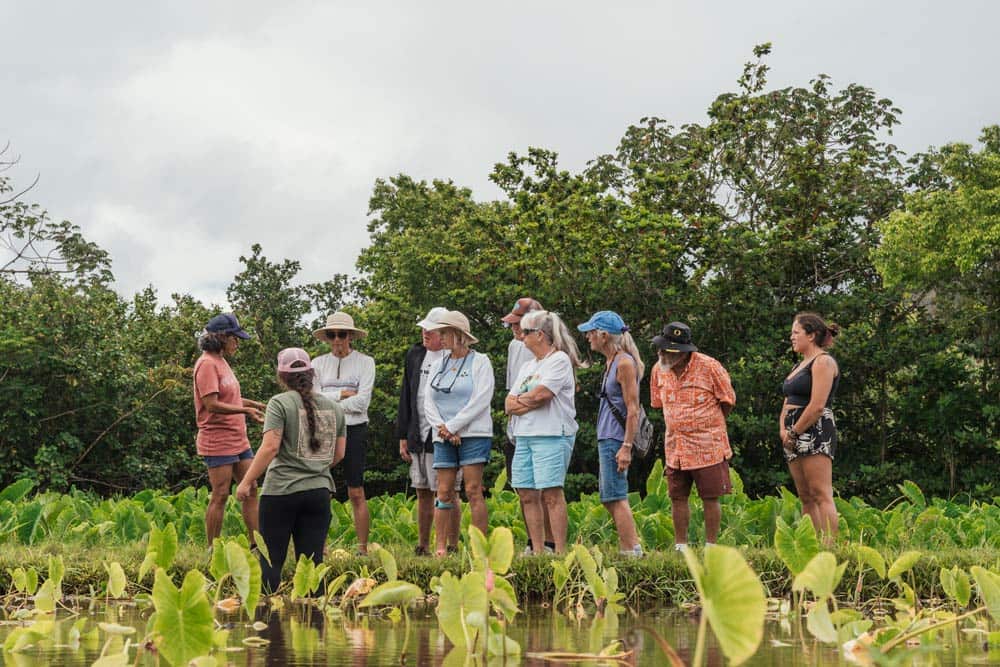
Visitors and Hawaiʻi residents are also invited to engage with this land and its efforts through Waipā’s regenerative food and farm tours. This is not tourism built on extraction, but an invitation to understand.
“There are visitors who are our kind of people,” Sproat said. “People who come with intention, who want to learn, who want to understand.” Many leave with a deeper connection to the valley, later returning as volunteers, donors, advocates, and friends.
From the coastline of Hanalei Bay to the uplands of Waipā Stream, participants experience the full span of the ahupuaʻa. Along the way, they learn how traditional knowledge and modern tools work together to restore balance. Guides, many of whom are directly involved in the care of the valley, share how resources are managed and why restoration is both environmental and cultural.

Looking ahead, Waipā is entering a new phase focused on strengthening long-term sustainability while remaining grounded in its cultural values. While grants continue to support much of this work, efforts are underway to build more resilient models that can support both the organization and the community it serves.
Waipā continues to evolve as a modern ahupuaʻa at a time when communities across Hawaiʻi face displacement and loss of access to land and resources. After decades of laying the groundwork, it stands today not just as a model, but as a living Hawaiian community. One that feeds its people, teaches its keiki, and sustains ʻāina through daily practice.
Here, culture and knowledge are not only preserved but lived through the work of growing food, caring for the land, and maintaining pilina across generations.
“It’s been such a blessing for me to be able to spend my life doing the kinds of things I did as a kid and bring our Hawaiian community back from the brink of losing our place here,” Sproat said.