By Wayne Chung Tanaka and Lenei Naipo
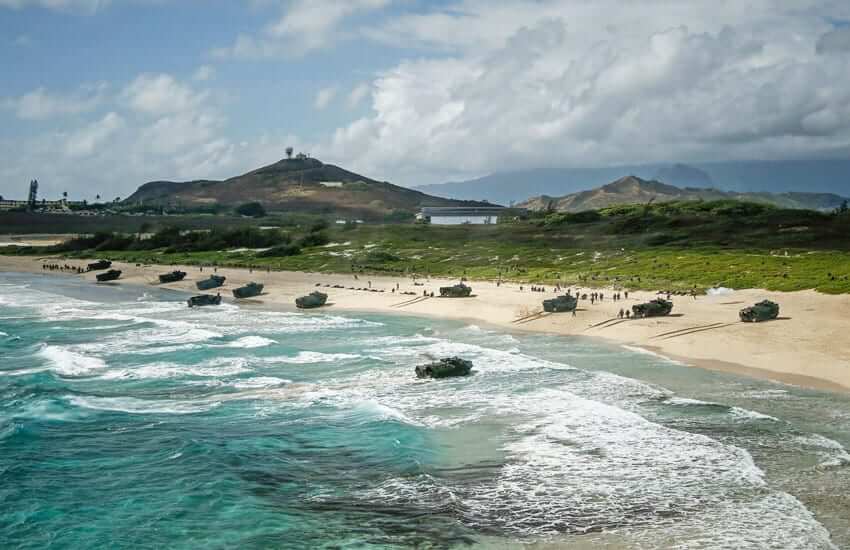
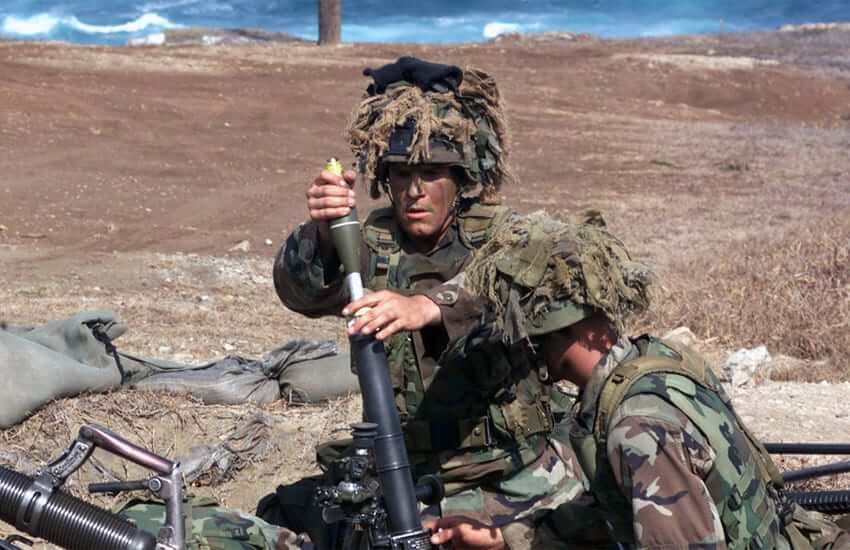
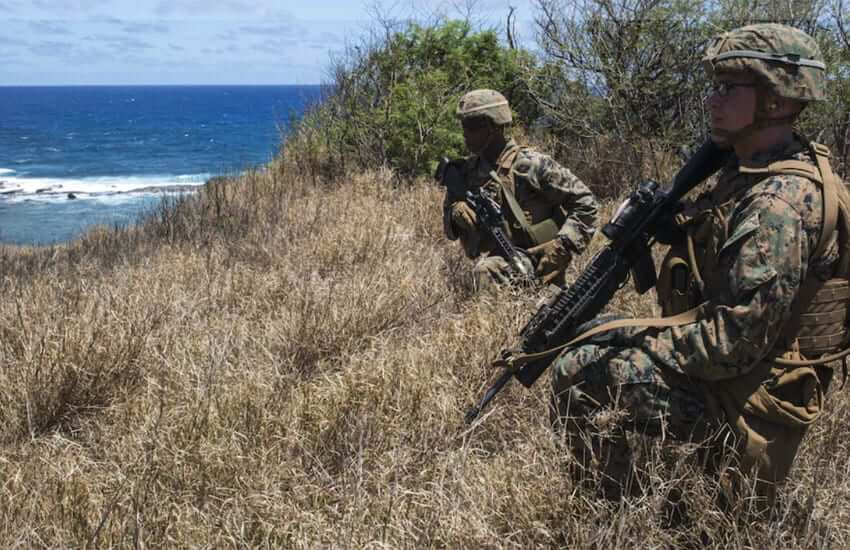
For many Hawaiʻi families who live in communities near or adjacent to military bases, the sounds of war and the byproducts of military training activities are woven into daily life.
One example is Waimānalo, Oʻahu, where children fall asleep to the thunder of explosions, the echo of gunfire, and the rumble of military aircraft shaking the windows of their houses on military training days. Meanwhile, along Kahawai o Pūhā, community members work to restore a stream that once sustained thriving loʻi kalo, fisheries, and food systems, while confronting contamination caused by decades of military occupation.
These impacts on ʻāina and surrounding communities demand far greater attention and discussion.
But they are only part of the story. What harms do military training activities, including this month’s Rim of the Pacific Exercises (RIMPAC), inflict on the ocean and its physical, cultural, and ancestral connections to Hawaiʻi and her people?
The Ocean as Ancestor, Relative, and Responsibility
Answering this question first requires an understanding of what the ocean means to Kānaka Maoli, and all who call Hawaiʻi home.
For Kānaka Maoli, the ocean is woven into genealogy, identity, and purpose. The Kumulipo traces the origins of life through successive stages of Pō, where early life emerges from the sea. It situates humans within a continuum of existence that begins in the ocean and extends through land, sky, and the spiritual realm, binding people to the natural world through ancestry.
This ancestral grounding shapes the kuleana to care for all ʻāina, including the ocean, which has fed families, connected communities, guided navigation, and provided spaces for ceremony and learning for millennia.
Ocean-based practices such as kilo (observation) and the management of loko iʻa (fishponds) reflect enduring pilina among people, ʻāina, and akua. The ocean also carries cultural memory and embodies long-standing genealogical responsibilities.
When our ocean is harmed, the damage is not merely ecological. Families lose access to gathering areas, cultural practices erode, and ancestral knowledge becomes harder to pass on. For Kānaka Maoli, harm to the ocean is harm to kūpuna and to the source of life itself.
RIMPAC, Military Exercises, and Our Ocean Waters
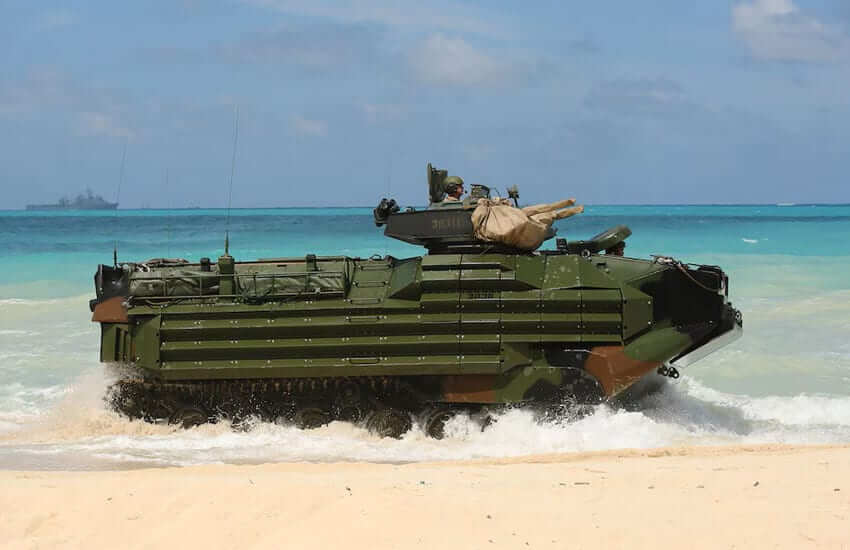
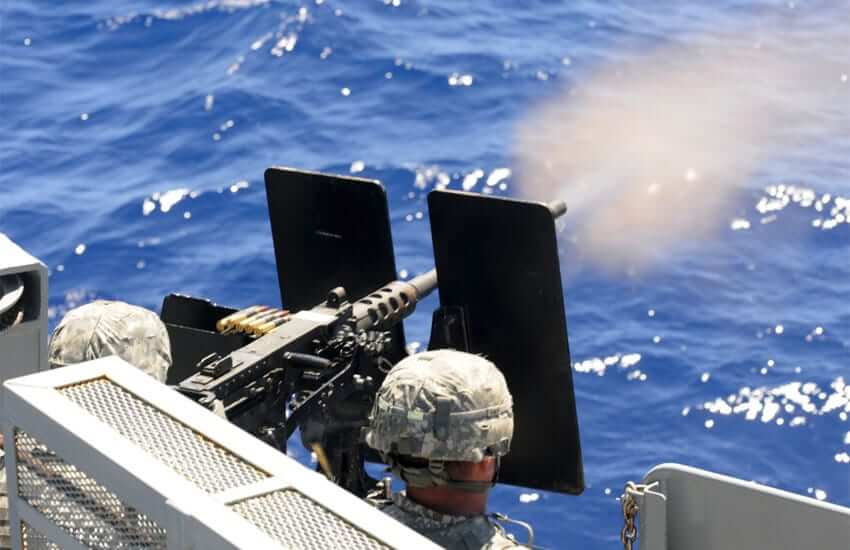
RIMPAC and similar ocean-impacting exercises extend beyond conventional Western measures of environmental harm. The following examples underscore the need for greater attention to these overlooked impacts.
Land-based pollution: On-land military exercises, including those that occur during RIMPAC, invariably introduce toxic contaminants to ma uka environments, where they can be transported into nearshore ocean waters via streams, runoff, and even air.
For example, testing has documented lead, polycyclic aromatic hydrocarbons, and additional contaminants in the wetlands of Waimānalo, just one of several areas used for combat training on Oʻahu. These pollutants pose risks to aquatic ecosystems and the local communities they sustain.
Other military training sites, like Pōhakuloa, have also been associated with high levels of toxic pollutants including PFAS “forever chemicals,” trichloroethylene, arsenic, beryllium, lead, and dioxins, as well as the historical use of depleted uranium munitions. These long-lasting contaminants can easily make their way to the ocean via groundwater and runoff into adjacent streams.
Finally, runaway fires from military training, such as the nearly 900 fires associated with military training at Pōhakuloa, also rapidly accelerate the spread of toxic compounds through the air, across the landscape, and inevitably into the sea.
Water pollution: RIMPAC 2026 will bring more than 40 ships and 25,000 personnel to Hawaiʻi. Environmental impact statements (EISs) indicate that when docked at Pearl Harbor, warships will offload wastewater for treatment, likely at the Joint Base Pearl Harbor-Hickam facility.
Given its history of unlawful discharges and an $8.7 million Clean Water Act penalty in 2022, added strain on this dilapidated facility increases the risk of yet another massive sewage leak into our ocean.
At sea, ships may dump treated or untreated wastewater directly into the ocean, depending on their distance from shore. Sewage system failures, such as those that sidelined the USS Gerald R. Ford and USS George H.W. Bush, could also result in releases closer to land.
Other pollutants, from fire-fighting foams to oils, solvents, and other toxic chemicals used on military equipment, weapons, and vehicles, may also be released at sea or in port due to accidents, training exercises, deck wash-downs, or rain.
Wildlife and habitat impacts: The Hawaiʻi-California Training and Testing EIS contemplates mine warfare training using underwater detonations, including near Pearl Harbor, Barbers Point, and Pearl City Peninsula.
The document acknowledges that such activities, as well as “military-expended materials” and anchoring, may damage coral reefs and cause years’ worth of damage to marine life.
Military sonar, which has been linked to mass strandings of whales and dolphins in Hawaiʻi and elsewhere, is also projected to cause millions of disruptions to marine mammal behavior.
Hawaiʻi Island residents may recall the beaked whale that stranded itself in Hōnaunau in 2022 after the Navy confirmed its use of sonar off the Kona Coast. And Kauaʻi residents may remember the mass stranding of 200 melon-headed whales in Hanalei Bay in 2004 which the National Oceanic and Atmospheric Administration (NOAA) later confirmed was the “plausible, if not likely” result of active Navy sonar use.
Whales are also at risk of fatal ship strikes. In 2023, the Navy reached its permitted limit of three whale kills from vessel collisions of the California coastline – prompting it to ask permission from the National Marine Fisheries Service to kill more whales.
This came after an Australian ship participating in a U.S. Navy-led multinational exercise unknowingly struck, killed, and dragged two Fin whales – occasional visitors to Hawaiian waters – into San Diego Bay.
Meanwhile, the Navy’s EIS for the Pacific Missile Range Facility on Kauaʻi proposes firing machine guns, rockets, and “inert” bombs at Kaʻula Island (located 23 miles from Niʻihau) up to 55 times annually, more than once per week on average, near native seabird nests and monk seal and dolphin resting areas.
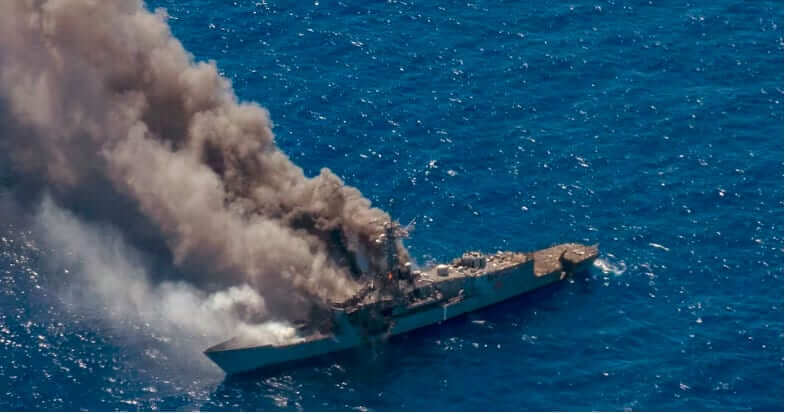
The continuation of RIMPAC’s SINKEX exercises, in which decommissioned warships are intentionally sunk, threaten to damage deepwater habitats that take centuries to form.
Aquatic invasive species risks: Military activities and installations are well-known for their association with terrestrial invasive species, such as devil weed (first found on Oʻahu at the Army’s Kahuku Training Area) and the coconut rhinoceros beetle (first discovered at Joint Base Pearl Harbor-Hickam).
RIMPAC’s influx of naval vessels and planned underwater training exercises carry the risk of introducing or spreading aquatic invasive species as well.
Even with guidelines to reduce the risk of invasive species introductions from vessel ballast water and biofouling – the source of 80% of our aquatic invasive species – the extent to which visiting warships will comply with these safeguards is unclear.
Significantly increased vessel traffic and underwater detonation exercises may also contribute to the spread of the current octocoral infestation in Puʻuloa. These reef-smothering soft corals already cover a 100-acre area and led to the shutdown of fishing and kayaking at Pearl Harbor due to the ease in which they can spread through fragmentation.
Should octocoral fragments escape the harbor mouth, the consequences for our coral ecosystems could be devastating.
Climate change impacts: Climate destabilization remains the greatest threat to our oceans. Yet the U.S. – the world’s largest institutional consumer of fossil fuels – continues to expand its impact through exercises like RIMPAC, reinforcing a cycle of military expansion among allies and rivals that accelerates the climate crisis.
These examples capture only a fraction of the impacts that RIMPAC and other military exercises may have on the ocean – an ancestor, caretaker, and the source of life for all living things.
The prevailing military narrative frames these harms as “necessary” for America’s “national security.” However, our pilina and kuleana to the ocean require a fuller accounting of their consequences for our ancestors, ʻāina, and future generations.
The authors wish to thank Rebecca Holloway and Dan Rempala for their research assistance.
Wayne Chung Tanaka is the executive director of the Sierra Club of Hawaiʻi and a former public policy manager with the Office of Hawaiian Affairs. Lenei Naipo, a kupa of Waimānalo, is a law student and a summer law clerk with Earthjustice whose work focuses on environmental and restorative justice for Kānaka Maoli.