
Each March, our lāhui pauses to honor Prince Jonah Kūhiō Kalanianaʻole, whose vision and leadership secured a future for Native Hawaiians rooted in ʻāina, identity, and self-determination.
Serving in Congress as the congressional delegate for the Territory of Hawaiʻi from 1903 to 1922, Prince Kūhiō championed one of the most consequential pieces of legislation for our people — the Hawaiian Homes Commission Act (HHCA) of 1920.
Signed into law on July 9, 1921, the HHCA established approximately 200,000 acres as a federal land trust to create a permanent homeland for Native Hawaiians. Prince Kūhiō’s intent was clear: to return our people to the land so that families could build homes, cultivate farms and ranches, and pursue economic self-sufficiency grounded in culture and place. The Act represented a solemn promise — that Native Hawaiians would not be strangers in our own homeland.
Yet over the decades, that promise required vigilance. Upon statehood in 1959, Hawaiʻi assumed responsibility for administering the HHCA, but certain amendments — especially those affecting who could hold or inherit homestead leases — still required the consent of the United States Congress. As generations passed and intermarriage reshaped families, many descendants of original beneficiaries faced displacement because successorship rules no longer reflected the realities of our community.

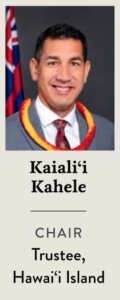
In my previous role as a member of Congress, I introduced the Prince Jonah Kūhiō Kalanianaʻole Protecting Family Legacies Act in the 117th Congress on the 100th anniversary of the HHCA to address this very issue. The legislation provided congressional consent to a 2017 amendment enacted by the Hawaiʻi State Legislature (Act 80), which reduced the blood-quantum requirement for eligible successors to a homestead lease from one-quarter to one-thirty-second Hawaiian for spouses, children, grandchildren, and siblings of a lessee.
This change was not about altering Prince Kūhiō’s vision — it was about preserving it.
Homestead associations and beneficiaries had long warned that rigid requirements were forcing families off ancestral lands, undermining stability and cultural continuity. By ensuring that descendants could continue to live on and steward these lands, the legislation sought to protect family legacies and uphold the original intent of the HHCA: long-term tenancy, self-sufficiency, and self-determination for Native Hawaiians.
Throughout history, Congress had consistently provided consent for HHCA amendments with broad bipartisan support, recognizing the unique trust relationship between the United States and Native Hawaiians. My bill followed that tradition, advancing Prince Kūhiō’s work into the next century.
As we reflect on Prince Kūhiō Day, we remember that his leadership was not only about land — it was about dignity, identity, and the survival of our people as a distinct lāhui. The responsibility to protect that legacy now rests with all of us.
Prince Kūhiō once fought in Congress to secure a homeland for Native Hawaiians. A century later, we must continue to hoʻomau — with unity, wisdom, and commitment — to ensure that our families remain rooted in the lands he worked so tirelessly to restore.
E mau ke ea o ka ʻāina i ka pono.

