
By Leināʻala Ley, OHA Chief Advocate
June 15, 2026, marks the 20th anniversary of Papahānaumokuākea Marine National Monument. At the time the monument was designated by President George W. Bush in 2006, it was the largest marine protected area in the world, limiting permitted activities and access to the area to educational, scientific, and cultural endeavors.
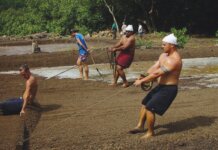
Native Hawaiian advocates, lawaiʻa (fishers), kūpuna, and cultural practitioners were critical in securing this victory. Early efforts to limit commercial fishing in Papahānaumokuākea were led by Native Hawaiians who had fished in the northern islands as early as the 1940s and personally observed the outsized negative impacts even a small commercial fishery can cause in this pristine and nutrient-limited environment.
Native Hawaiian leadership continued through the monument’s first superintendent, Aulani Wilhelm, and within the larger community. In January 2015, a group of seven prominent Native Hawaiian scholars and leaders, including former Office of Hawaiian Affairs (OHA) Chief Executive Officer Dr. Kamanaʻopono Crabbe, sent a letter to President Barack Obama that helped galvanize momentum in support of expanding the monument and adding OHA as a co-trustee on the Monument Management Board.
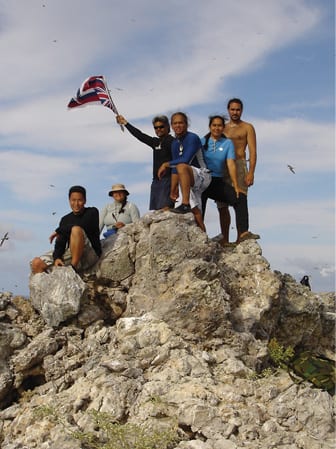
When President Obama issued the 2016 proclamation expanding the monument to its current boundaries (582,000 square miles), he recognized the area as “part of a highly pristine deep sea and open ocean ecosystem with unique biodiversity and that constitute a sacred cultural, physical, and spiritual place for the Native Hawaiian community.”
OHA was added as a co-trustee shortly thereafter, joining the State of Hawaiʻi, the Department of Commerce, and the Department of Interior as the highest level government stewards of this place and its biocultural treasures – which include the primary nesting and pupping grounds for a range of culturally significant and endangered species, such as honu (green sea turtles) and ʻīlioholoikauaua (monk seals).
Mai Ka Pō Mai: A Native Hawaiian Guidance Document for Management of Papahānaumokuākea Marine National Monument (2021), is a model for elevating Indigenous principles and worldviews within conservation management and advancing a rights-based framework that recognizes Indigenous decision-making as critical for environmental stewardship.
Key within the ecosystem of Kānaka ʻŌiwi leaders who have ensured that the conservation of this place occurs in a culturally grounded manner is the Native Hawaiian Cultural Working Group, which serves as OHA’s key community partner for management decisions. OHA extends its deepest mahalo to the Cultural Working Group for its work to protect Papahānaumokuākea, which predates and was foundational to the establishment of the monument.
In celebration of this 20th anniversary, the author recommends two publications by noted archaeologist Dr. Kekuewa Kikiloi, a Cultural Working Group member: Rebirth of an Archipelago: Sustaining a Hawaiian Cultural Identity for People and Homeland (2010) and Kūkulu Manamana: Ritual Power and Religious Expansion in Hawaiʻi the Ethno-Historical and Archaeological Study of Mokumanamana and Nihoa Islands (2012).
These papers are available online and provide a rich introduction to the historical use of the Northwestern islands, the significance of the islands within traditional Native Hawaiian cosmology, and the physical and oral record that illuminates these ancestral ties to place.
Dr. Kikiloi’s work is foundational to the reintroduction of the Hawaiian place names now commonly used to reference the islands, and essential reading for further understanding of the cultural significance of this area.
I ka wā ma mua, ka wā ma hope. The future is found in the past.
Read Dr. Kekuewa Kikiloi’s publications
- Rebirth of an Archipelago: Sustaining a Hawaiian Cultural Identity for People and Homeland
- Kūkulu Manamana: Ritual Power and Religious Expansion in Hawai‘i the Ethno-Historical and Archaeological Study of Mokumanamana and Nihoa Islands
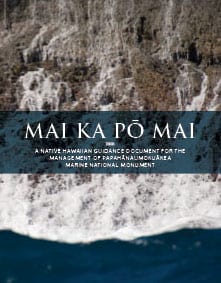
Download Mai Ka Pō Mai
Mai Ka Pō Mai: A Native Hawaiian Guidance Document For Management of Papahānaumokuākea Marine National Monument