By Jonathan Kay Kamakawiwoʻole Osorio, Ph.D.
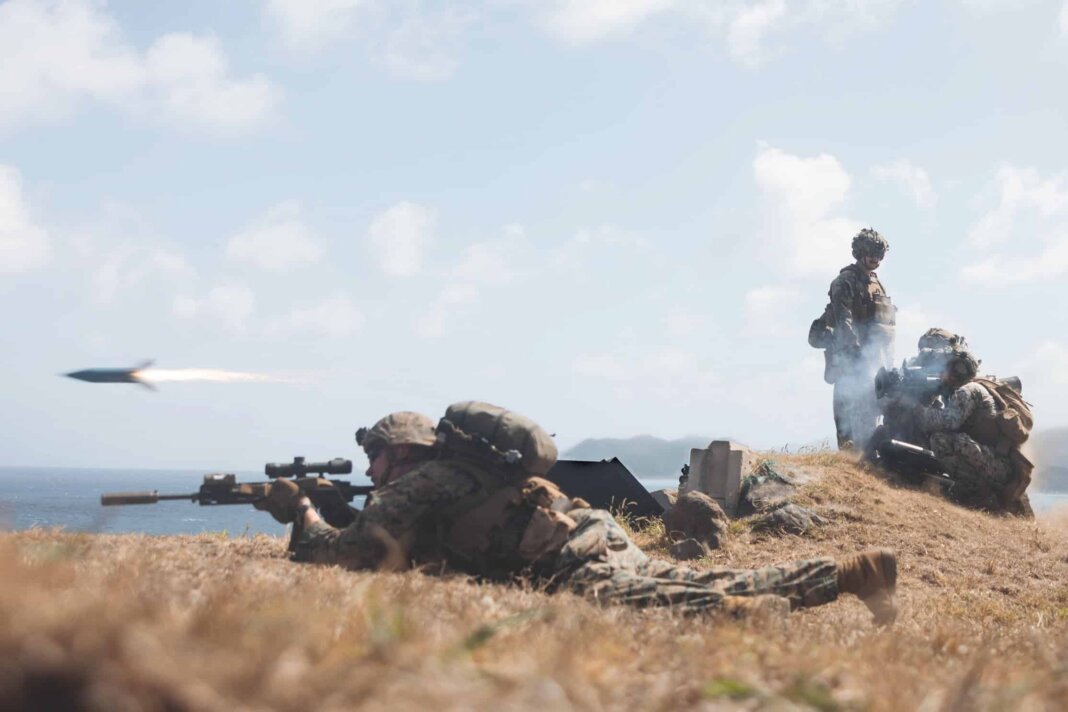
On February 16 the Honolulu Star-Advertiser announced that the U.S. Department of Defense intends to make Hawaiʻi a key player in arms manufacturing and distribution.
Though its title, “Hawaiʻi could be key hub for Pacific arms manufacturing” made the plan seem more aspirational than real, the article revealed that several years of planning have already resulted in an Advanced Manufacturing Program Facility at Honolulu Community College and a new facility at Schofield Barracks called “The Forge” capable of “rapid prototyping,” presumably of military hardware.
Nothing in this article reveals what could be – or already is being – designed and produced at these installations. But that will not surprise anyone with roots in Hawaiʻi.
On Oʻahu, especially, secured gates and armed guards are only the most obvious signs of the military’s sense of privilege when it comes to surrounding communities. But so is the U.S. military’s position that its security and its mission entitles it to share information with the public solely at its own discretion.
And yet, an assistant secretary of the Department of Defense (or is it War?) speaks so glibly of a “partnership” while others in the article try and persuade the reader that this industry will reduce Hawaiʻi’s overdependence on tourism.
“The people of Hawaiʻi need to decide if we want to implicate ourselves in America’s accelerating commitment to menacing other nations at will.”

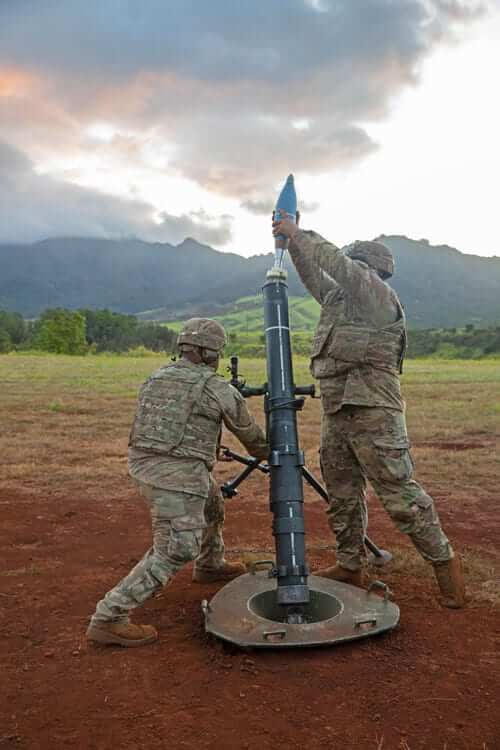
This is just an old and familiar rationale for Kānaka Maoli and the other Hawaiʻi residents whose heritages trace back to 19th and 20th century plantation workers: We will be given the chance to work and provide goods and services for an industry dedicated to the welfare of a nation that has taken hundreds of thousands of acres of our lands, obscured and obstructed our right to restore our national government, and routinely treated us as trespassers on ʻāina that Kamehameha III designated as our birthright more than 175 years ago.
These should be reasons enough for every Kanaka Maoli to oppose this latest proposed industry or, at the very least, to subject it to intense scrutiny.
But when it comes to the U.S. armed forces, State of Hawaiʻi government agencies and even the general public have historically given them a pass on the grounds of “national security” and because of an unwillingness to interfere with the revenue stream of military spending.
The Board of Land and Natural Resources’ May and June 2025 rejections of the Environmental Impact Statements submitted with the Army’s applications for lease extensions at Pōhakuloa and on Oʻahu are reassuring to Kānaka, especially those concerned with the impacts of military training on ʻāina and those who continue our cultural practices and efforts to resettle ʻāina from which our people were evicted.
But the larger resident community seems to have little appetite for scrutinizing the military’s claimed prerogatives.
After running the story on potential arms manufacturing in Hawaiʻi, the Star-Advertiser conducted its usual survey of public opinion. Seventy-three percent of those responding to the “Big Q” survey on February 18, answered “Yes” to the question, “Should Hawaiʻi play an increased role in the military supply chain?”
“There are better uses for our ʻāina, and far better uses for our labor and intelligence.”
To be fair, these results may have been affected by the phrasing of the selected answer: “Yes: more tech/research programs for Hawaiʻi.” It is possible that many respondents saw “tech/research,” and approved of such programs – regardless of what they produced or for whom, simply because they would presumably help diversify the state’s economy.
So, it is crucial for Kānaka Maoli to lead the public conversation on the military’s future in Hawaiʻi because we know, from long ancestral and personal experience, that producing food, shelter, medicines, and textiles are far better uses of our lands economically than contributing to the U.S. government’s ability to threaten and exploit nations and governments in Oceania and Asia.
One way we can begin to shape a different future for Hawaiʻi is to remember our history with the United States.
Though the Mōʻī Kamehameha I built a fleet of warships and trained an army in firearms to keep both rival aliʻi nui and foreign adventurers in check, within a few years after his death this navy and army had nearly disappeared. Thus, under the regency of Kaʻahumanu, Hawaiʻi had few means to resist demands by Britain, France, and the United States.
Between 1826 and 1839, all three countries pressured the Kingdom to agree to treaties that privileged foreign trade at the expense of the Kingdom’s own economy, and in some cases, even our own laws.
Through threatened military intervention, these European powers and the United States coerced favorable trade access to Hawaiʻi as it had with other large and prosperous countries like India, China, and Japan.
The adoption of a constitutional government and international recognition of Hawaiʻi as a nation-state in 1843 brought an end to such military-backed extortion for the next 40 years.
But in 1887, the Kingdom experienced a renewed threat from the U.S. Navy when Mōʻī David Kalākaua refused to lease Puʻuloa (Pearl Harbor) to the United States in exchange for a renewal of a reciprocity treaty that had greatly benefited the sugar plantations for over a decade.
This was because a lasting U.S. naval presence in the Kingdom was extremely unpopular among Hawaiian citizens.
Fourteen years earlier, when Mōʻī William Charles Lunalilo proposed a long-term lease of Puʻuloa for a naval harbor in exchange for a reciprocity treaty with the U.S. in 1873, the unhappiness and the open and widespread protests by the lāhui were so great that Lunalilo withdrew his support for the treaty – much to displeasure and scorn of the Kingdom’s business community.
When Lunalilo died a year later, David Kalākaua campaigned for the throne by promising to secure a reciprocity treaty without sacrificing the “Pearl River Lagoon.” In 1875 he did as he promised and, from 1877 on, the sugar industry enjoyed a ten-fold annual increase (1,000%) in profits, in land under sugar cultivation, and in the number of laborers – most of them under indentured contracts and working for meager wages.
Forcing the acceptance of a foreign naval installation to maintain these economic advantages was ominously clarified when the United States warned the Hawaiian government in 1885 that no renewal of the reciprocity treaty would be possible without a long-term deal for Pearl Harbor.
Kalākaua’s refusal to budge angered the sugar planters – not only because their sales would suffer – but also because they would still have to pay the laborers under contract and would still be liable for the purchases and leases of lands they had added for increased cultivation. Even some of the larger plantations could have faced ruin.
Their response was to organize a secret society called the “Hawaiian League.”
With almost no Hawaiians in the organization, many of its members also enlisted in a militia known as the “Honolulu Rifles.” In the summer of 1887, Hawaiian League leaders used the threat of the Honolulu Rifles to force the Mōʻī to replace the ministers of his own cabinet with Hawaiian League members.
That same threat led to Kalākaua signing a constitution that removed almost all the King’s executive power, reduced the number of eligible Native Hawaiian voters, denied citizens of Asian ancestry the right to vote and, through high property requirements, virtually guaranteed the white business community control of the legislature. The lāhui overwhelmingly disapproved of these new laws and the way they were extorted, calling the result the “Bayonet Constitution.”
When in 1892, with the support of the lāhui, Queen Liliʻuokalani attempted to mandate a more equitable constitution, U.S. naval forces supported haole insurgents who declared themselves the de facto government of Hawaiʻi. This military action led the Queen to temporarily yield her authority to the United States on January 17, 1893.
The American military has historically deployed several types of intimidation against other nations. The most “traditional” has been the threat of violence against our people or our sovereign.
But a longstanding and equally coercive strategy has been to insist on our “dependence” on the American armed forces and on our acceptance of their whims and prerogatives due to the economic subsidies and supposed protection they provide.
“Our best choices are always guided by our ancient wisdom and aloha for our ʻāina. To transform our lands and our society into instruments for better lives and a healthier environment, we find ourselves squarely in opposition to U.S. military objectives and operations here in Hawaiʻi.”
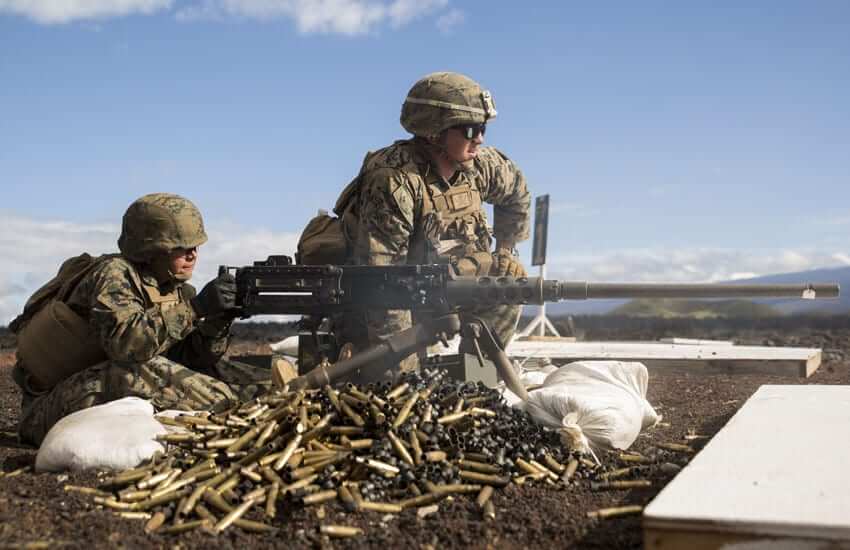


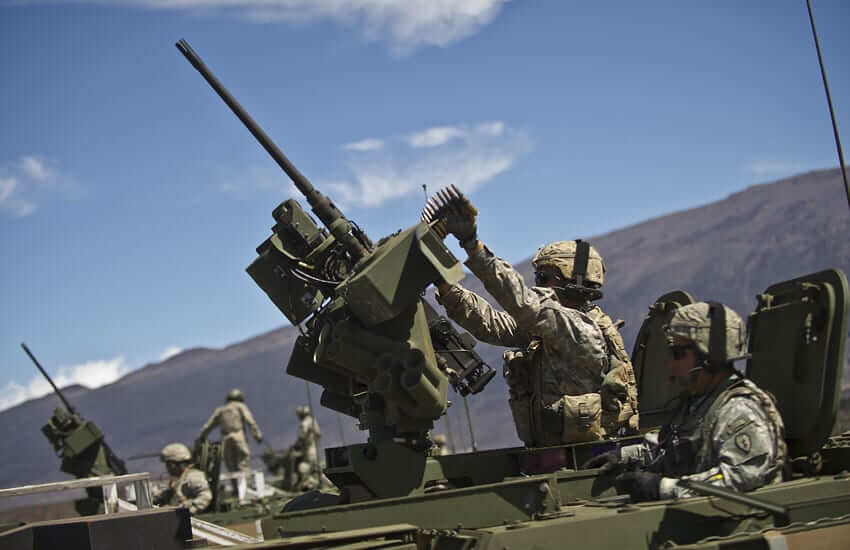
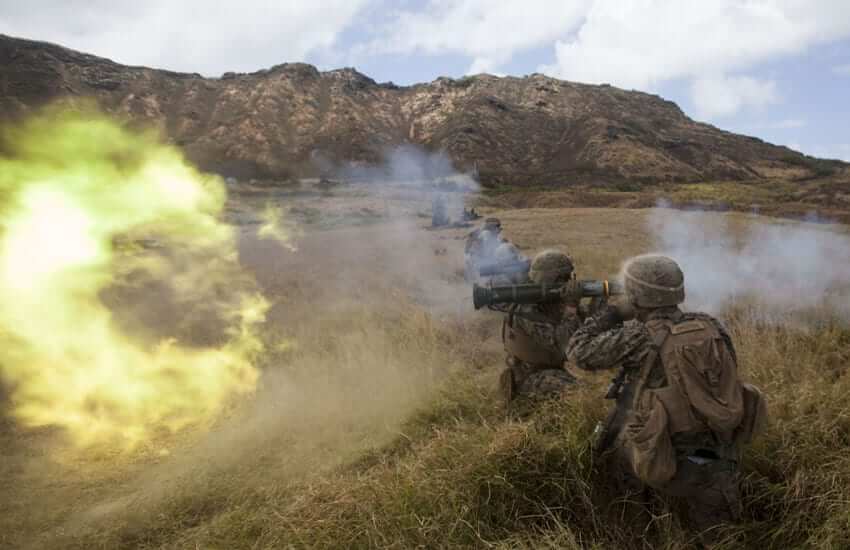
If, like our kūpuna, we are indeed a nation of intelligent Kānaka – and I know that we are – then we, too, should always be examining closely the intentions of anyone, any organization, or any nation that proposes to use our ʻāina and our labor for any enterprise that suits their purposes.
The fact that military hardware can be produced in Hawaiʻi does not mean it should be. And we are not just entitled, but required to ask of every new initiative: “What will this mean for our lāhui and for our residents, and what will this mean for our ʻāina?”
The U.S. military buildup in the Pacific about a hundred years ago was made possible by America’s seizures of the Philippines, Guam, and Hawaiʻi. And while historians might not agree on the details, there is a general consensus that the vastly greater presence of the U.S. Pacific Fleet, when added to the already significant British naval presence in Southeast Asia, helped provoke the rise of national resentment and militarism in Japan that eventually resulted in their decision to attack these western powers in 1941.
The consequences of creating the Pearl Harbor naval base were, therefore, not just the thousands of American deaths on December 7, 1941, but the deaths of hundreds of thousands of Japanese men, women, and children in Tokyo, Hiroshima, and Nagasaki in 1945 and perhaps a million other Japanese and American deaths in the four years between.
To bring us up to the present, the current U.S. president’s unleashing of military actions in Yemen, Venezuela, and Iran demonstrates that the new national “diplomatic” strategy is threat, destruction and death for any country that stands in the president’s way.
The people of Hawaiʻi need to decide if we want to implicate ourselves in America’s accelerating commitment to menacing other nations at will.
Our lāhui was unable to stop the U.S. takeover in the 1890s, or its seizure of our crown and government lands for military bases and training grounds during the territorial era and even after statehood. But we should refuse to participate in this new manufacturing undertaking and we can urge Hawaiʻi residents to condemn this scheme as courageously and unwaveringly as possible.
But above all, the people of Hawaiʻi – Native Hawaiian and resident alike – must recognize and embrace the vast possibilities of restoring ʻāina to health and with it ourselves, our families, and our communities.
There are better uses for our ʻāina, and far better uses for our labor and intelligence. Climate change and the increasing impoverishment of peoples can only be counteracted by our communities becoming more self-sufficient, innovative, and agile as producers of food and protectors of water.
We can decide to go along with the plunder of other nations as other empires have done in the past, or we can insist on contributing to the future of life and resiliency on this planet.
We know what our kūpuna thought about this: ʻOnipaʻa. ʻAuʻa ʻia. E ui ē. They told us to stay together, to persist on the land, and above all, to treat ourselves and others with aloha.
The United States has set a new and violent path for itself. That nation’s fate is uncertain.
Our choices are clearer and our best choices are always guided by our ancient wisdom and aloha for our ʻāina. To transform our lands and our society into instruments for better lives and a healthier environment, we find ourselves squarely in opposition to U.S. military objectives and operations here in Hawaiʻi.
And that opposition begins with remembering our kūpuna and their bravery:
ʻAʻole mākou aʻe minamina
I ka puʻukālā o ke Aupuni.
Ua lawa mākou i ka pōhaku
I ka ʻai kamahaʻo o ka ʻāina.
Aloha nō.
Made in Hawaiʻi?
Military Arms Manufacturing in Hawaiʻi Has Already Begun
Although it was only widely reported in February that the U.S. military wants Hawaiʻi to be a “hub” for arms manufacturing in the Pacific, unbeknownst to most Hawaiʻi residents that effort is well underway. With the support of Hawaiʻi’s Congressional representatives, state leadership, the University of Hawaiʻi, and the Hawaiʻi Chamber of Commerce, many key components of this effort are already in operation.
- “The Forge” is a new advanced manufacturing facility at Schofield Barracks in central Oʻahu. It is equipped with 3D printing, precision machining and rapid prototyping technology, producing replacement parts and prototypes for the U.S. Navy and Joint Forces. A variety of firearms can already be produced using 3D technology.
- Operating in conjunction with The Forge at Schofield Barracks is the “Lightening Lab.” In November 2025, the Wall Street Journal published a story describing how the U.S. Army is using 3D technology at the Lightening Lab to design, manufacture and test lethal drones here in Hawai‘i.
- “Kuʻi Haʻo” is an “advanced manufacturing training facility” that opened last year at Honolulu Community College to equip students, incumbent workers and active duty military with “industry-ready skills.” The program includes an internship to job program, providing students with hands-on experience at Department of Defense commands and in private sector companies to build a local weapons manufacturing workforce.
- UH Mānoa’s College of Engineering is partnering with the military on defense-related research, while researchers at the John A. Burns School of Medicine (JABSOM) are using bio-printed organ models to test chemical compounds for the Department of Defense.