
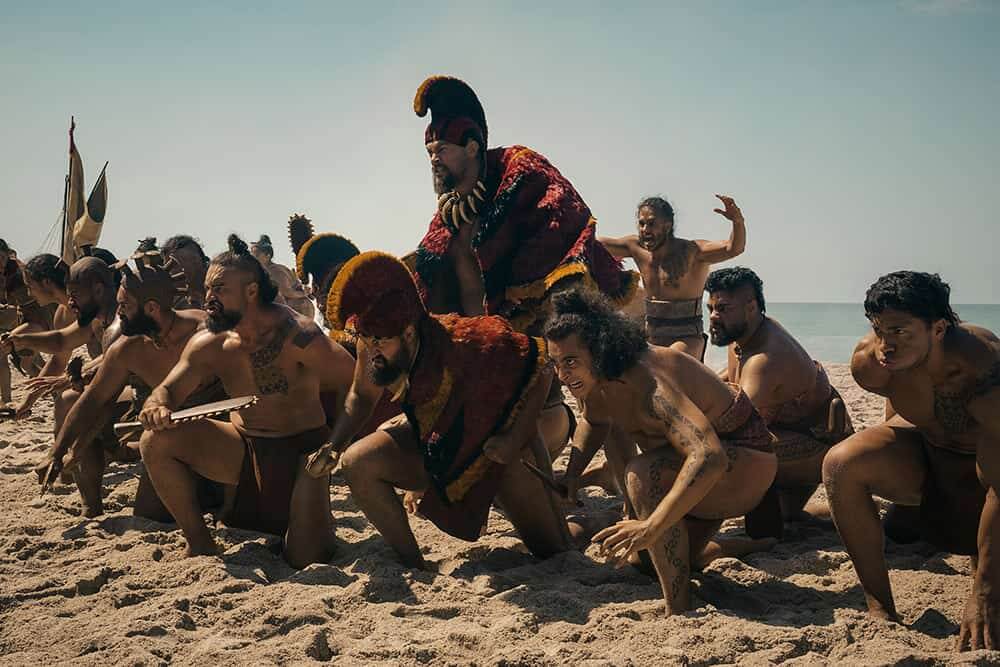
Years ago, Thomas Paʻakaiokahonua “Paʻa” Sibbett was working at Kualoa Ranch when he read in a newspaper article that discussions were in the works about making a film about Kamehameha. He remembers thinking to himself, “if Hollywood wants Hawaiian stories I can do that.”
The spark that ignited within him that day set a new trajectory for his life. Raised in Washington state as a child of the diaspora, Sibbett returned to the continent and began writing scripts. He would write 12 scripts before selling his first one.
Immersing himself in the world of movie-making, he soon formed a friendship with another ʻŌiwi raised in the diaspora, an up-and-coming actor named Jason Namakaeha Momoa, and they began collaborating on projects – a partnership that has now spanned 15 years.
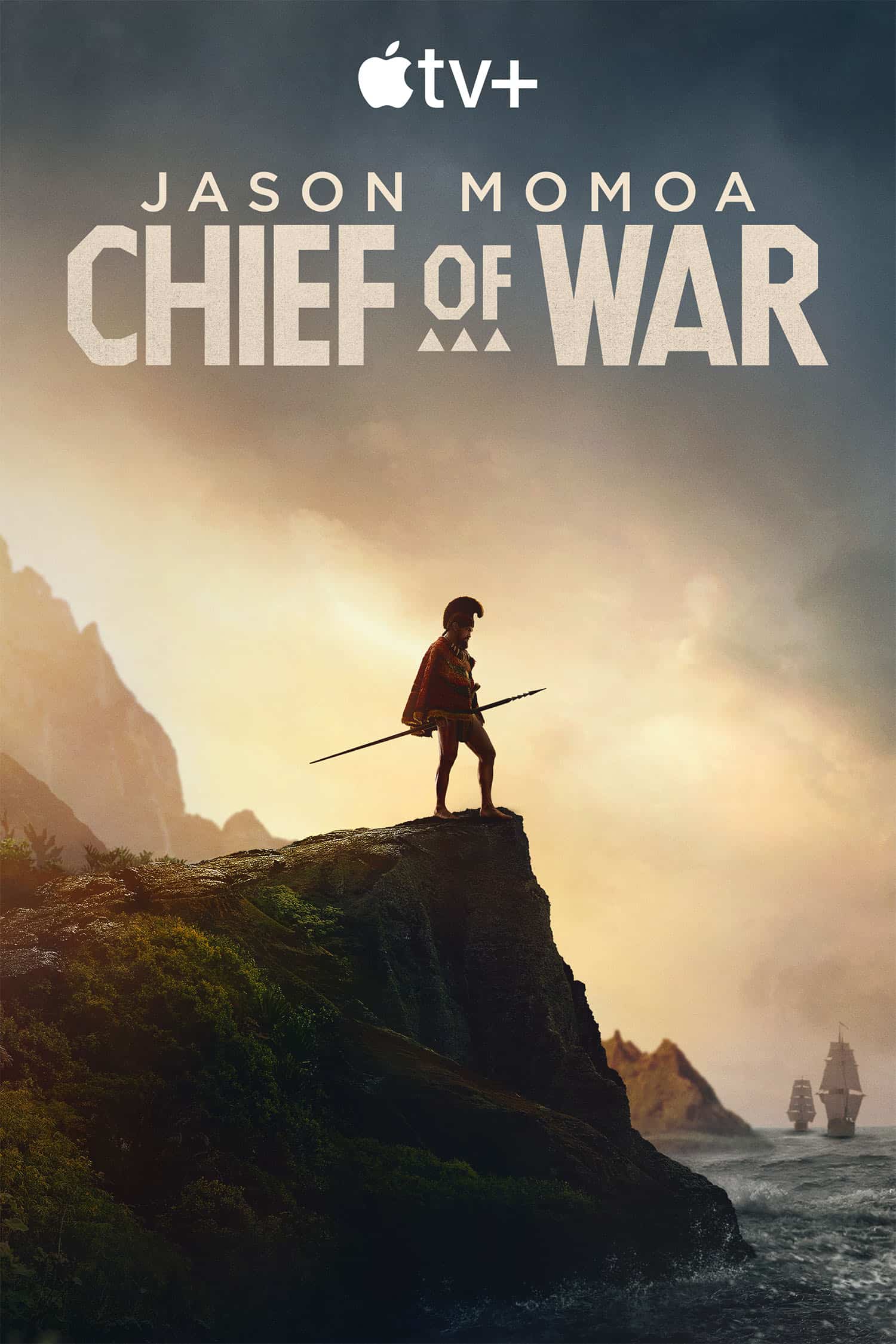
Over the years, their collaborations have included Braven (2018), The Last Manhunt (2022), Aquaman and the Lost Kingdom (2023), and, most recently, Chief of War, the highly anticipated nine-episode television series about the unification of the Hawaiian Islands that will stream globally on Apple TV+ beginning August 1.
Pitching the Idea
Chief of War has been described as a “passion project” for Momoa and Sibbett, but it’s more than that – it is a huliau (turning point) for Native Hawaiian storytelling.
This is the first time that a story written by Hawaiians about Hawaiians has been financed and produced on such an epic scale. It is a moment that was decades in the making and that required years of hard work and the building of pilina within the industry.
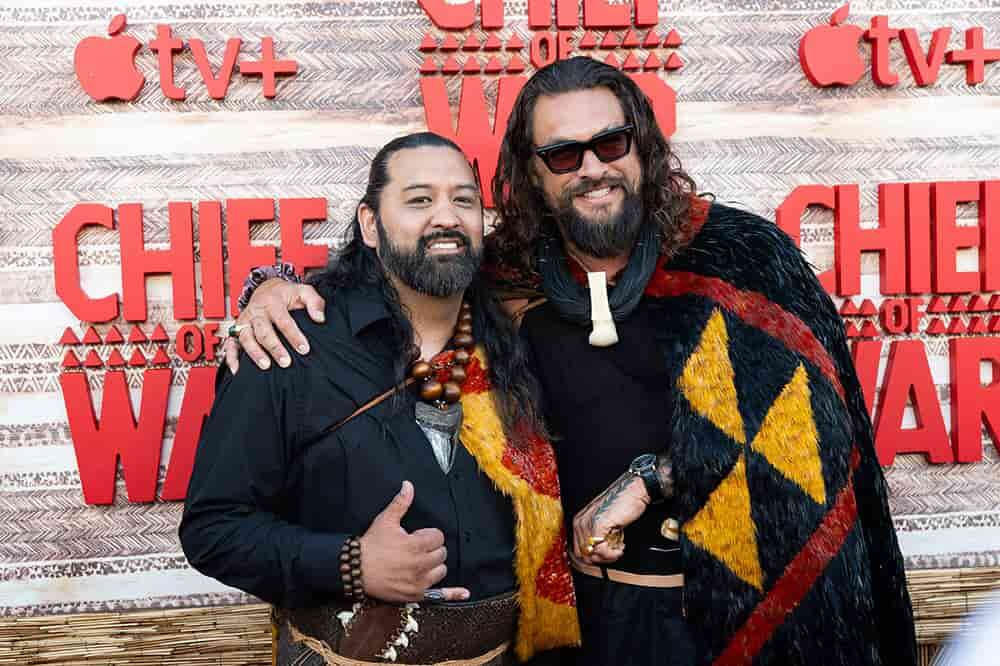
“We had [the script] for a while, but we knew it had to be big. It took me 20 years to get to where I had to be [in my career] in order to pitch something like this,” Momoa reflected.
Momoa and Sibbett pitched Chief of War to Apple while Momoa was in Budapest filming Dune (2021). Momoa made a call to Zack Van Amburg, the chief content officer for Apple TV+. “It was perfect timing because I had finished filming season three of See (2019-2022) and had worked with Apple since 2018. We were on the call for probably over an hour. We had the script, the plot – the whole layout of the season.
“It was the first time I’ve ever just had a ʻyes.’ It was green-lit the moment I pitched it to him. He was so excited. And I don’t think that would have happened if I hadn’t done 30 episodes of See. There’s a good relationship there.”
Centering the Story on Kaʻiana
It would be reasonable to assume that the lead character in a story about the unification of the Hawaiian Kingdom would be Kamehameha – after all he was known as “Ka Naʻi Aupuni” (conqueror of the nation). And for a moment, Momoa and Sibbett did seriously consider telling a “Kamehameha story.”
“I’ll be completely honest. As a Kanaka I was worried about the response to that. I kept thinking about how to approach it – like what perspective do you take? There is so much nuance to his story and everybody has a connection to it in one way or another,” Sibbett said noting that in some circles Kamehameha is almost deified.
Sensitive to that, along with the understanding that there are ʻohana who, based on their lineage, might see Kamehameha as more of a villain than a hero Sibbett said, “we ultimately came to the decision that we shouldn’t tell that story at all even though it’s commercially viable.”
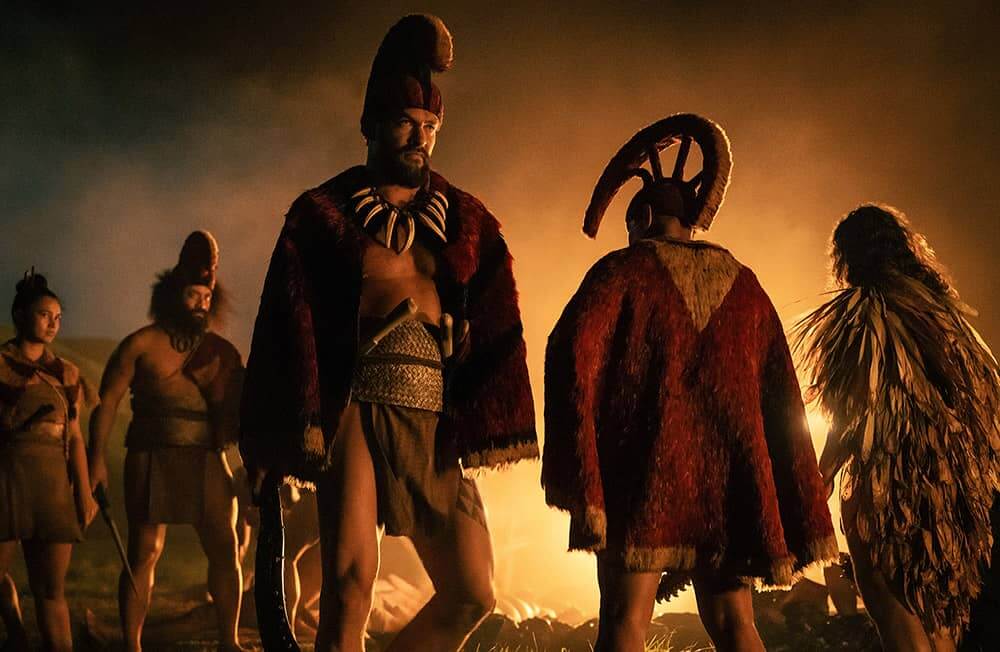
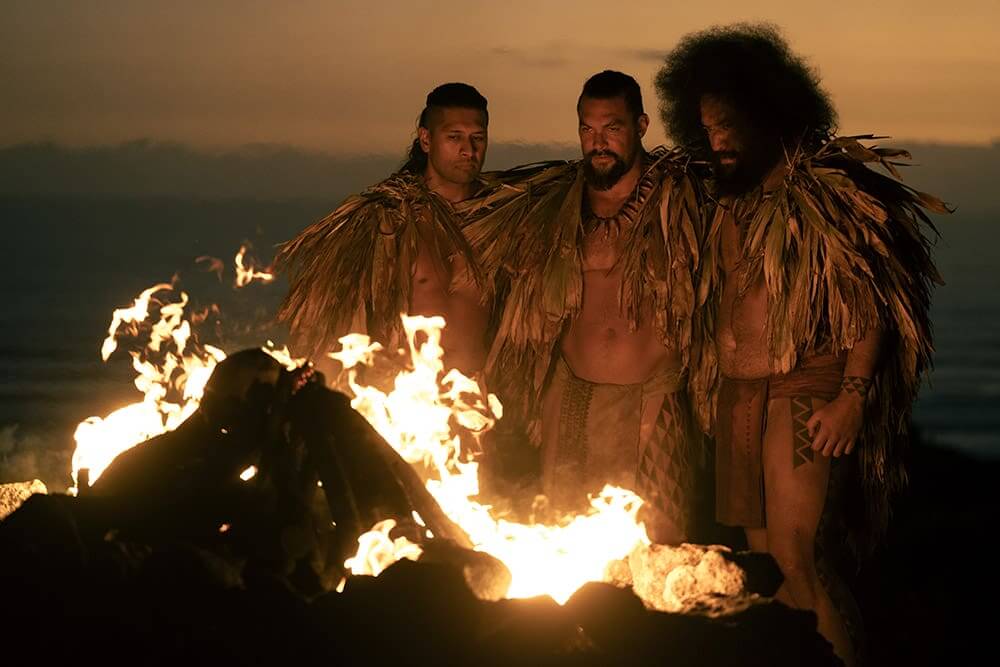
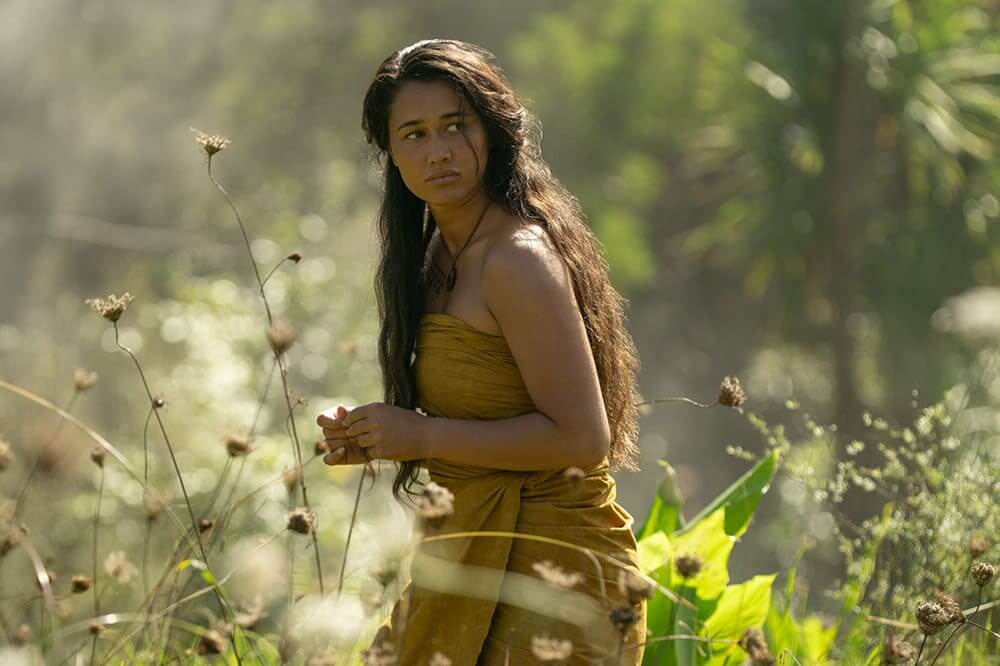
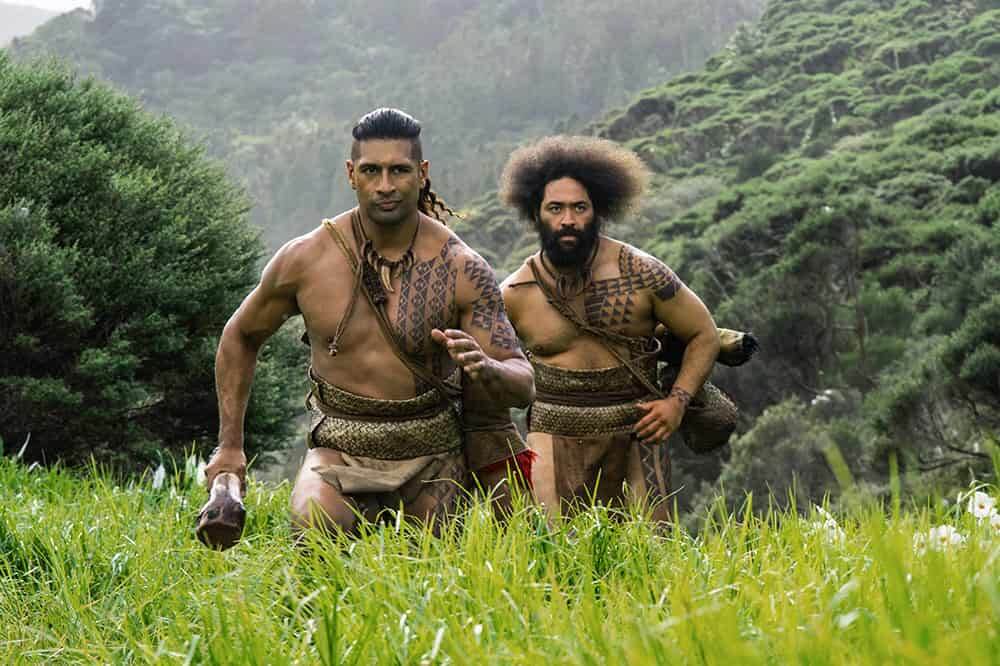
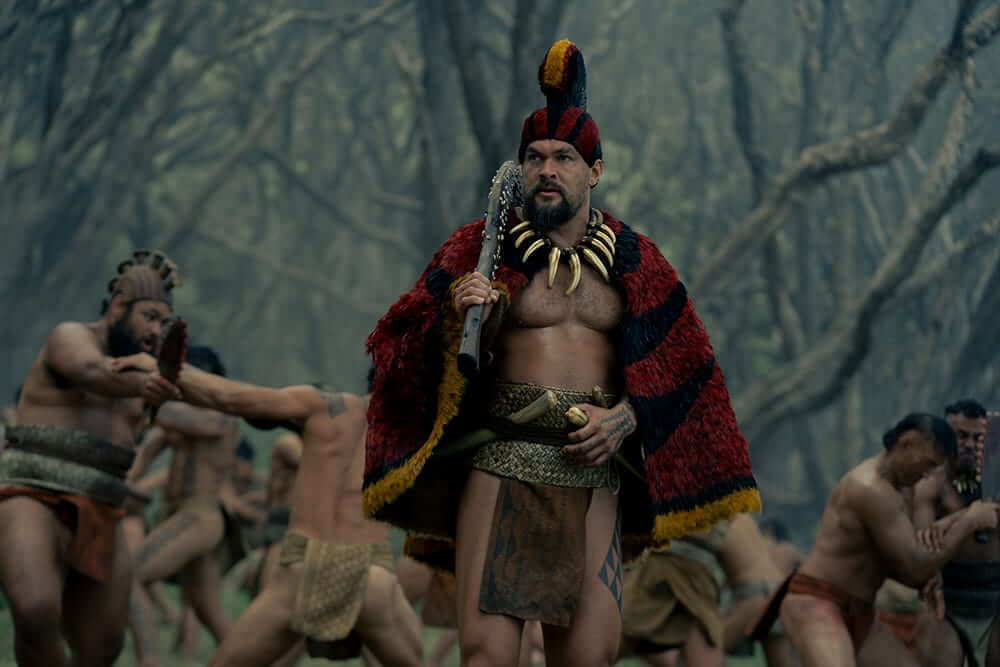
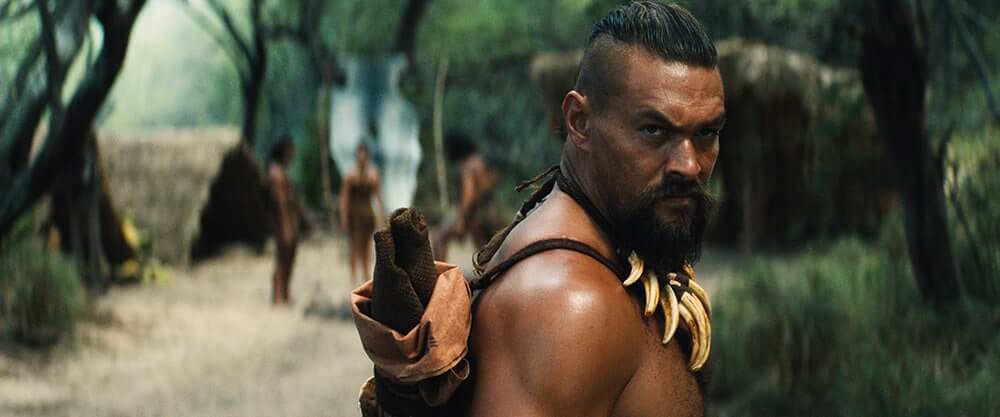
The day after they made that decision, it dawned on Sibbett that the story of unification could be told through another, lesser-known character. “It’s an interesting dynamic. The world probably knows more about Kamehameha than any other Hawaiian. But during his lifetime the only Hawaiian name spoken outside of Hawaiʻi was Kaʻiana.”
Kaʻiana was a high chief of Kauaʻi who left Hawaiʻi in 1787 aboard the vessel Nootka as the guest of Captain John Meares. It is likely that he was the first aliʻi to travel abroad on a Western ship – although he was not the first Hawaiian. That distinction went to a woman whose name is recorded as “Winee.” She left Hawaiʻi about three months before Kaʻiana on another ship, the Imperial Eagle, as the personal servant of the captain’s wife.
Kaʻiana traveled around the Pacific Rim, visiting China, the Philippines and the Northwest Coast of America. When he returned to Hawaiʻi he was fluent in English and had amassed a large collection of Western weapons – assets Kamehameha was quick to leverage. Kaʻiana and his two brothers joined Kamehameha’s army and helped the future king secure the islands of Hawaiʻi and Maui.
Sibbett said that focusing the story on Kaʻiana instead of Kamehameha “made it really interesting. He was a character who had traveled the world. It fit perfect – not just for storytelling. It worked great for Jason too because he is also very worldly. He is Kanaka, but he’s traveled.”
While researching the story, Momoa discovered that he is a descendant of Kaʻiana. “That was something we came upon, so it was wonderful that it just kind of fell into place,” Sibbett added.
From a storytelling perspective, focusing on a lesser-known character gave Momoa and Sibbett more flexibility. “The best way to tell this story is with a character that you can dirty up a little bit. A character that you can run through the mud, expose his flaws, vilify and redeem. We can do anything with a character like that and still tell the story of unification.”
Casting Kamehameha
One of the many interesting stories about the creation of Chief of War is how Kaina Makua – a Kauaʻi kalo farmer, cultural practitioner and community educator – was cast to play the role of Kamehameha.
It was a chance meeting three years ago at a canoe regatta. “The moment I laid eyes on him I was like: ʻThat’s Kamehameha,’” Momoa recalled. “It was a thunderbolt to the brain, to my soul. I ran up to him. I needed to know who he was and talk to him. It was destiny. He walks the talk. He’s brought all this integrity. He’s a true Kanaka.”
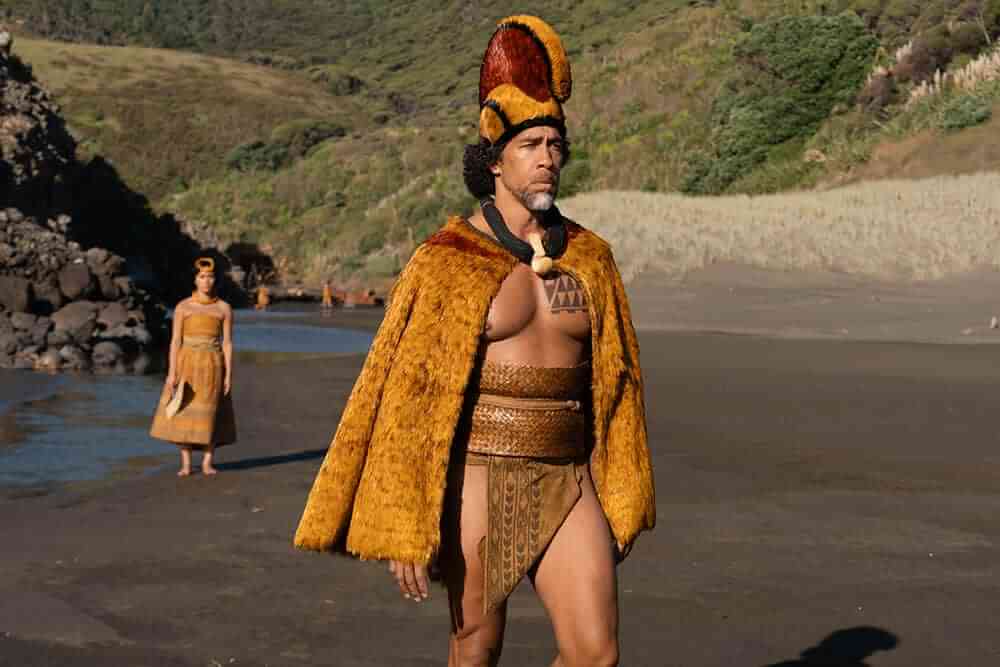
In Chief of War, Kamehameha is portrayed as a man coming to terms with his kuleana and reluctantly accepting the burden of leadership. “We know Kamehameha was trained as a warrior. And we know that he became the sole mōʻī of Hawaiʻi [Island]. I wanted to focus on that period in between,” Sibbett said.
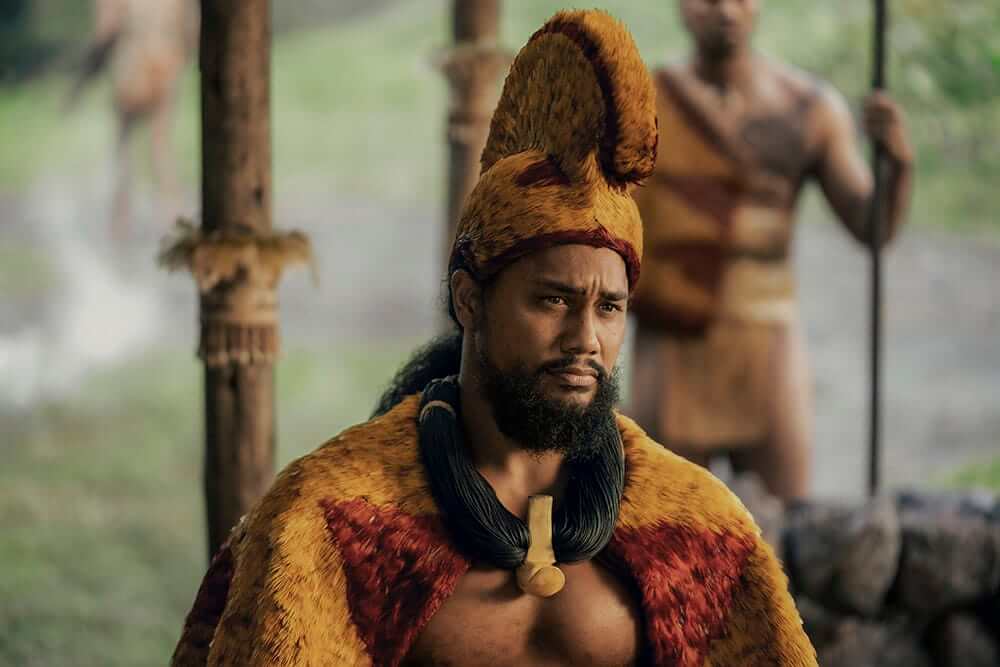
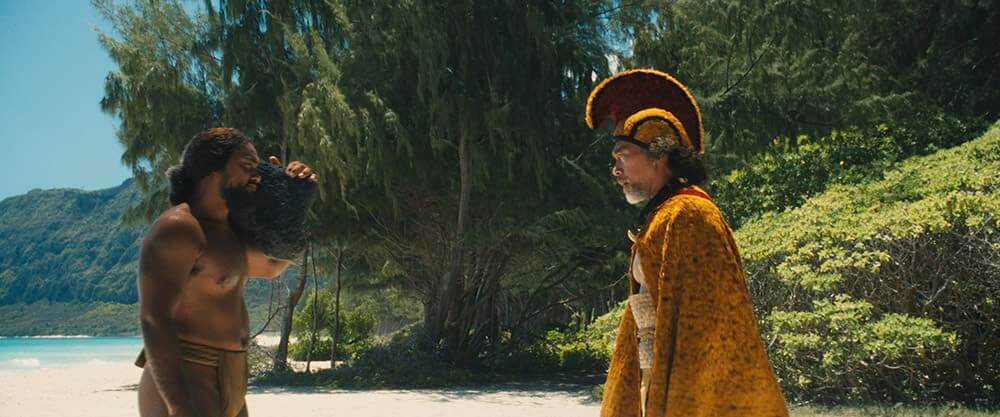
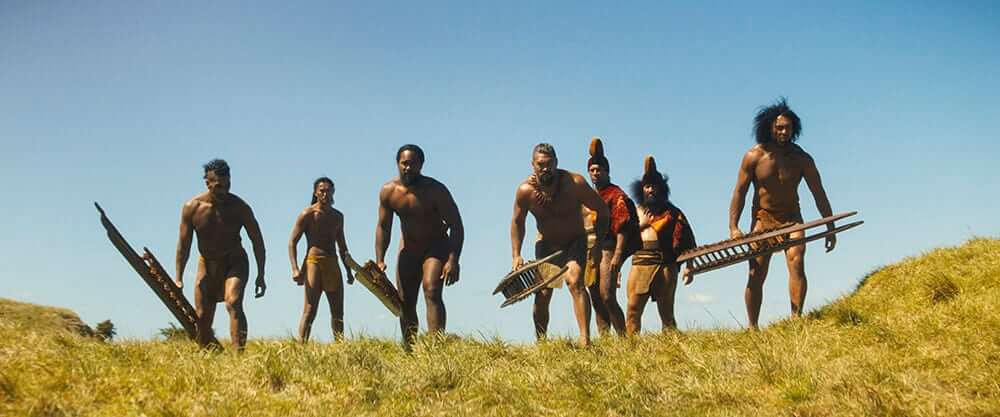
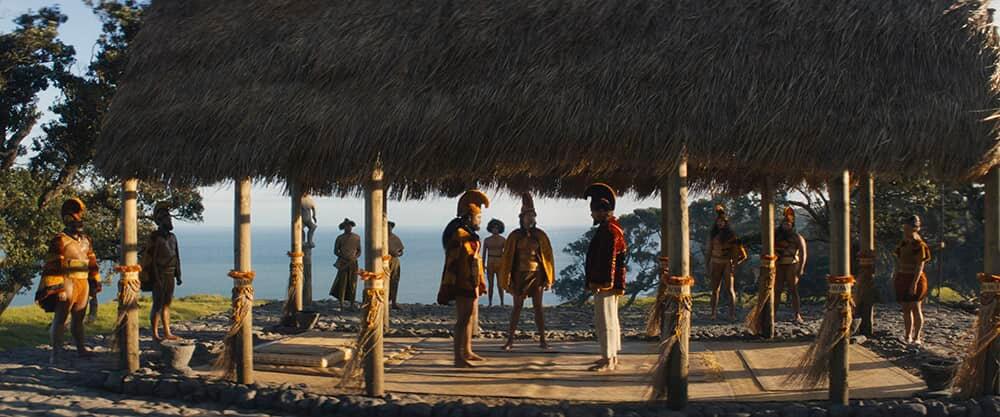
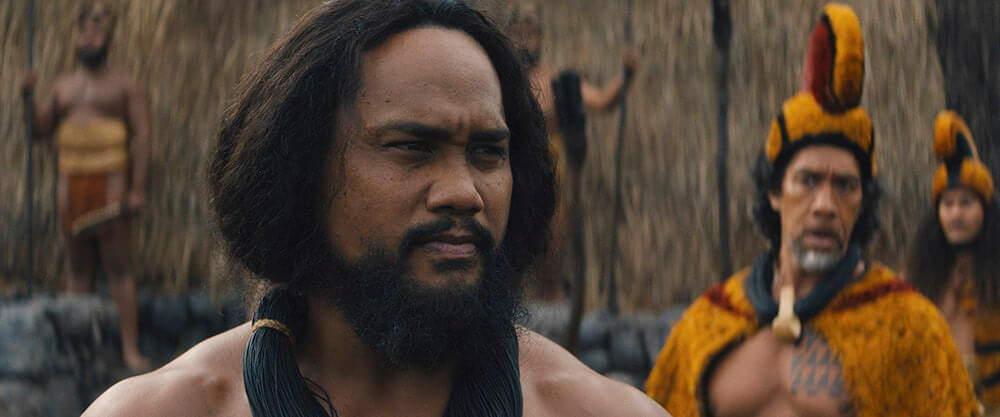
“There was another aspect to Kamehameha. We know that after the unification he turned people to agriculture. He loved farming. It’s the human side of his story that we don’t always talk about. This is Kamehameha portrayed in a specific context at a specific time.”
Pondering the subject of leadership Sibbett said, “Imagine being told your whole life that you are supposed to be this. But can you be a leader simply because you’re told you’re one? Or do you need to find that path yourself? That is the window I wanted us to open and look through and talk about.”
In taking on the kuleana of portraying Kamehameha, Makua said he looked within. “If you look at Kamehameha, and his role as a leader, he has to go through the trials of decision-making, doubting his decisions, right or wrong. And I go through that in the same way. I’m already in leadership in our community. You got to be the strength. You got to be vulnerable. And I feel it was exactly that. So the preparation was simple. I did what I do. I became myself.”
Researching History and Culture
Sibbett’s bookshelves at home are lined with titles like Ruling Chiefs of Hawaiʻi by historian Samuel Kamakau and Kamehameha and His Warrior Kekūhaupiʻo by Rev. Stephen Desha. He grew up in a family that sang songs and told stories and, despite living outside of Hawaiʻi, Hawaiian culture and history “was always just alive in us. It’s just part of who I am.”
Over the 10 years that Momoa and Sibbett worked on the storyline for Chief of War, they read everything they could get their hands on – including translations of 19th century Hawaiian newspapers.
Because while the story of Kamehameha and the unification of the kingdom is familiar, their challenge was telling the story from Kaʻiana’s point of view – and how to include all the wonderful information they found during their research.
“It was exciting. It was so much fun. The research was never labor,” Sibbett reflected. “The real question became what can’t we include? Like, we just don’t have space for everything and in some cases, we were combining two characters into one so that we could salvage some of those stories.”
They zeroed in on trying to present as much as possible in a way that didn’t feel disjointed. “The real joy was hearing non-Hawaiians tell us, ʻI can’t believe how much of the story we don’t get to tell,’” Sibbett recalled. “But we just didn’t have a place for [everything] in the narrative that we were building.”
While researching the story, Momoa and Sibbett connected with Awaiaulu, the organization dedicated to developing resources and resource people that can bridge Hawaiian knowledge from the past to the present and the future.
Asserting ʻŌlelo Hawaiʻi
Awaiaulu Programs Director Kauʻi Sai-Dudoit met Sibbett and Momoa on Maunakea in July 2019. They were directed to her after asking around about who could help them with history and language.
There, on the mauna, Momoa and Sibbett told Sai-Dudoit about their project. “I was impressed because the two of them had done their homework,” Sai-Dudoit recalled. “We spent about an hour just talking and talking.”
Sai-Dudoit made arrangements to meet with them on Oʻahu so Awaiaulu Executive Director Dr. Puakea Nogelmeier could be looped in. At the meeting, Momoa and Sibbett talked with them about their vision for the project, which was still in the idea stage as there was no funding. “We said okay, let’s see how this thing morphs. But we can be onboard,” said Sai-Dudoit.
When Apple agreed to finance Chief of War, Awaiaulu became a key collaborator. Nogelmeier and Sai-Dudoit took on the kuleana of translating the script into ʻōlelo Hawaiʻi. Because they were privy to the script as it was being refined, they also served as historical and cultural consultants.
“We had Zoom meetings. As scripts were produced they wanted them to be translated – but they would also accept our feedback on the content,” said Nogelmeier. “There was some material that we would say ʻwe can’t translate this because it’s problematic’ and they were responsive to that.”
The plan from the beginning was for the first two episodes to be completely in Hawaiian. “Paʻa and Jason actually had to fight for that because Apple was ʻon the fence’ and then flaked out at one point and said ʻno,’” recalled Sai-Dudoit.
“And so they fought for it and they won that fight. The first two episodes are completely in Hawaiian and rest of the episodes are 40-60% in Hawaiian – except [the episode] when Kaʻiana is traveling.”
“It absolutely had to be in ʻōlelo,” Momoa said. “Our cast is very diverse, mostly Polynesian. [Besides Hawaiians] we have Tongans and Samoans and Māoris. When you see Temuera (Morrison) playing Kahekili and Cliff Curtis [playing Keoua] what they were doing [learning to speak Hawaiian] is insane. I canʻt just roll over and speak Māori, right?
“Aside from a couple of folks like Kaina who speak Hawaiian fluently, it was extremely challenging. For me, personally, it was the hardest thing I’ve ever done.”
When filming began, other Awaiaulu staff were pulled in as Hawaiian language coaches to work with the actors. Keawe Goodhue emerged as the project’s Hawaiian language supervisor while Kahoʻokahi Kanuha was tapped to be Momoa’s personal language coach.
Commenting on the importance of making the series in ʻōlelo Hawaiʻi, Kanuha said it strengthens the lāhui and our connection to lāhui.
“What identifies us as the same lāhui? It’s not the color of our skin anymore because we all look quite different. But if we ʻōlelo Hawaiʻi, if we practice Hawaiian practices, if we know our moʻolelo (stories) and tell our moʻolelo, if we know our culture and practice our culture – those are the things that we can identify each other by,” he said.
“This project brings all of that together. Because of our political situation – if you don’t know, google ʻHawaiian occupation’ – it’s difficult to envision a Hawaiian future because we have no idea what our past looked like. But if we can imagine what Hawaiian society was like, then we can imagine what Hawaiian society should be moving forward.
“This isn’t something that just brings the past back to life,” Kanuha added. “This is something that brings life to our present and to our future.”
Balancing Authenticity…
For Momoa and Sibbett it was imperative that Chief of War was created and presented with authenticity and cultural integrity.
Noted musician and cultural practitioner Kaumakaiwa Kanakaʻole served as Chief of War’s cultural supervisor, and a long list of consultants were also involved – respected cultural practitioners in their respective fields that included folks like Keone Nunes (tattoos), Francis Palani Sinenci (hale-building), Dalani Tanahy (kapa-making), ʻUmi Kai (weapons) and Tom Pōhaku Stone (hōlua sledding).
When traditional weapon-maker ʻUmi Kai was approached by Sibbett to serve as a consultant for Chief of War, he responded with caution. “Hollywood has not been kind to cultural people. They don’t represent them well; they exaggerate things according to what they think can be entertaining,” Kai said to Sibbett.
“Paʻa said, no, that he wanted to keep it as authentic as possible. But indicated that the only way they can produce something is to make it entertaining as well,” Kai recalled. “I said, ʻthat’s fine, but just stay within certain boundaries so that you don’t misrepresent Hawaiʻi and its people.’”
Kai ended up making nearly 30 traditional weapons and various implements for the production. His weapons were sent off to Los Angeles where molds were made and rubber renditions of the weapons created for filming the series’ many intense battle scenes. Kai’s original weapons were just used for close-ups.
Tom Pōhaku Stone, an expert in hōlua sledding, was in California with his ʻohana when he got a call from Sibbett about being a project consultant. He flew home early to meet with him. Once he agreed, Stone had three months to make 12 hōlua sleds for the production – which includes a thrilling hōlua race scene.
With help from his wahine, Aulani, Stone met the near-impossible fabrication deadline. But he also had to teach the production team about building a hōlua slide and how to ride. “I spent a whole day with Jason Momoa talking about it,” said Stone. “We went over to the Big Island and talked about how to actually ride a hōlua sled.”
The hōlua race scene was filmed in Aotearoa (where most of the filming was done due to cost), but the production team kept in touch with Stone via Zoom. Because Stone couldn’t be there to supervise the building of the slide he said, “they built the wall a little bit higher than what it was supposed to be. But they made it work.”
Hōlua sledding is an extreme sport – imagine going down a rock slide at anywhere from 40-80 mph on a sled that is only six inches wide and up to 12 feet long with the ride ending once the sled hurtles off a cliff and plunges into the ocean – so for safety reasons, CGI is used in part of the scene. Stone was just happy to share an aspect of our culture that few people know exists.
…With Entertainment
Despite the care taken to honor our culture and history and to maintain authenticity, everyone involved in the production is quick to point out that while Chief of War is based on actual events, it is not a historical documentary. Momoa and Sibbett have exercised creative license as storytellers, not only to move the story forward, but for cinematic or entertainment purposes.
“We’re crunching 10, 20 years of chronology into a short story. And there is no guarantee of a season two for us, so we want to make sure that we’re telling stories that reflect the Hawaiian experience and the things that we have been through,” said Sibbett.
Additionally, some historical events were moved around “because we needed our characters to experience the event on a personal level instead of hearing about it happening somewhere else,” he said.
“They took some liberties, but they were open to suggestions. Some of the liberties seemed logical and functional as far as filming goes, but were problematic in terms of history or culture. We would bring in those angles and they were pretty open,” said Nogelmeier.
“You’re going to have to make creative choices,” Momoa said. “We’re working for a massive company trying to sell [the story] and get this out. We can kick down the door. The next generation can make it even better.”
“I think that, as creatives, as storytellers, we made decisions that maybe aren’t universally acceptable in the Hawaiian community and that’s okay. The fact that we can even have the conversation is amazing – as is the fact that we are in a place to discuss our history on such a platform,” said Sibbett.
Including and Empowering Other ʻŌiwi
By all accounts, Momoa has been extremely generous about sharing his considerable platform in the film industry with other Hawaiians. Chief of War has provided employment and opportunities for Hawaiian talent both in front of and behind the cameras, including hundreds of extras.
“I think at least 85% of the crew [in Hawaiʻi] were Kānaka or Hawaiʻi-born,” said Hawaiʻi Unit sound mixer Nohealani Nihipali. “So our industry is turning. We have enough people who can represent every department in our industry, who know how to make this work.
“Paʻa and Jason are inspiring us, they’re empowering us. We have lots of stories and there’s enough work for everybody – all different kinds of work. But it’s Jason’s platform that he’s opening to other people,” she said.
Ioane Goodhue plays “Lima” who is kahu (honored attendant) to Kalanikūpule, son of Kahekili. He is one of a handful of cast members with speaking roles who is fluent in ʻōlelo Hawaiʻi and was happy to get the call to be part of the project.
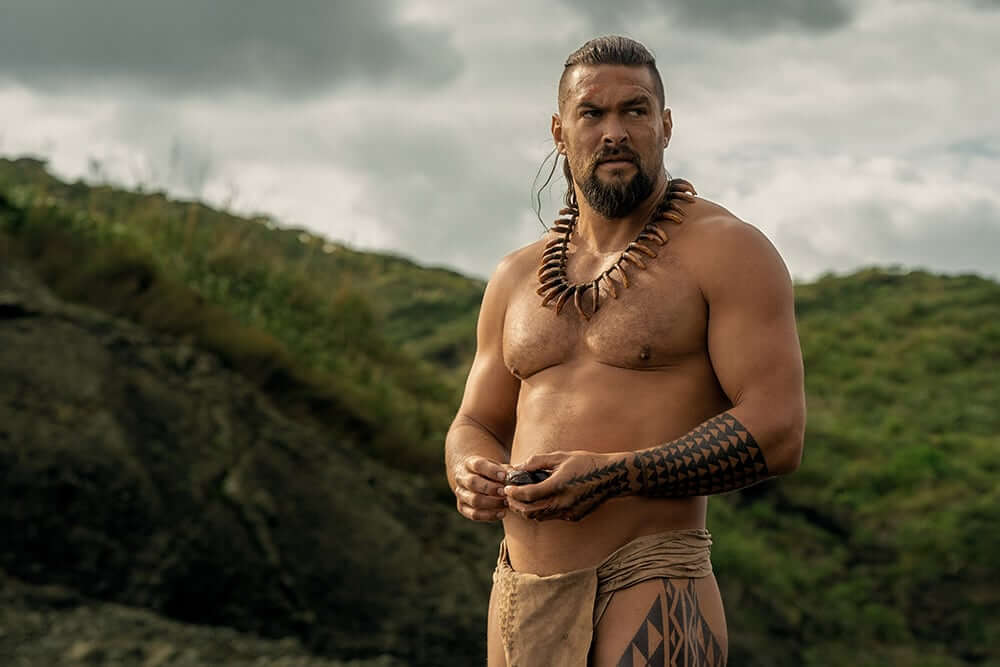

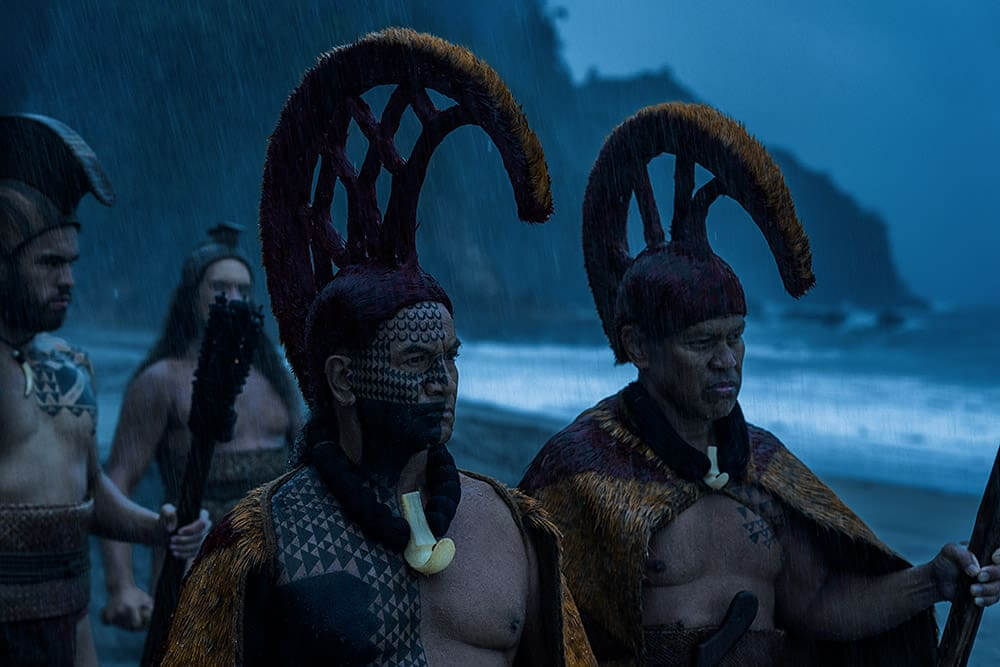
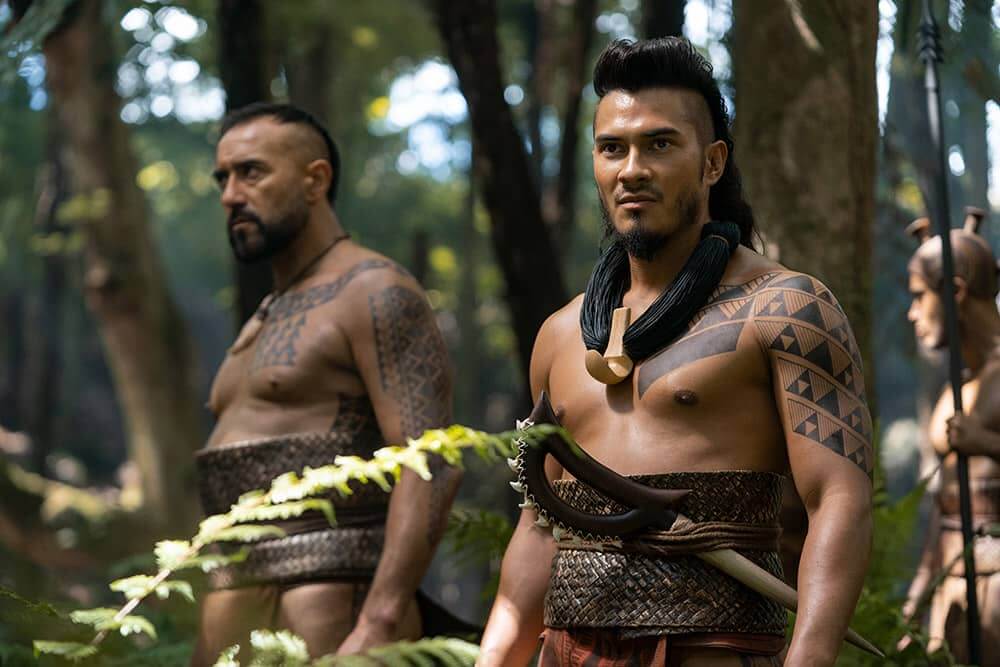
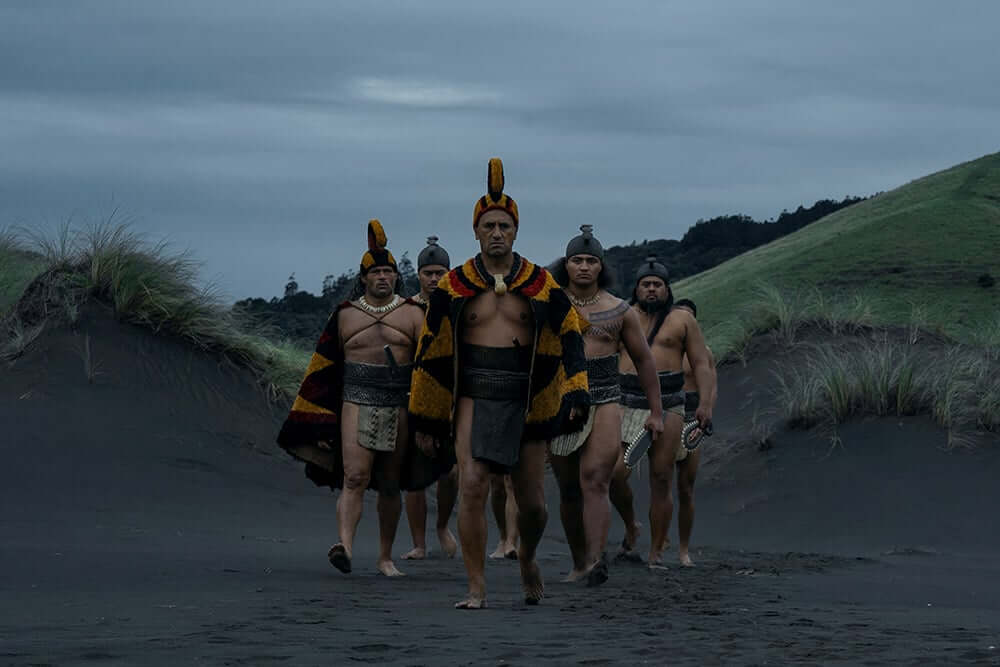
“I’ve been carving out a little niche for myself here at home with some Hawaiʻi films, but nothing to this scale, obviously,” Goodhue said.
“In film we have artistry that gets represented really well at the indie level, and then you have industry, which is a different beast. This project team has found a happy medium where artistry and industry can co-exist. I’m really excited for where this will go and what will come after.”
Moses Goods, who plays Keʻeaumoku, is a seasoned ʻŌiwi actor and playwright who has been active in Hawaiʻi’s local theatre scene for almost 30 years. He said being part of Chief of War is a continuation of what he’s been doing as a storyteller, but on a much larger scale.
“I’ve been doing my thing performing in classrooms and theatres. But when I auditioned for this and was cast, it was a moment for me. It was something I had hoped would happen in my career – and it happened,” said Goods. “The Hawaiians who were already ʻin the room’ opened the door and invited more Hawaiians into the room on every level – as actors and crew and cultural consultants.”
As a student, Mainei Kinimaka loved taking photos, making short films, and doing the morning announcements at school. When she graduated, Kinimaka, who is ʻohana to Momoa, worked as his assistant for six years to learn about the film industry.
Momoa took her under his wing, giving her experience working on set, directing, filming and producing. Kinimaka eventually tried acting and when Chief of War came up, she auditioned for the role of “Heke,” sister to Kekupuohi (Kupuohi), wife of Kaʻiana.
Heke is an invented character who provides a counterpoint to the violent world that surrounds her. “She is a healer,” Kinimaka said. “An innocent, peaceful person caught up in the crossfire of war.” As an interesting side note, Kinimaka shared that the name, Heke, pays homage to “Grace Heke,” the lead character in Once Were Warriors, a 1994 Māori film that helped inspire Momoa’s desire to tell Hawaiian stories.
“I realize how great an opportunity this is for our people. Hawaiʻi has such an unimaginable amount of talent and so many incredible storytellers. If Chief of War gets another season, I think they’ll be able to invite more filmmakers from Hawaiʻi to [be involved]. That’s going to be key,” Kinimaka added.
Seizing Control of Our Narrative
Since the film industry emerged a century ago, Hawaiʻi has hosted hundreds of feature films and television series. But in most cases, Hawaiʻi and her people have been an exotic backdrop for stories that could have happened elsewhere starring actors with no connection to this place.
“Many times shows have come out about Hawaiʻi and we’ve been offended. But years ago it hit me that those filmmakers want to honor Hawaiʻi – they just don’t know how to do it. They were trying to share their love of this place, but that’s not their kuleana. It’s ours,” Sibbett reflected.
“This show being created, produced, written, acted, and (because of Jason’s involvement as a director of the final episode) directed by Hawaiians is a big deal. We don’t take for granted how amazing this opportunity has been,” Sibbett added.
“Instead of us chasing and trying to be a part of this industry as the background of somebody else’s story, what we’re hoping is that our people can value what’s being done and realize they can be the main character of a movie.”
“It’s not that films were not being made, but to have something made on this level feels really good,” Momoa said. “Hawaiʻi has so many beautiful, wonderful stories. I hope this inspires others. You want the next generations to be better and better and better. I think what we’ve created right now sparks a lot of beautiful things. I think a lot of things are going to open up.”
“The intent of this project was to tell our story and try to and tell it in the best possible way,” said Ocean Kaowili, a firefighter by vocation who plays “Pāhoa,” kahu to Kahekili. “When most of the world thinks about Hawaiʻi it’s grass shacks on a beach. They don’t know our history, where we come from, and the challenges we face as Hawaiians – you know, the demographics. This depicts us as a prosperous people with our own government. I think that’s huge.”
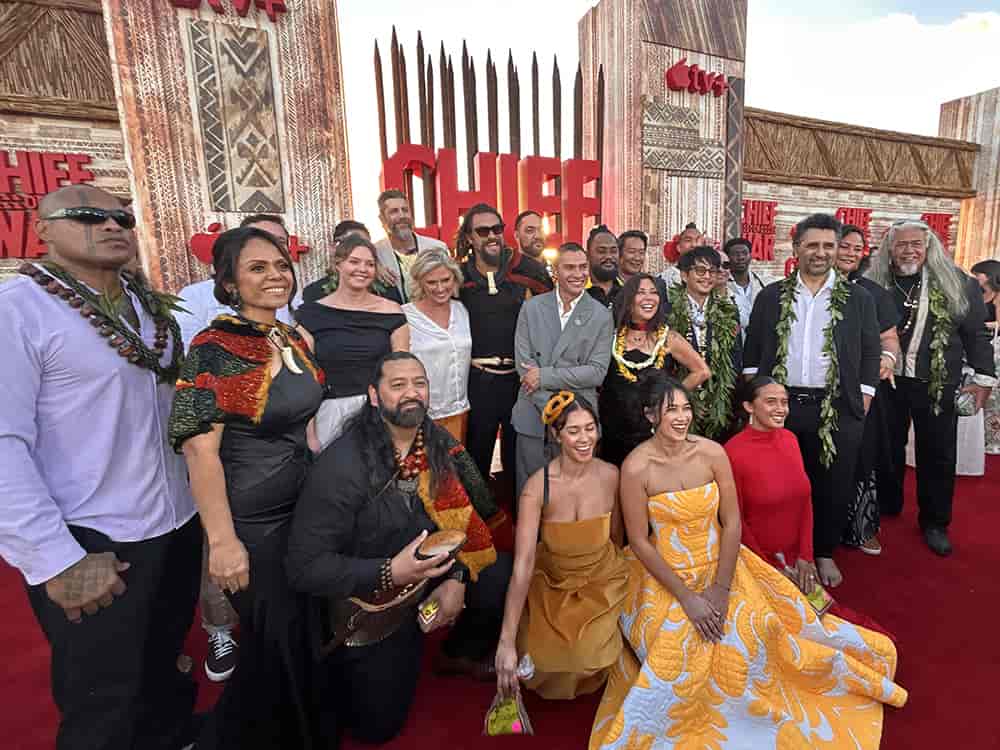

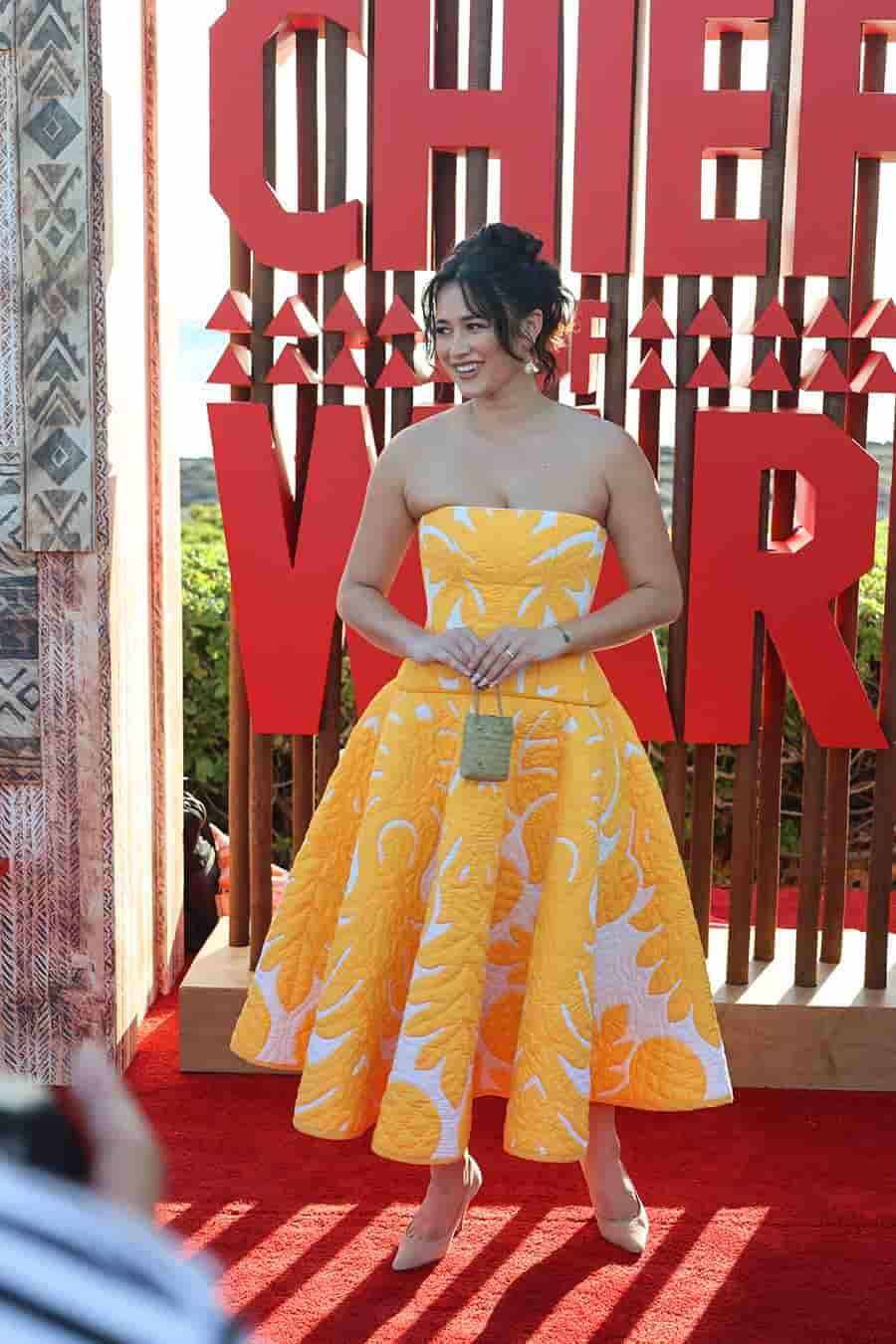
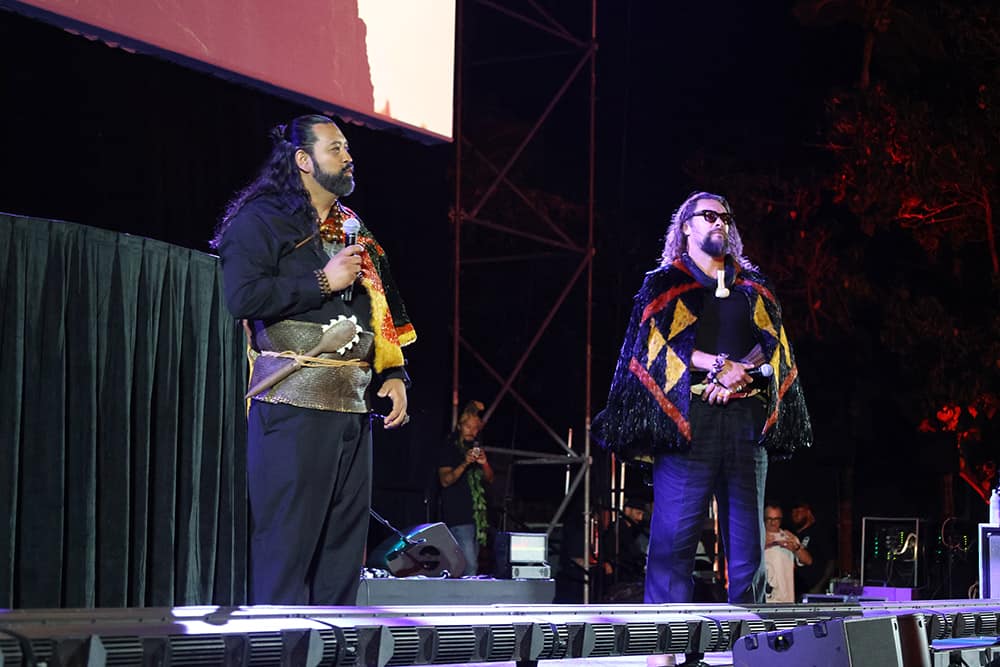
Momoa and Sibbett are deeply grateful for Apple’s support and are ready to continue moving forward – they just need to know that Chief of War will be well-received by audiences outside of Hawaiʻi.
“As soon as we have that confidence, we’ll do everything we can to make sure there’s more storytelling. I have a whole archive of stories to build, stories I’ve already prepped. I’ve got pilots ready to go,” Sibbett said. “Doing Chief of War was a way to open the door for more storytelling by our people.”
“We put everything into this,” Momoa said emotionally. “It’s our home, our people, it’s our everything. It’s not just another show. It’s our lives, our families, our ancestors.
“This has been a dream of mine my whole life. Is it 100% the best it can be? No. But is it going to inspire future generations and is it going to kick down the door for something that’s never been done before? I think yes.”
Key ‘Ōiwi Contributors to “Chief of War”
Co-Creators/Co-Writers
- Jason Momoa
- Thomas “Pa‘a” Sibbett
Title Role
- Jason Momoa: Ka‘iana
Starring Roles
- Moses Goods: Keʻeaumoku (“Moku”)
- Mainei Kinimaka: Heke (sister to Kekupuohi “Kupuohi”)
- Kaina Makua: Kamehameha
Supporting Roles (not an exhaustive list)
- Ioane Goodhue: Lima (kahu to Kalanikūpule)
- Keala Kahuanui-Paleka (ʻŌpūnui)
- Ocean Kaowili: Pāhoa (kahu to Kahekili)
Supervisors/Leads (not an exhaustive list)
- Kala Crowell: Key Assistant Location Manager
- Keawe Goodhue: Hawaiian Language Supervisor
- Pono Guerrero: Key Assistant Location Manager
- Nohealani Nihipali: Hawaiʻi Second Unit Sound Mixer
- Kaumakaiwa Kanakaʻole: Cultural Supervisor
- Kahoʻokahi Kanuha: Language coach to Jason Momoa
- Wainani Young-Tomich: Hawaiʻi Second Unit First Assistant Director
Cultural Consultants (not an exhaustive list)
- Kauila Barber: Costume makeup and hair
- ʻUmi Kai: Weapons and implements
- Archie Kalepa: Canoes/sailing
- Huihui Kanahele-Mossman: Costume makeup and hair
- Kimo Kepano: Hawaiian Light Seer
- Marques Marzan: Costume makeup and hair
- Joseph Aliʻi Miner: Martial arts
- Puakea Nogelmeier: ʻŌlelo Hawaiʻi script
- Keone Nunes: Tattoos
- Kauʻi Sai-Dudoit: ʻŌlelo Hawaiʻi script
- Rick San Nicolas: Featherwork
- Francis Palani Sinenci: Hale building
- Thomas Pōhaku Stone: Hōlua sleds/sledding
- Dalani Tanahy: Kapa-making
- Jerry Walker: Martial arts
- Hina Wong-Kalu: Customs/culture