
In November, I had the privilege of joining thousands of Indigenous educators, leaders, and community members at the World Indigenous Peoples’ Conference on Education (WIPCE) in Tāmaki Makaurau, Aotearoa.
Being surrounded by so many who are building futures grounded in ancestral knowledge reminded me that Indigenous education is not only alive but actively leading efforts for systemic change.
I traveled to WIPCE to present alongside an inspiring group of Hawaiʻi school leaders who have dedicated years to developing culturally responsive assessments grounded in Hawaiian epistemologies. These leaders included Denise Espania of Mālama Honua PCS, Paul Kepka and Jamie Cruz of Kamaile Academy, Meahilahila Kelling of Ke Kula o Samuel M. Kamakau, Kanoe Ahuna of Kanuikapono – all from our Hawaiian-focused charter and immersion schools.
The presentation also included Buffy Cushman Patz of SEEQS, a Hawaiʻi charter school on Oʻahu. Together, we shared “Manifesting the Mana of Culturally Responsive Assessments,” a presentation highlighting work across Hawaiʻi to design rigorous, culturally aligned tools such as the HFCS Process Rubric, the Hōʻike Capstone Project Continuum, and the Kupukupu Framework of Cultural Competencies.
These tools were co-designed with community, reviewed through Indigenous and Western lenses, and built to hold equal or greater value than traditional standardized tests. Their purpose is simple but profound: to measure what we value as Hawaiian educators and communities.
WIPCE’s plenary sessions further affirmed the importance of this work. Dr. Jon Osorio, dean of Hawaiʻinuiākea School of Hawaiian Knowledge urged Indigenous peoples to take bold steps in education and governance, reminding us that strengthening our educational systems is political, generational, and essential for ea (sovereignty). He affirmed that “Native people everywhere, who have managed to remember how to live with others on the land. . .we are the antidote.”
His message was both a challenge and an affirmation. Not only do we have the right to determine our educational futures, we also carry knowledge, practices, and values that the world urgently needs. Osorio honored the long arc of Hawaiian resilience, noting that “the most powerful and potent political and social force” in the last 50 years has been our lāhui and the many community leaders who have restored our language, revitalized our arts and sciences, reopened loʻi and loko iʻa, protected sacred places, and prepared to confront ongoing military occupation of our crown and government lands.
The lessons of WIPCE strongly align with OHA’s Mana i Mauli Ola (MiMO) education outcomes. MiMO emphasizes strengthening culture-based learning systems, expanding Hawaiian medium and Hawaiian-focused charter schools, and ensuring these schools are adequately resourced.
The assessments developed by the aforementioned leaders directly support these goals. They cultivate cultural identity, deepen relationships to ʻāina, and prepare students for college, career, and community through measures rooted in Hawaiian worldviews and collective wellbeing. The work of OHA supports our lāhui by ensuring continued advocacy and engagement through education to continue our legacy of aloha ʻāina.
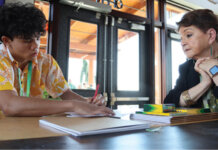

 in Tāmaki Makaurau, Aotearoa.)