
By Darrian Kāhealani Muraoka
There are places that change the way you see the world, and there are places that change the way you see yourself. Papahānaumokuākea is both. She is not simply a protected expanse on a map; she carries memory, genealogy, and prayer.
In her vastness, I was reminded that we are always the footsteps of our kūpuna. Stewardship here is not just about protection; it is about navigating kuleana, listening to your naʻau, and answering the quiet question our ancestors echo to us: What kind of kupuna will you be?
My journey began in my first year as a marine debris technician with the Papahānaumokuākea Marine Debris Program (PMDP) when our team traveled to remove marine debris from Kapou, Kamokuokamohoaliʻi, Kamole, and Lalo. As we crossed Ke Alanui Polohiwa a Kāne, we entered the realm of our kūpuna: Pō.

In that space, time shifted and sea mist carried greetings only the naʻau can understand. The veil between past and present thinned and we were watched with guiding eyes. For days, 16 of us lived and worked together in rhythm, learning trust through long hours, shared meals, salt-soaked gear, and quiet exhaustion. The work demanded strength but, even more, humility.
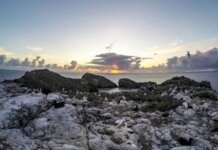
Each island received us differently, but Kamole and Kapou were the most vivid. On our first morning at Kapou, after offering oli, we were given time to kilo – observe, listen, and be still. I sat quietly asking myself, “what kind of kupuna might I one day become?” In that stillness, life unfolded in cycles: manu feeding their young while manō circled patiently below. Creation and consumption. Beginning and ending. The balance of Pō and Ao.
Witnessing these processes was an emotional reckoning. I felt the weight of continuity in systems that existed long before me and will endure long after. Standing there with sun-worn skin and salt in our hair, being entrusted to care for this space filled me with profound humility. I felt grief for what was harmed and gratitude that we were present to respond. Kuleana means doing the work even when it is hard – choosing care over convenience, protection over apathy.
Kamole tested that resolve: unforgiving terrain, relentless sun, and debris heavy with the world’s neglect. Between sweat and steady encouragement, 16 of us moved with one purpose: to fulfill our kuleana for ka poʻe o Hawaiʻi and for a world connected to these shores. Every net lifted, every fragment gathered, felt like a quiet act of devotion.
Coming home was unexpectedly emotional. We were able to care for a place that most will never see, not for recognition or praise, but because it is ours to protect. Perhaps this is how we will answer the dreams our kūpuna once prayed for: by being present, doing the work, and by continuing the lineage of responsibility entrusted to us. In standing in the realm of our kūpuna, we became part of the prayer that was sent forward into time.
Mahalo nui to Papahānaumokuākea, Papahānaumokuākea Marine Debris Program, The Native Hawaiian Cultural Working Group, and all who protect Papahānaumokuākea; from the minds of the past to the hands of our future.
Darrian Kāhealani Muraoka was born and raised on the west side of Kauaʻi, where she learned to holoholo, hoe waʻa, and mālama the nearshore waters of Kekaha. She is a biologist on the Mānā coastline, a board member for the West Kauaʻi Canoe Club, a member of the Native Hawaiian Cultural Working Group, and a member of Hui Mālama Pōlihale. This was her first year as a marine debris technician and she looks forward to returning to Papahānaumokuākea.