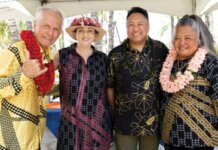

By Kamaka Pili
NaHHA is proud to share an article from one of our Lamakū Hoʻokipa – Beacons of Hospitality – who exemplify the value of mālama and are making a meaningful impact as contributing members of the Native Hawaiian community.
For many people today, Waikīkī is synonymous with tourism. For more than a century, its shoreline has been shaped by the visitor industry, beginning with the opening of the Moana Hotel in 1901, often called the “First Lady of Waikīkī.” That era established Waikīkī as a global destination known for luxury accommodations and oceanfront leisure. But in the broader story of Waikīkī, 125 years is only a short chapter.
Long before hotel towers lined Kalākaua Avenue, Waikīkī was the political and cultural center of Oʻahu for nearly 400 years. From the reign of chief Māʻilikūkāhi to the unification of the islands under Kamehameha I, Waikīkī was a thriving seat of governance, abundance, and innovation.
The area once known as Ulukou, near where the Moana Surfrider now stands, was home to Māʻilikūkāhi himself. Imagine Waikīkī, not as it appears today, but as a landscape of coconut groves stretching across the shoreline.
Even the name Waikīkī, “spouting waters” tells the story of this place. Waikīkī was sustained by freshwater springs and streams that fed expansive loʻi kalo and fishpond systems. The streams Kuekaunahi, ʻĀpuakēhau, and Piʻinaio once carried the waters of Mānoa and Pālolo to Waikīkī before being redirected with the construction of the Ala Wai Canal in 1928.
Today, those streams are no longer visible in the same way, and much of Waikīkī has been reshaped through urban development. Yet Waikīkī still remembers.
If you stand in the waters at Kaimana Beach, you are standing where Kamehameha arrived on Oʻahu in 1795 through the Kāpua Channel before the Battle of Nuʻuanu. These are not simply stories of the past, they are living landscapes layered with memory, ʻike, and meaning.
As a Native Hawaiian, Waikīkī was once a place I avoided. It felt overcrowded and disconnected from the Hawaiʻi I knew. But the more I learned its stories through mentors like Uncle Joe Recca and others, the deeper my aloha for Waikīkī grew.
With that aloha also comes kuleana, both a responsibility and a privilege; the honor of being entrusted with these stories, and the privilege of continuing to share them. It is this kuleana of knowing these places and speaking their names which ensures that the story of Waikīkī continues to flow like the fresh waters for which it was named.
Kamaka Pili is the owner of Now & Then Tours, a walking tour in Waikīkī that shares the rich history of place. A familiar face to many across Hawaiʻi through his years in television broadcasting, Kamaka is widely known for his passion for sharing place names in ways that reconnect people to the deeper identity of Hawaiʻi. For more info: nowandthentours.com