Generations of Kumu Hula Carole Lanialoha Lee’s ʻohana have made their home in Chicago, Illinois, as have many other Kānaka Maoli families. By her count, it was in 1886 that the initial wave of Hawaiians migrated to the American Midwest.
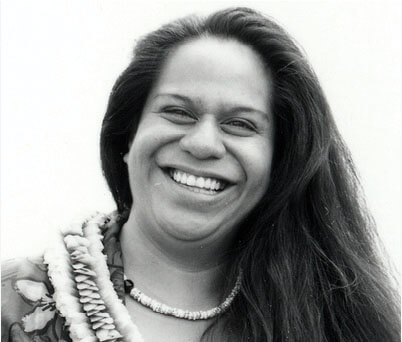
Lee, 62, is the wahine behind the Aloha Center Chicago in Evanston, Illinois, which shares space with the Gichigamiin Indigenous Nations Museum.
Established in 2015, the center – known as “Chicago’s Sacred Space of Aloha” – serves as a cultural and community cornerstone. It offers arts and crafts, music, performing arts, dance, genealogy research and more.
Now, Lee is searching for a “forever home” for the center in Chicago.
As she says, “My agenda is aloha. My life’s work is aloha. My name is aloha.”
Lee’s ʻohana is predominantly rooted in Oʻahu and Kauaʻi, with some ties to Hawaiʻi Island. Both her makuakāne, Calvin B. Lee Jr., and her makuahine, Joelladean Hinano Keliikoa-Lee, had Kānaka ʻŌiwi ancestry.
But the Chicago story really starts with her tūtū, Caroline Namahoe Haʻo. “She was my everything,” Lee said.
Caroline learned ʻōlelo Hawaiʻi as her first language. Before her passing in 2003, “it was joyful for her when she got to come across some of the younger generation,” Lee said. “She was actually able to communicate in the way she felt most comfortable.”
Caroline performed in Hawaiʻi as a dancer. She also sang lead and duets. After meeting and marrying musician Francis Samuel Kaʻaʻa Jr., the couple relocated to Chicago to perform.
Her daughter, Joelladean, was punished for speaking English at home and Hawaiian at school. She joined the U.S. Air Force, serving at Chanute Air Force Base in Rantoul, Illinois, which is now decommissioned. She received computer training and, at the end of her military career, Joelladean moved on to work for the U.S. Steel Corporation in Chicagoland. She had three keiki: Lee and her two brothers.
Lee recalls that her uncle and Navy man, Edward Nakapaahu Keliikoa, played a role in the aftermath of the attack on Pearl Harbor in 1941 alongside her mother: They carried the bags of recovered body parts that were taken to the infirmary for possible surgeries.
Some of Lee’s earliest memories are tied to performances. With the Hawaiʻi Visitors Bureau, Hawaiian Airlines and Aloha Airlines (which ended operations in 2008) maintaining a presence in Chicago, Lee’s ʻohana was contracted to perform at tourism events.
“That’s the path for us,” Lee said, “because our family was in it.”
From the age of 3, her family often traveled every weekend for work. “It was no easy task. It was brutal,” Lee commented.
She danced hula and performed ʻoli, with four kumu hula, including her grandmother. It served as the foundation of Lee’s burgeoning music career.
In her youth, she learned how to drum and play the French horn. She was part of Drum Corps International for several years. Later, Lee played ʻukulele and sang lead vocals. By high school, she wrote cadences for the marching band at Buffalo Grove High School in Buffalo Grove, Illinois. Some of those pieces are still played today.
However, “the entire time I was being raised in Buffalo Grove, I never felt a part of it,” Lee said. “I never felt welcomed. They weren’t really prepared to receive the ethnic diversity.”
After graduating in 1982, she attended VanderCook College of Music in Chicago to study music formally. At the same time, she booked shows of her own throughout the city.
Later, Lee transferred to the University of Southern Colorado, now known as the Colorado State University Pueblo. She performed as a timpanist for the Pueblo Symphony Orchestra while continuing her music education. Traveling the Rocky Mountain West, Lee recalls listening to skilled banjo players at the Flying W Ranch.
There, “life was so different,” she said. But Lee felt the pull back to her community and her hometown.
“All I knew, was I was gonna go back to Chicago, just kind of hoʻoponopono on everything,” she said, “and really look closely at what I could do to help.”
Lee realized she could use her educational training to develop a curriculum that aligns with Hawaiian culture. For decades, she taught both hula and ʻukulele at the Old Town School of Folk Music.
“I’m teaching our culture,” she said.
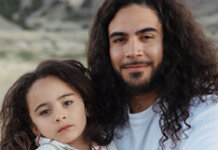
Lee has two children: daughter Kahoʻokele Napuahinano Sumberg and son Kū Kamaehao Sumberg. Years later, she would give birth to the Aloha Center, too.
It started in the basement of the Avondale Vintage Market but changed locations several times before landing at its current spot, the Gichigamiin Indigenous Nations Museum, which centers Indigenous history.
“We’re really digging it,” Lee said. “I’m really enjoying this path of finally being able to work with other natives.”