
The Office of Hawaiian Affairs (OHA) Board of Trustees convened an emergency meeting on September 9 and authorized up to $362,800 in immediate disaster assistance for Native Hawaiian beneficiaries and communities impacted by Hurricane Lowell, with particular attention to severe and continuing impacts on Kauaʻi, Niʻihau and West Oʻahu.
The emergency action included up to $250,000 in direct disaster aid grants to verified Native Hawaiian households, up to $75,000 to support community resource hubs (with awards of up to $10,000 per hub), and the distribution of $37,800 in Times/Big Save Supermarket gift cards to help meet immediate needs in communities impacted by the storm.
The Board’s action also gave OHA’s administration the flexibility to rapidly deploy assistance as damage assessments continue and additional needs emerge, while maintaining eligibility, fiscal and accountability requirements.
“Hurricane Lowell has caused tremendous damage and disruption, and many of our beneficiaries are dealing with the loss of property, interrupted utilities, damaged roads and the uncertainty that comes with a disaster of this magnitude,” said OHA Board Chair Kaialiʻi Kahele.
“The Board’s action today allows OHA to move resources directly into affected communities without unnecessary delay. Our priority is to reach our beneficiaries and families experiencing the greatest need and help them begin the difficult work of recovery.”
The Board also authorized the OHA Administrator to establish streamlined application, verification, documentation, award and disbursement procedures to help get assistance to beneficiaries as quickly as possible.
Recognizing that families displaced or otherwise affected by a major disaster may have difficulty accessing ordinary documentation, the authorization provides OHA with flexibility to appropriately streamline documentation requirements while maintaining fiscal, eligibility and accountability controls.
“We have learned through our previous disaster responses that conditions can change rapidly and that assistance needs to be flexible enough to respond to what communities are actually experiencing on the ground,” said OHA Interim Chief Administrator/CEO Summer Sylva.
“This authorization gives our team the ability to move quickly, while ensuring that OHA resources are directed responsibly to verified Native Hawaiian beneficiaries and organizations serving our communities. We will continue working closely with government agencies and community partners to identify where the needs are greatest.”
Hurricane Lowell brought destructive winds, heavy rainfall, flooding and high surf across portions of the state on September 7, damaging homes, roads, utilities and other critical infrastructure. Kauaʻi and Niʻihau experienced particularly serious impacts.
Beneficiaries and communities experiencing the most immediate and substantial impacts were prioritized. OHA assistance may complement county, state, federal, insurance, charitable and other disaster assistance, while safeguards will be implemented to prevent duplicative OHA assistance for the same identified need to the extent reasonably ascertainable.
OHA Trustee for Kauaʻi and Niʻihau Dan Ahuna and his team on Kauaʻi have gone out into the affected communities to listen, assess impacts and connect with community- led response efforts. OHA staff is also working with community organizations and other response partners to determine the appropriate locations and level of support needed for community resource hubs. The hubs can provide critical points of contact for families seeking assistance and help connect isolated or heavily impacted communities with available resources.
Approximately 17,000 Native Hawaiians live in Kauaʻi County, representing roughly 23% of the county’s population, according to 2021 Census data and OHA staff analysis. The significant concentration of Native Hawaiians on Kauaʻi, combined with the severity of Hurricane Lowell’s impacts, was among the factors prompting the Board to convene an emergency meeting.
In the weeks following the storm, OHA continues to assess impacts on Native Hawaiian businesses, farmers, homesteaders and other beneficiaries impacted by Hurricane Lowell to determine how OHA’s available resources can best support recovery efforts.


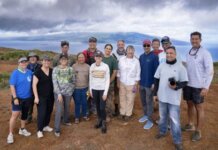
 Board of Trustees convened an emergency meeting on September 9 and authorized up to $362,800 in immediate disaster assistance for Native Hawaiian beneficiaries and communities impacted by Hurricane Lowell.)