
New documentary asks what comes next for military-leased lands
In 1964, thousands of acres of Hawaiʻi’s public trust lands were leased to the U.S. military for 65 years for just $1 per lease. Those leases begin expiring in 2028, including major Army leases at Pōhakuloa Training Area on Hawaiʻi Island, and at Mākua, Kahuku, and Kawailoa-Poamoho on Oʻahu in 2029.
More than six decades later, the people of Hawaiʻi face consequential decisions about what happens next on these public trust lands.
A new documentary from the Office of Hawaiian Affairs (OHA), Held in Trust: The Future of Hawaiʻi’s Public Lands Beyond Military Leases, examines the history of these lands, their significance to Native Hawaiians, the impacts of decades of military use, and the choices ahead as the leases expire.
Held in Trust begins with ʻāina. For Native Hawaiians, the film explains, the relationship between Kānaka and ʻāina is genealogical. Through cultural practitioners and community leaders, the documentary explores Pōhakuloa as a living cultural landscape and a place tied to generations of Hawaiians.
From there, it traces the lands’ political history – from their designation as the crown and government lands of the Hawaiian Kingdom, through the overthrow and annexation, to their inclusion as part of Hawaiʻi’s Public Land Trust at statehood.
The documentary returns, again and again, to the following question: What responsibilities do we carry today that a previous generation lacked, or didn’t represent, when it signed these leases more than 60 years ago?
In February 2025, the OHA Board of Trustees established a Permitted Interaction Group (PIG) to investigate the ongoing military-leased land negotiations and report on how OHA might participate. Over the following months, the group reviewed environmental documents, visited the sites, met with state and federal officials, engaged the congressional delegation and military leadership, and conducted community outreach.
In December 2025, the board established a new PIG to develop OHA’s official position on leases expiring between 2029 and 2031, along with a 14-member Technical Advisory Group (TAG) that includes Native Hawaiian practitioners, community advocates who question continued military use of the lands, as well as individuals with military experience and an understanding of the Army’s case for why Pōhakuloa matters to national security.
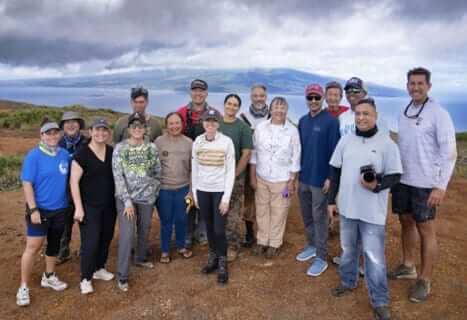
One of the documentary’s most powerful segment records the Technical Advisory Group’s visit to Kahoʻolawe, where members found both warning and hope.
Decades after military bombing ended, unexploded ordnance remains, restricting where restoration work can occur. Yet the documentary also shows Native Hawaiians returning to the island, restoring native vegetation, practicing culture and rebuilding relationships with ʻāina.
The visit provided a tangible example of how decisions about military land use can extend far beyond the term of a lease.
OHA’s work has continued beyond the documentary. The agency has engaged state and federal officials while opposing any permanent alienation of the lands through fee-simple sale, land exchange, or condemnation. The documentary frames the lease expirations as a question of trust obligation, asking viewers what this present generation owes to those who will inherit these lands next.
“Held in Trust: The Future of Hawaiʻi’s Public Lands Beyond Military Leases” premieres October 8 at 6:30 p.m. on television stations statewide and at OHA.org/aloha-aina.