
By Maile Arvin, Ph.D.
Over the summer, rumors started to spread that a key archive for Hawaiian history would be closed. I was concerned to hear this, as a scholar of Hawaiian history, especially since I have always meant to visit this archive but have yet to make it.
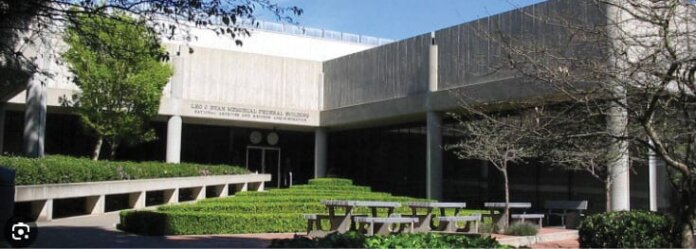
It requires some intentional planning to get to from Hawaiʻi. It’s the National Archives and Records Administration (NARA) regional facility of San Francisco, located in San Bruno, close to SFO airport.
This facility opened in 1973. It holds documents created or used by the United States federal government on a wide range of issues. Basically any topic for which there is, or was in the past, a related federal government agency (e.g. immigration, commerce, veteran’s affairs), has a corresponding group of archival documents.
Like other NARA regional facilities around the continental United States, it holds documents relevant to its region, making them more accessible than documents held at the main NARA facilities in Washington, D.C.
In the last few months, many community groups, professional archivist associations, and history organizations have stood up efforts to raise awareness and intervene in the potential closure of the NARA location in San Bruno as well as another facility in Chicago.
Amid the news coverage of those important efforts, I noticed that there had not yet been much coverage of the importance of this archive to Hawaiian, American Samoan and other Pacific islands touched by U.S. militarization.
NARA San Bruno holds a wealth of documents that are vital to reconstructing the histories of U.S. power in the Pacific.
For example, NARA San Bruno holds the immigration case files of “American citizens of Chinese ancestry” and of “Chinese-born U.S. citizens” for return or first-time entry to Hawaiʻi. Because of a number of anti-Asian immigration laws, from at least 1916-1942, U.S. citizens of Chinese ancestry had to pass extra hurdles when arriving or returning to Hawaiʻi. Many of those people also had Native Hawaiian ancestry, given long-established relationships between Chinese immigrants and Native Hawaiians in the Hawaiian Kingdom.
When those people went to China and tried to return to Hawaiʻi, when it was officially a U.S. Territory, they were interrogated. San Bruno holds the records of these interrogations.
These files can be important to individual families seeking more information about one of their kūpuna, as many of them have photographs of the applicant. But the files are also essential to historians interested in trying to understand this period and the kinds of rights that people newly had to fight for after the loss of the Hawaiian Kingdom.
There are also a lot of records related to the military build-up of Hawaiʻi and other parts of the Pacific at NARA San Bruno. These kind of files include documents and photographs related to the construction of Pearl Harbor, for example. But it also extends into the social and political history of militarization.
For example, NARA San Bruno has a series of files related to this episode from 1931 in which a white Navy wife, Thalia Massie, accused a group of local men in Honolulu of rape. After they were acquitted, her family orchestrated the murder of one of those men, Joseph Kahahawai.
Among records filed under the Navy at San Bruno are newspaper clippings about the Massie case. It is likely that many of these newspaper articles are accessible elsewhere, but the files are meaningful not just for the content of the articles. They show us that the U.S. Navy was closely following the matter, and perhaps, through marginalia or other notes with the files, how they understood and sought to manage the case.
In late August, NARA finally posted some concrete information on their website about the planned closure of the San Bruno and Chicago facilities. Of the records I mention above, the files related to the U.S. military and to governance of American Samoa will be moved to Riverside in Southern California, while the immigration records are slated to move to Kansas City. That’s a much longer, more expensive trip.
But even for those able to travel the extra distance, there will still be new barriers to access. The archivists at San Bruno who have worked with the materials at their facility will lose their jobs when the facility closes. That loss of institutional knowledge and expertise built from years of practical use of the documents is another way we lose access to our own histories.
NARA has stated that the closure of the facility in San Bruno is simply a matter of long-term plans to consolidate regional facilities. This isn’t the first time this facility has been threatened with closure, either.
In 1998, a similar plan to close regional archives was stopped through the efforts of groups like Save Our National Archives (SONA). SONA is continuing to fight this closure as well. U.S. Representative (CA-15) Kevin Mullin is leading an effort to save the regional archives in Congress. And just on October 14, the California Attorney General filed a lawsuit claiming the closure is in violation of the Administrative Protective Act.
It is ironic to have to fight to keep an archive accessible to communities in Hawaiʻi when that archive is already over 2,300 miles away. Nonetheless, we should be aware of what pieces of our histories are contained in San Bruno, and not let them get any further away.
Read more at savenarasf.my.canva.site.