
There are two questions about the future that people in Hawaiʻi should be asking: What might Hawaiʻi look like in the future? And what do I want it to look like?
The first question is about trends and transitions. The second is about vision.
Before answering the second question, we must spend time becoming familiar with the ways in which the world is already changing – rapidly and on many levels. Some changes are familiar (AI, anyone?) while others seem a little more … out there.
These changes are reshaping the trajectory of human life on Earth and, in many ways, will shape what is possible for our future.
It is important to look at trends and transitions before discussing visions for the future because foresight – insight into how and why the future could be different from the present – is not just about preparing (like what risks to avoid), it is also about anticipating and creating opportunities.
For example, if you learned researchers were developing a delectable new thing called “chocolate,” while entrepreneurs were marketing something they termed “peanut butter,” you might have the idea, before anyone else, of mixing those two novel foodstuffs together. That idea, based on present signals of change, would expand the possibilities for tomorrow.
This is one way that we anticipate – and sometimes shape – the future: by learning about the different things others are imagining, inventing, and mixing. Like Lego pieces, the more information we have, the better we can anticipate what others might build; and the greater our ability to imagine ways to build things that we want to see in the future.
Let’s begin expanding our view of what is changing in the world by considering three forces already reshaping the future: machines, biology, and space.
Rise of the machine world

Humans create machines to take on laborious chores and enable us to do new things. Today, at an accelerating pace, new generations of machines perform and coordinate work across the vast digital landscape we have been building all around us for decades (i.e., the internet, smartphones, ring cameras, Starlink, etc.).
From programs that churn through scientific data to discover new compounds to autonomous delivery drones to robotic construction sites to the brand new AI “agents” offering to manage your daily affairs, a wild variety of machines are emerging to take on every role people can think of, whether we are pleased about it or not.
Given the rate of change, the excitement for pushing things further, and the fact that these machines can connect to one another across the world’s digital landscape (sometimes without permission), how should we be thinking about where things go from here? What are the possibilities?
Tech companies are pushing hard to make AI our UI – our user interface with computers. Now some are pushing to make AI the OS – the very operating system upon which our day runs.
As more machines spread across society in both digital and physical forms, and even gain autonomy (perhaps self-replication), we can anticipate an entire machine world that overlaps with and weaves through the natural and human worlds (and its own secret invisible spaces); future machines as partners, paramours, designers, explorers, coaches, soldiers, and more, both with us and among themselves.
Reengineering life
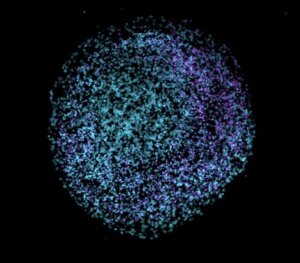
While machines get most of the attention about being a world-changing technology (AI in particular) in fact, biology is poised to be the far more transformational set of technologies.
Including everything from “old school” genetic engineering to biofoundries and synthetic biology, advances occurring today involve biology tantamount to our ability to design life.
Researchers worldwide are well past “GMO” crops and genetic screening. They are working on everything from miniaturizing CRISPR tools (gene editing) that work inside patients, to creating implants with engineered cells that manufacture medicines, to making cow cells organize into meat-like tissues, to a living fabric made of fungus, to engineering mosquitoes so that their offspring cannot spread malaria.
Advances in biotechnology can accelerate future advances, even more so as AI evolves alongside it to boost the speed of research and the ability to model larger and more complex systems in the world.
Curing disease remains a major objective and an area of growing success. But scientists are also moving beyond editing existing genes toward designing and constructing entire synthetic genomes, opening the possibility of programming novel forms of life.
From there we can anticipate the ability – just down the road – to design and then grow entirely bio-synthetic ecosystems. Once you are in the realm of designing ecosystems, you’re within the thought-possibility space of terraforming (modifying other planets to make them capable of supporting human life).
Off world bound
We are headed back to space. Not since the space race in the 1960s has there been so much interest – and funding – flowing into building our presence off world. Recently, we have seen a meteoric rise in the number of rocket launches, with more than 300 launches carrying over 4,000 new payloads into orbit in 2025 alone.
Today, approximately 15,900 functioning satellites orbit Earth, providing ever-increasing communication, surveillance, navigation, and defensive capabilities. Satellite-based internet access, satellite-based cellphone services, on-demand commercial satellite imagery, reusable rockets, and even space tourists are all part of a very crowded orbital space.
Assuming logistical bottlenecks and international rules are worked out, the current trajectory of our push back into space means we are altering the very geometry of human affairs.
Visions animating business leaders, engineers, and policy makers include planned missions for permanent human presence on the Moon; building, fixing, and refueling spacecraft in orbit and on the Moon; better exploration (and resource exploitation) of the Solar System; and establishing a presence on Mars.
Earth becomes the foundation of a slow growing but ever-expanding space for human civilization. Politics and economics switch from geopolitics and geoeconomics to astropolitics and astroeconomics.
While machines will likely play significant roles in planning, exploring, building, and sustaining off world operations, we can also anticipate the intersection of machines and biotechnology to shape new habitats for future generations of explorers.
Countries and corporations are collaborating – and competing – to own the technologies and access required to control space for down-to-Earth reasons (e.g., communications, intelligence, and security) as well as for the ambitious and visionary ones.
Seeing enough of today to … anticipate tomorrow
This is a lot to process, and it does not represent even half the tectonic plates shifting in the world today. The rise of machines, reengineering life, and colonizing space are just three of the twelve major shifts that I look at – and there are others.
It can be overwhelming. Try thinking of these changes as Lego pieces in different colors and shapes. The more you have, the more you can imagine and create. If you reframe it this way, then you might start finding excitement in it: You will want to know what is new to better understand what others are trying to build because you want the opportunity to design your own solutions, prepare in advance for the worrisome builds that might emerge, build things to reduce those threats, or support people you trust imagining and building amazing new things. Connect those dots, gather up the Lego pieces, and expand the scope of what is possible.
Machines are here. Biotechnology is already reprogramming life. And we are extending civilization beyond the Earth. If this frightens you, you need to understand how they are already reshaping the world to navigate the coming changes, rather than clinging to the present.
In today’s world, with so many empowered and inspired to pursue change, if you are not pursuing your own vision for tomorrow armed with foresight, you will find yourself living in someone else’s future.