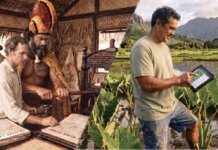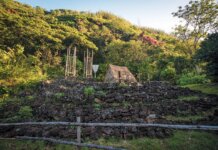
Before food reaches our tables, before a lei is strung or a plant is gathered for cultural practice, there is lepo, the soil that supports its growth. Its health helps shape what can grow, what can nourish us and what can continue to be shared.
For mahiʻai and cultural practitioners, caring for lepo means paying attention to a place. One crop struggles while another thrives. The person stewarding that land notices the differences and begins asking what the land needs.
Those questions arrive at Makaliʻi Metrics, a soil lab in Mōʻiliʻili where samples are weighed, prepared and analyzed for information about the conditions beneath growing plants. The findings return to growers and land stewards who consider them alongside what they have learned through working the land.
For co-founders Daniel Richardson, a soil scientist and the CEO of Makaliʻi Metrics, and Kūhaʻo Zane, creative director of Sig Zane Designs and president of the Edith Kanakaʻole Foundation, the work begins with a responsibility to sustain life in Hawaiʻi. A Hawaiian worldview guides which questions the team pursues, with ancestral knowledge and practitioners’ experience helping shape what happens inside the laboratory.
“We are creating these metrics so that we all have an ability to sustain life here,” Zane said.
Richardson worked in UH Mānoa’s soil testing laboratory while earning his undergraduate and graduate degrees in natural resources and environmental management. Founded in 2022, Makaliʻi Metrics aimed, in part, to ease that laboratory’s workload.
When UH discontinued its public soil and plant analysis service, samples awaiting analysis piled up. Sending samples to the continent meant additional shipping costs and wait times, reinforcing the need for testing and interpretation grounded in Hawaiʻi’s growing conditions.
“We’ll just do it ourselves,” Richardson decided.
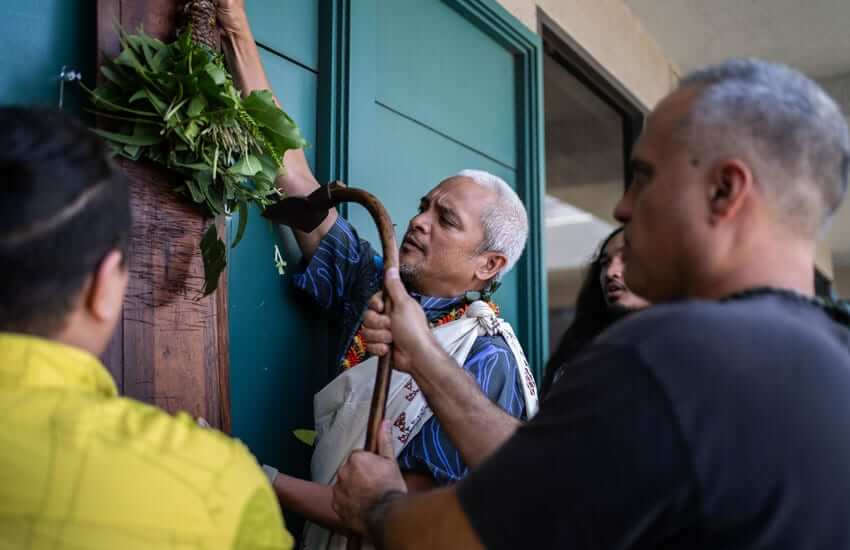
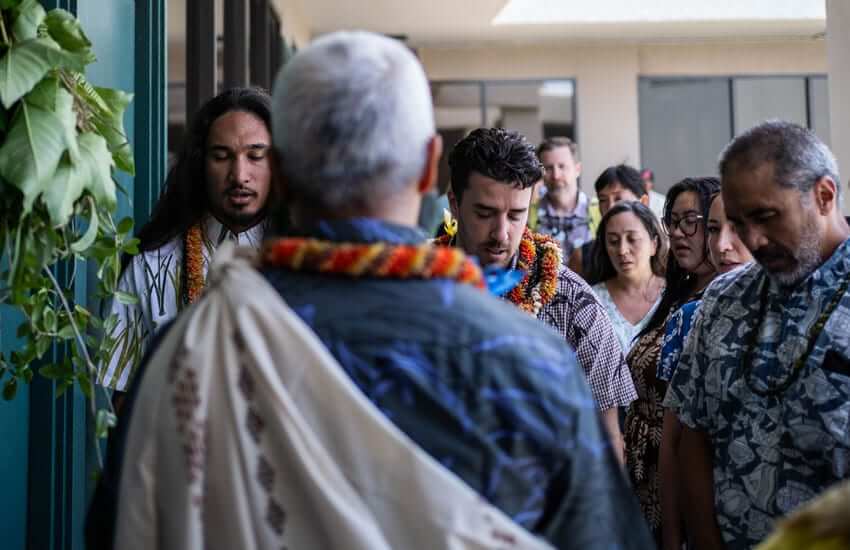
Their Mōʻiliʻili laboratory opened May 14, 2026, providing a space to process samples locally and work directly with growers and land stewards. At the opening ceremony, Richardson spoke about the practitioners and partners who inspired their team to build that capacity.
ʻĀina work is difficult, he acknowledged, and its returns are not always lucrative. Yet people across Hawaiʻi continue caring for places despite being told nothing can grow there. “We’re so inspired by so many practitioners and partners that we work with all across Hawaiʻi because people are just going for it anyways,” Richardson said.
Looking at the community gathered for the blessing, he considered what the space could help grow, both in food and in relationships, adding “let’s keep growing things where people say we cannot grow.”
The intention behind that work had been taking shape long before the laboratory opened. Zane recalls conversations beginning around 2019, when the group first came together to share ideas about what the work could become. “We were just trying to figure out what kind of opportunities there were around soil,” he said.
Kamuela Enos, director of the University of Hawaiʻi System’s Office of Indigenous Knowledge and Innovation, brought Zane into the project. Zane’s experience communicating Hawaiian knowledge through design became part of the group’s work to name the laboratory and identify its purpose.
“Initially I was brought in to be able to share our makawalu process to name this soil lab,” Zane said. Drawing on Papakū Makawalu, a practice of the Edith Kanakaʻole Foundation grounded in understanding the world through ancestral texts, Zane worked with soil scientists Jonathan Deenik and Susan Crow, Enos, and Richardson to map the ideas and relationships that would help shape the laboratory’s name and purpose.
“All of them were sharing certain things and it tied back to this understanding of Indigenous knowledge as well as how do we strengthen or translate or communicate our Indigenous know-ledge through the usage of technology,” Zane said. “That was the basis of Makaliʻi Metrics.”
Within that process, aloha ʻāina was highlighted as a metric. For Zane, the question reaches from the soil into the plants it supports, the air around them, and the reef systems beyond the shoreline.
“How do we move towards measuring the metric of aloha ʻāina within our air, within our reef systems alongside that, even more so within the lau, not only stopping in the actual soil capacity, but how is the metric of aloha ʻāina reflected also in the lau of kalo or in the lau of kukui?” he asked.
That Hawaiian foundation continues to guide the laboratory’s work.
“We’re not against other systems of knowing, but we’re strongly rooted and grounded in a Hawaiian world view,” Zane said. That worldview shapes which projects the team chooses and what it seeks to understand through soil analysis. “That is what drives our initiatives within the lab,” he said.
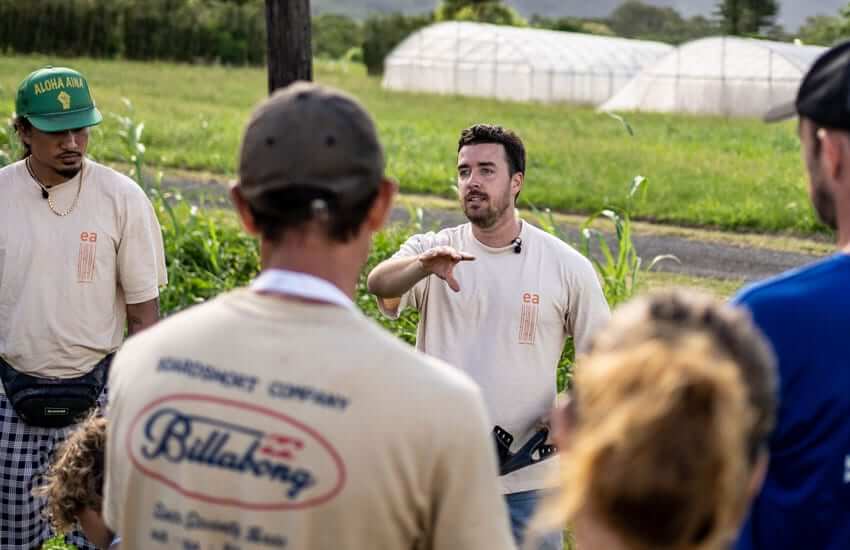
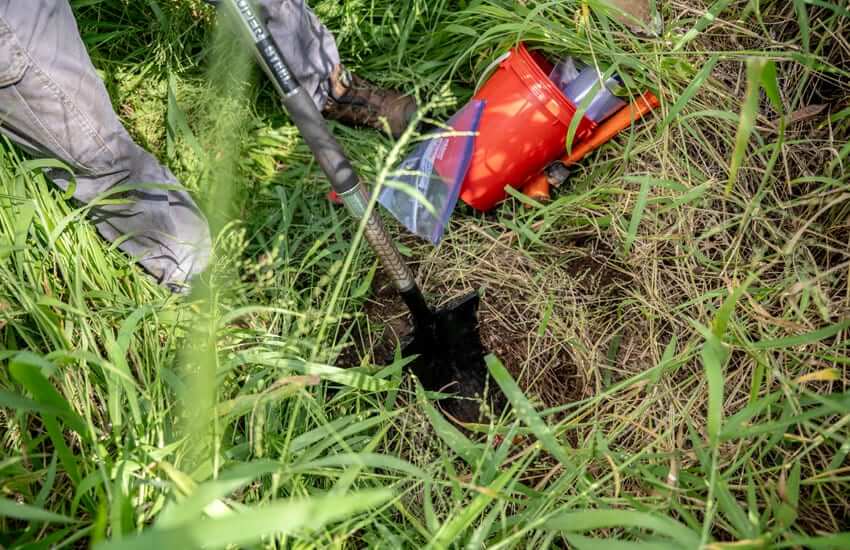
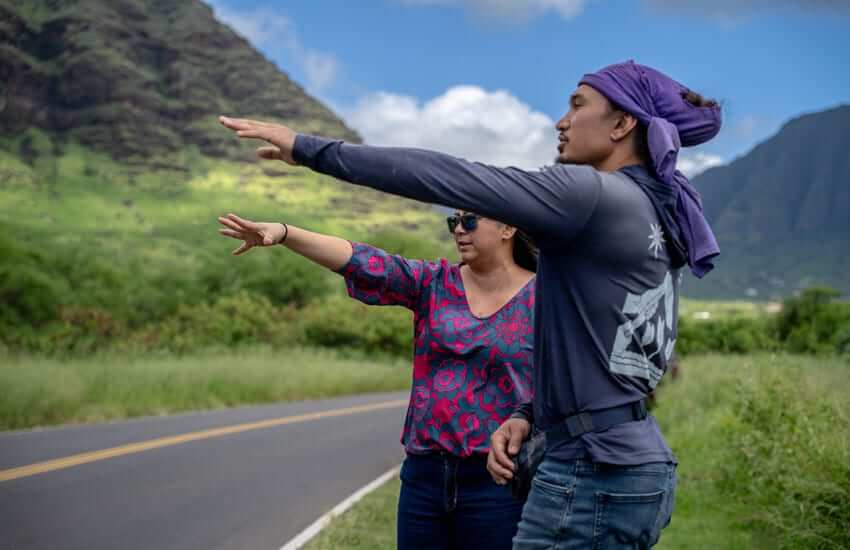
In Hāmākua, the team’s work with huiMAU practitioners Haley Kailiehu and Noʻeau Peralto drew on an old nūpepa (newspaper) account of pākukui cultivation. The method involves burying kukui material in pits and planting kalo above the composting material. The account preserved knowledge of a practice connected to that place, giving practitioners a foundation to work from today.
Makaliʻi Metrics contributed soil analysis as the method was put into use. The team could examine changes in carbon and phosphorus and consider how those conditions relate to kalo growth. Ancestral knowledge shaped the investigation, while laboratory tools helped track changes beneath the plants.
“We’re taking these methods that kūpuna have known previously and just assigning a certain amount of technology to it so that we can read the data from that and also figure out how we can refine these processes further for the next generation,” Zane said.
Questions often begin with a grower preparing a field investigating uneven growth or tracking changes during restoration.
Makaliʻi Metrics offers site visits to collect soil and record sampling locations with GPS. Growers can also submit samples themselves. Keeping track of where the material came from connects the findings to the area being examined and the questions that prompted the testing. Inside the Mōʻiliʻili laboratory, that analysis begins with careful preparation of small amounts of material.
Richardson describes weighing samples on a sensitive balance, placing the material into tiny tin capsules and folding the capsules closed with tweezers. The packets go into a carousel that rotates and drops them into the combustion analyzer. The instrument burns the sample and measures the gases released, allowing the team to quantify carbon and nitrogen.
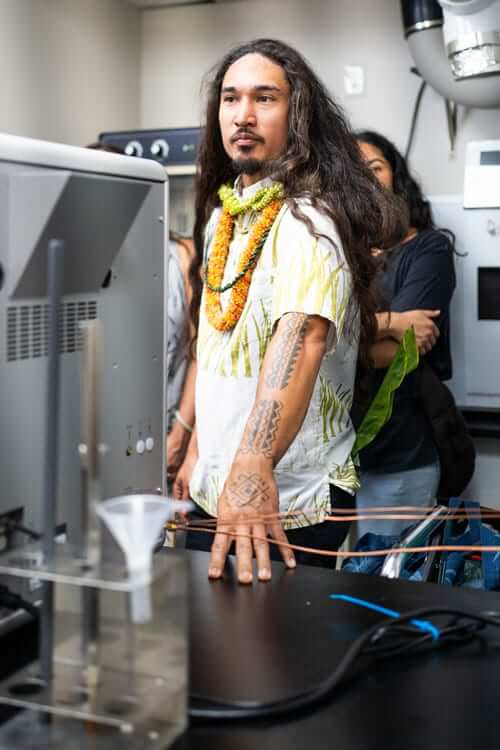
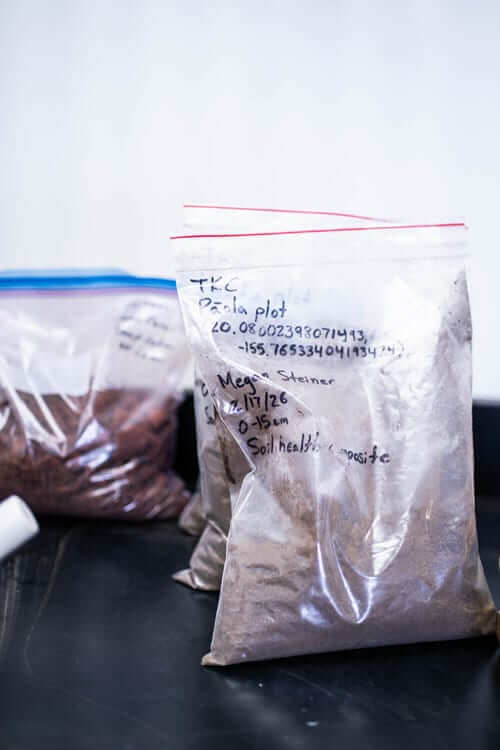
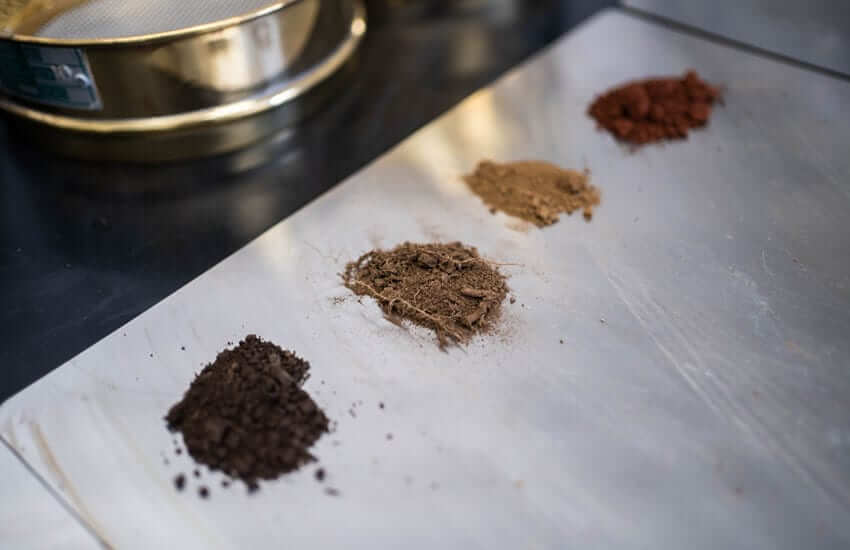
Zachary Pilien gives guests a tour of the laboratory and explains his role in soil analysis.- Photos: Philamer Felicitas
A separate spectrometer measures nutrients including phosphorus, potassium, calcium and magnesium. To prepare soil for that instrument, it is mixed with an extracting solution, shaken and filtered. The clear liquid is transferred into vials. Hot plasma excites elements in the prepared sample, and the instrument measures the light they emit to determine their concentrations. Other tests establish pH, indicating acidity or alkalinity, and electrical conductivity – an indicator of dissolved salts.
The measurements become part of a larger understanding of the place. Practitioners bring the history of the practice, their knowledge of the land, and observations of how the plants respond. The exchange continues when the findings leave the laboratory.
For Chief Technology Officer Zachary Pilien, respecting the person caring for the land is central to how the team works. “We don’t want to tell people what to do on their ʻāina, because they know what’s best for their ʻāina,” Pilien said.
Pilien leads the technology work, including the digital dashboard through which clients access their soil analysis: measurements of soil properties accompanied by interpretation and recommendations.
The team also provides information about the mahina (moon) calendar in relation to farming, bringing attention to lunar cycles alongside soil conditions. Clients can review their soil analysis over time, considering the findings alongside their own observations as they plan what to plant next or how to care for the soil.
Richardson credits the relationships that shaped Makaliʻi Metrics, including the early collaboration with Enos and the partnership with Purple Maiʻa. “I think what’s unique is the way that we engage community and the partners that we’ve brought together to kind of create the intentions of this space,” he said.
Their analytical methods are published and reproducible. What makes the work distinctive, Richardson explained, is how the team brings those methods into its relationships with communities and its responsibility to future generations.
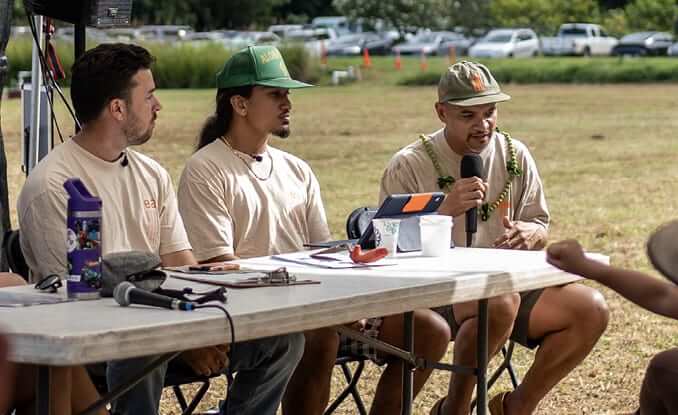
Zane sees that responsibility extending beyond soil. “I don’t think that these kind of data and analyses stop at soil,” he said.
He envisions opportunities to examine reef health and air quality through a similar approach. Those possibilities return to the question the team explored from the beginning: how technology can help communicate Hawaiian knowledge and perpetuate aloha ʻāina.
For Zane, that includes helping people beyond the lāhui understand how to live responsibly within an island environment. “It’s to fulfill that curiosity and then start to step into the educational portion of what it’s like to live in synchronicity with the island,” he said.
That learning begins with the questions people bring to the laboratory from the places they steward and farm. Like in Hāmākua, where a nūpepa account offered a cultivation practice to carry forward. Soil analysis helps practitioners follow what happens as kukui material breaks down beneath growing kalo. Their observations, together with the laboratory findings, become know-ledge they can continue to work with and share.
The lepo holds what has been returned to it and supports what will grow next. Caring for it connects the practices inherited from kūpuna to the food that future generations will harvest, the lei they will make, and the plants they will gather.
It starts with lepo.
Learn more at makaliimetrics.com